
Agent Shooter - Shooting Game review
 Analysis by Appsdrops
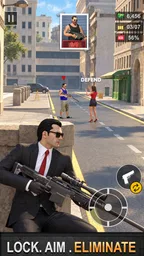
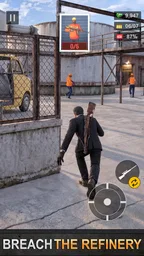
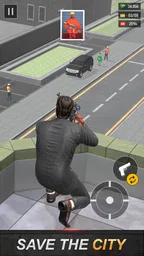
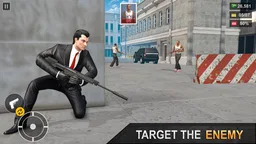
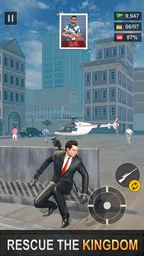
I’m usually wary of mobile shooters that promise a little of everything, because the result can feel like a stack of familiar ideas without much purpose. Agent Shooter makes a clearer pitch: it is an action game built around shooting, sniper play, and taking cover. That combination gives me a useful way to judge it. If I want a focused, mission-based action session rather than a deep competitive shooter, it is an appealing place to start.
What to decide before you download
Agent Shooter - Shooting Game is a free action game from Rebel Actions. Its average rating is 4.5 from around 140,000 ratings, and it has passed 50 million installs. Those figures suggest that it has found a broad audience, though popularity alone cannot tell you whether its style suits you. The important question is whether you enjoy a shooter that puts sniper encounters and cover missions at the center of its appeal.
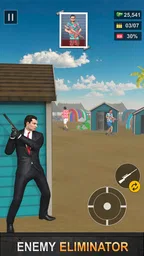
I would approach it as a mobile action game for short, self-contained bursts, not as a substitute for a large-scale tactical or competitive shooter. The sniper-and-cover focus points toward deliberate encounters: you are meant to pay attention to positioning and aim, rather than simply treating every moment as a run-and-gun sprint. That can make it a better fit when I want a clear action premise without needing to coordinate with a team.
The age rating is Everyone 10+, so it is presented as suitable for players aged ten and up. That is helpful context for families, but it does not mean every child will enjoy the shooting theme or find the controls comfortable. I would still let a younger player try a short session first and check whether the pace and presentation feel right for them.
It is also worth setting expectations around progression and variety. The confirmed premise is specific, but it does not establish how long the campaign is, how missions change over time, or whether every encounter offers meaningful tactical choices. I would download it for the core action idea, then judge its staying power by whether the missions continue to make aiming and cover feel purposeful.
Why the sniper-and-cover pairing matters
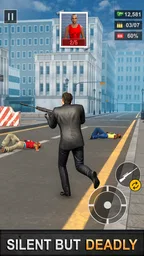
Sniping and cover play ask for different kinds of attention. A sniper-focused moment rewards patience and careful target selection; a cover-focused mission makes the space around a fight matter. For me, the interesting possibility is the shift between those two approaches. A shooter can feel less monotonous when it asks for both measured shots and awareness of where to shelter, rather than letting one firing rhythm carry every encounter.
A practical tip is to treat the first few sessions as a test of control comfort, not just difficulty. On a touchscreen, aiming can feel natural to one player and fiddly to another. If I find myself correcting the aim repeatedly or losing track of cover while trying to line up a shot, that is useful information: the game may be enjoyable in short doses, but it probably will not become my go-to shooter. A good mobile action game should feel manageable in the situations it is built around.
Where it can win over broader shooters
Compared with the usual alternatives in the action-shooter category, Agent Shooter has a narrower identity than a broad multiplayer arena game or a sprawling shooter with many modes. That narrower focus can be a strength. If I have ten minutes between errands, I would rather enter a game with a straightforward action premise than spend that time learning a large roster, coordinating with other players, or navigating several layers of menus.
It may also suit someone who likes the fantasy of precision shooting but does not want every session to become a test of competitive reflexes. The combination of sniper action and cover missions gives the experience a more deliberate frame than an all-out firefight suggests. I would choose it when I want to concentrate on individual encounters and play at my own pace, rather than measure progress against other people.
Here is a realistic use case: I have a short break, my connection or attention is not ideal for a team match, and I want a game that can be picked up without arranging a session with friends. A mission-led shooter is a sensible option in that moment. I can focus on the immediate challenge and stop when the break ends. That does not prove every mission is brief, so I would avoid starting a session when I need to put the phone down at a precise moment.
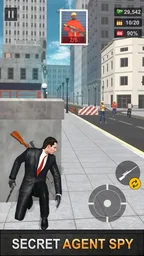
One useful way to assess its design is to notice whether cover changes your decisions or merely delays incoming fire. If moving between safer positions helps me choose when to aim, and sniper moments reward calm rather than hurried tapping, the central pairing is doing real work. If both elements feel like the same shooting action with different scenery, the game may not offer enough variation for someone who has played many mobile shooters.
When another kind of shooter may fit better
If I want competitive matches, social play, or a game built around mastering a large set of characters and weapons, I would look at alternatives in those categories instead. That is not a knock against this game; it is a difference in what I would be asking from it. A focused sniper-and-cover action game is not automatically the best choice for someone who wants ranked competition, constant updates to a multiplayer meta, or long sessions with a regular squad.
Likewise, players who prefer fast movement and uninterrupted close-range action may find the deliberate sniper angle less satisfying. If aiming carefully feels like a pause rather than a reward, a more arcade-like shooter could be a better match. I would also skip it if I am looking for a richly explained military simulation or a story-led campaign with substantial character development; the known premise is action-centered, not a promise of either of those experiences.
The best comparison is therefore not “which shooter is objectively better?” but “what kind of attention do I want to give this session?” For a quick, individual action break, this game has a coherent reason to exist. For a group activity, a complex tactical sandbox, or a deep long-term competitive hobby, a different category is likely to meet that need more directly.
Free to start, with a sensible spending check
The game is free to download and includes in-app purchases priced at $3.99 per item. I would begin without spending and see whether the core missions hold my interest. That is especially sensible for a shooter: paid options only matter if they improve an experience I already enjoy, and the presence of purchases by itself does not tell me what is included or whether anything is necessary to progress.
For parents, the practical approach is to check purchase settings on the device before handing it over. The age rating provides one part of the decision, while the possibility of optional spending is another. I would also talk through purchases with a child rather than assuming that “free” means there can never be a charge.
There is a small but important trade-off here. Free entry makes it easy to test whether the shooting feels right, but optional purchases can make the experience less appealing to players who prefer a clearly fixed-cost game. If I dislike seeing purchase prompts or managing spending, I may be happier with a paid game whose costs are settled upfront. If I am comfortable trying first and deciding later, the free entry point is convenient.
Updating and settling into a routine
The current version is 2.1.71, and the game was released on December 19, 2023. It requires Android 7.0 or later. Before installing, I would check that my device meets the minimum operating-system requirement and has room for another game. That simple check avoids the frustration of deciding I want to try it only to find that my device is not compatible.
After installing, I would make the first session a low-pressure trial. Try a sniper encounter, notice how aiming responds, and then see whether the cover missions feel like a worthwhile change of pace. If controls feel awkward, give yourself a little time to adjust before deciding; if the basic actions remain uncomfortable, switching to a shooter with controls that better suit you is a reasonable choice.
For everyday use, I would keep it as a pick-up-and-play option rather than assume it needs a daily routine. That recommendation comes from the focused action premise, not from a claim about specific session lengths or reward systems. It is a useful distinction: a game can be enjoyable whenever there is free time without becoming another obligation to check in on.
Who I would recommend it to
I would recommend Agent Shooter to someone who wants a free mobile action game with a clear focus on precision shooting and cover-based encounters. The large player reach and strong average rating make it an easy candidate to try, but I would still put personal control preference above the crowd’s opinion. A player who enjoys measured aiming may find more to like here than someone who wants constant movement and competitive pressure.
I would be more cautious about recommending it to people who need a deep story, dependable team play, or a highly varied catalogue of modes before they commit to a shooter. Those are different expectations from the game’s central pitch. I would also tell a parent that the Everyone 10+ rating is a useful starting point, not a substitute for checking whether the action theme and in-app purchase setup suit their child.
My decision is straightforward: try it if sniper action and cover missions sound like the kind of focused break you want, and judge it by how comfortable the aiming feels in your hands. Skip it if your ideal shooter is built around friends, elaborate tactical systems, or sustained competition. Its strongest reason to download is the specific pairing of deliberate shots and cover-based action; whether that is enough for you depends on the kind of shooter you actually want to play.
What we like
- Quick matches make it easy to play in short sessions.
- Simple controls are approachable for newcomers.
- Mission objectives provide clear goals during each run.
- Unlockable agents add variety to the playable roster.
- The action-focused format keeps gameplay easy to pick up.
What could be better
- Repeated mission layouts may feel predictable over time.
- Progression can require substantial time investment.
- Touch controls may feel imprecise during hectic fights.
- Enemy encounters may lack variety in later stages.
- Frequent action can make aiming feel crowded on small screens.







