



Text Me: Second Phone Number review
 Analysis by Appsdrops
I can see why a second-number app feels useful almost immediately: it gives you another way to handle calls and texts without making every new contact part of your main number’s routine. Text Me: Second Phone Number is built around that practical appeal. It is a free social app from TextMe, Inc., with calling and texting among its central uses, and the option to get a new number. I’d consider it most carefully if I wanted a separate line for a recurring situation—not just a novelty number I’d forget to check.
Why the first week feels promising
The first benefit is easy to understand: a separate number can make it simpler to keep a particular set of conversations apart from your usual ones. That might mean coordinating a side project, replying to people you don’t know well yet, or keeping a number for a short-term arrangement. Instead of handing out your primary number in every context, you have another channel to use.
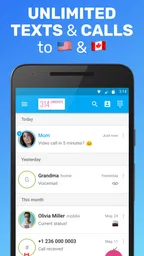
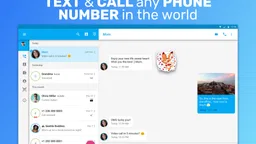
Text Me’s appeal is that it brings texting and calls together rather than treating the extra number as a one-purpose tool. If someone contacts you by text, you can respond in the same app; if a call makes more sense, calling is part of the same basic setup. The app’s store summary describes free SMS to the US, Canada, and more, along with calling. I’d still check the terms and options shown in the app for the countries and kinds of communication I actually need, rather than assuming every destination works the same way.
In a realistic first-week scenario, I might use the number while arranging a local service or selling something. I could share it with interested people, answer messages when convenient, and avoid putting my everyday number into each conversation. The useful part is not that this makes strangers trustworthy; it doesn’t. It is that it gives me a practical boundary and a way to keep those exchanges separate.
A new number is also useful when you want to start fresh for a particular purpose. But I would decide what that purpose is before setting things up. If I don’t know who is meant to contact me on the second line, I’m likely to leave it idle. The app works best when the number has a job and I have a reason to check it.
Keep the number tied to a clear purpose
My strongest practical tip is to choose a narrow use for the line. “For project inquiries” or “for coordinating a move” is more manageable than “for everything I don’t want on my main phone.” A defined role makes it easier to notice relevant messages and decide when to share the number. It also reduces the chance that the extra inbox becomes another stream of conversations with no clear owner.
I would also tell contacts which number to use and keep the context straightforward. A second line can help with organization, but it cannot make someone recognize which identity or conversation they are dealing with unless you make that clear. That small bit of housekeeping matters more than the novelty of having another number.
What keeps it useful after the novelty fades
For month-to-month value, the key question is whether the second number stays connected to a real routine. If I regularly use it for a side activity or a particular group of contacts, having calls and texts in one place can remain convenient. If I only needed it once, its value naturally falls after that task is over. That is not necessarily a flaw; it means the app’s usefulness depends on how consistently the separate line serves a purpose.
The app is free to install, and it has a 4.1 average from around 549,000 ratings, with more than 50 million installs. Those figures suggest that the second-number idea is familiar to a large audience, but they don’t tell me whether it fits a particular person’s habits. I’d judge it by whether I actually return to the app to respond, not by the initial satisfaction of seeing a new number ready to use.
Compared with ordinary messaging apps, Text Me is aimed at a different problem. A typical messaging app is most convenient when the people you contact already use it and you’re happy to keep those conversations connected to your usual account or number. Text Me makes more sense when the separate number itself is the point. If all I need is a group chat with friends who already use the same service, my regular messaging app is probably simpler.
It also differs from using a second physical SIM or a phone with dual-SIM support. Those options may suit someone who needs a separate line integrated into the phone’s normal calling and texting habits. Text Me is an app-based alternative, which can be appealing if I want to manage the extra line inside an app rather than add another SIM. The trade-off is that I need to remember to open and maintain that app; it is not automatically the same experience as treating two carrier lines as equally present.
Build a check-in habit before relying on it
A second number is only useful if I notice the messages sent to it. I’d make a simple habit of checking the app at a predictable point in the day, especially if I’ve given the number to someone who may need a timely reply. That’s a more dependable approach than assuming I’ll remember to look whenever a notification appears. If I need a line for urgent or time-sensitive communication, I should first make sure the app fits the way I monitor calls and messages.
Another useful workflow is to review whether the number is still serving its original purpose after a project ends. If the temporary need is over, I can stop sharing it and avoid letting old conversations accumulate. If it has become a regular channel, I can keep it as part of my routine. Treating the number as something to manage—not as a set-and-forget privacy shield—helps prevent confusion later.
Text Me includes in-app purchases, with items ranging from $0.99 to $79.99. That makes it worth paying attention to what the app offers at the point where a particular feature or option matters to you. I wouldn’t assume that every use of the app will remain free simply because installation is free. Before buying anything, I’d check the displayed purchase details and decide whether the added value is relevant to the way I use the second line.
Maintenance, friction, and who should skip it
The maintenance burden is modest in concept but real in practice: I have to keep a second communication channel in mind. There are now two places where someone might reach me, and I need to remember which number I gave to which contact. If I’m already struggling to keep up with one inbox, adding another may make me less responsive rather than more organized.
There is also a social cost to using a separate number. Some people may be unsure why I’m contacting them from a different line, or they may reply to the number they already know. I’d explain the reason briefly when sharing it, especially for ongoing work or arrangements. That small clarification can prevent a useful boundary from turning into a confusing handoff between numbers.
I would not use a second number as a guarantee of anonymity, safety, or separation from every consequence of a conversation. It can help me avoid handing out my usual number in some situations, but I still need to make sensible decisions about who I contact and what information I share. For a sensitive or high-stakes need, I’d look carefully at whether an app-based line meets the requirements rather than assuming that “second number” means complete protection.
People who want one dependable number for all calls and texts may be better off sticking with their normal phone service. Likewise, if a person’s friends and family already communicate comfortably through an existing messaging app, introducing another service may add friction without solving a meaningful problem. Text Me is more compelling when I can name the boundary or recurring task it will support.
The app is rated for Everyone, and its current version is 3.57.0; it runs on operating systems starting at version 7.0. The long-running presence of the app, released on August 3, 2011, gives it a more established feel than a brand-new experiment, but age alone doesn’t make it the right fit. I’d still consider how it behaves on my device and whether its current options line up with my routine.
Where the fatigue comes from
The biggest source of fatigue is not learning that a second number exists; it is remembering to maintain the distinction. When I’m in a hurry, I might reply from the wrong channel, overlook a message, or forget which number a contact has saved. Those are ordinary organizational problems, but the app’s usefulness depends on avoiding them. A clear purpose and a regular check-in routine reduce that burden.
A second source is paying attention to purchases and expectations. Since the app offers in-app purchases, I’d make choices deliberately rather than treating every prompt as necessary. If I only need basic texting and calling for a limited purpose, I should evaluate the available options against that use instead of buying something because I’m already invested in setting up the number.
Text Me has been available since August 3, 2011, and its scale—over 50 million installs—shows that the idea has lasting appeal. Still, the best sign that it deserves space on my phone is more personal: I use the second line often enough to justify checking another app. If the answer is no, uninstalling or moving back to my usual number may be the simpler choice.
My long-term verdict
I’d recommend Text Me: Second Phone Number to someone who has a clear, recurring reason to separate some calls and texts from their main line. It can be handy for managing a side project, handling unfamiliar contacts, or keeping a specific activity in its own communication lane. The free starting point makes it accessible to try, while the in-app purchase range is a reminder to review costs before relying on paid options.
I would skip it if I wanted a second number only because it sounds fun, if I rarely check additional apps, or if my existing phone and messaging setup already handles the separation I need. The app’s lasting value is not in having another number for its own sake. It is in whether that number keeps a useful boundary in place without creating more messages to track.
For me, the right way to judge it is after the first burst of curiosity: do I still have a reason to use the line, and do I remember to check it? If both answers are yes, Text Me can earn a regular place in a communication routine. If not, the novelty will fade, and the simplest alternative may be the number and messaging app I already use.
What we like
- Provides a separate number for calls and texts.
- Supports international calling to many destinations.
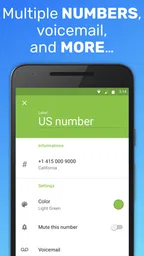
- Voicemail helps manage missed calls.
- Group messaging makes conversations easier to organize.
- Customizable themes let users personalize the interface.
What could be better
- Free calling and texting may require earning credits.
- The app may show ads in the free version.
- Number availability can vary by location.
- Some features require a paid subscription.
- Call quality can depend on your internet connection.





