
Sincerely - Off My Chest review
 Analysis by Appsdrops
I’m drawn to social apps that make room for thoughts people might hesitate to attach to their name, and Sincerely - Off My Chest is built around that idea. It gives people a place to read and write anonymous stories, which can feel more candid than posting to a profile full of friends, relatives, and coworkers. In my view, its appeal depends less on constant conversation than on whether you’re comfortable sharing or reading personal experiences in a less identifiable setting.
That format also calls for a little care. Anonymity can make it easier to be honest, but it can make it harder to judge who is speaking and how much context a story leaves out. I would approach the app as a space for reflection and connection, not as a substitute for trusted support or a reliable source of advice.
What the anonymous format is good for
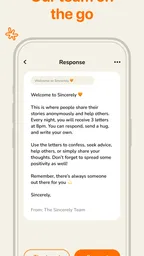
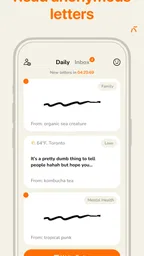
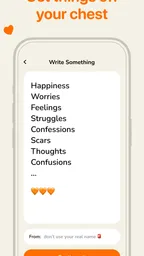
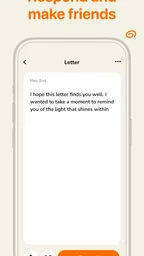
The core experience is straightforward in concept: read other people’s stories, then write one of your own if you have something you want to get off your chest. That makes the app a social option for people who want to express themselves without turning every thought into a public statement tied to their regular identity. It is a narrower proposition than a general-purpose social network, and that focus is part of its appeal.
I can see it fitting a quiet moment when a thought is looping in your head and you would rather put it into words than send a hurried message to someone you know. Writing anonymously can lower the social stakes: you do not need to shape the story for a particular friend or worry about it becoming part of your usual online persona. The trade-off is that anonymous responses may not offer the continuity or personal understanding you get from someone who knows you.
Because this is a social app, the experience is naturally tied to connecting with content and people through the service. I would expect network access to matter when opening stories or trying to share one, so it is best treated as something to use when your connection is dependable rather than as a private notebook you can count on in every situation. If you want a place to draft thoughts regardless of connectivity, a notes app is a more dependable first step; you can decide later whether a story belongs here.
When a connection changes the moment
Connectivity affects more than whether an app opens. For an anonymous story app, it shapes the moment of reading and sharing: a delay while content loads can interrupt the emotional thread, and a weak signal can make it harder to tell whether an action has completed. I would avoid composing a vulnerable post while rushing through a train station or moving between coverage areas. A few calm minutes on a stable connection make it easier to review the wording and avoid sending something you meant only to think through.
A practical habit is to separate drafting from posting. If a story feels raw, write a version elsewhere first, pause, and reread it before deciding whether to share. That helps with both connection interruptions and judgment: if the network stalls, you still have your draft, and if your feelings change, you have not rushed into publishing. I also would not repeatedly tap a submit control when a connection is uncertain; without clear confirmation, repeated actions can create confusion about what went through.
There is a useful distinction between anonymity and privacy that I keep in mind here. An anonymous format does not mean that every detail in a story is harmless to reveal. Names, workplaces, small-town landmarks, and unusual timelines can identify someone even when a profile name is absent. I would remove identifying details before posting, especially when writing about other people. That is a sensible habit for any social space, but it matters particularly when the point is to speak candidly.
Using it in the middle of a real day
Picture a lunch break after an awkward conversation at work. You have ten minutes, a phone in hand, and want to read something that makes your own reaction feel less isolated. This is the sort of brief, personal use where an anonymous story community can be appealing. But if you are on crowded public Wi-Fi or a patchy mobile connection, I would keep the session low-pressure: read when the content is available, and save the more considered writing for later rather than trying to publish a complicated story in a hurry.
That same scenario shows why the app may not suit every social habit. If you want instant replies from a known group, a group chat is usually better. If you want polished, public-facing posts with a persistent identity, a conventional social platform is a better match. Sincerely sits in a different space: it is more about personal stories without the usual profile-centered framing. I would choose it when anonymity is the point, not when I need a dependable conversation with someone specific.
It may also work for someone who prefers reading to posting. You do not have to treat every social app as a stage. Reading can be enough to see how other people describe difficult, embarrassing, or complicated experiences. Still, anonymous accounts can be incomplete, exaggerated, or impossible to verify. I would take stories as personal perspectives rather than evidence that a particular choice is right for me.
What to do when loading or posting goes wrong
Network problems can be especially frustrating when a story feels personal. If a page does not load or a post seems stuck, I would first check whether the connection is stable, then give the app a moment before trying the action again. If the text matters, keeping a separate draft is a simple safeguard. It avoids having to reconstruct a carefully worded account from memory after an interruption.
I would also be deliberate about what I expect from a response. A story may invite recognition, but an anonymous community cannot guarantee that someone will see it quickly or reply in a helpful way. When I need a specific person to understand something urgent, I would contact that person directly instead of relying on a post. For serious distress, a social app should not be the only source of help; a trusted person or appropriate professional support is a better choice.
That does not make the app useless when someone is having a difficult day. Writing can help organize feelings, and reading can offer a sense that other people have faced messy situations too. The important distinction is between expression and resolution. I would use the app for the former, while keeping real-world support available for problems that need care, context, or follow-through.
Keeping mobile use intentional
On a phone, it is easy to open a social app in spare seconds and then stay longer than planned. With anonymous stories, that can mean moving from a light read into material that feels emotionally heavy. I would check in with myself as I browse: if a story is making me feel worse, it is fine to stop rather than keep scrolling out of habit. A short session with a clear purpose—read a little, write a draft, or reflect—can be more useful than opening the app whenever there is a pause in the day.
For data-conscious use, the main practical advice is modest: use a reliable connection when you can, avoid repeatedly reloading content on a weak signal, and be mindful of how long you spend browsing away from Wi-Fi if your mobile plan is limited. I would not assume a particular offline mode or data-saving setting. If minimizing mobile data is essential, check the app’s current behavior and settings on your device before making it part of a regular commute routine.
There is also a human side to data-consciousness. The more personal the story, the more carefully I would consider whether the detail is necessary. Removing identifying clues protects other people and can make the post easier to share without regret. A concise account focused on what you felt, rather than every traceable detail of where and when it happened, is often a better fit for an anonymous setting.
Who should try it, and who may prefer something else
Sincerely is a social app from MWM - AI Music and Creative Apps. It is free to install, with in-app purchases listed from $7.99 to $45.99 per item, so I would look at the purchase choices before spending and decide whether the free experience meets your needs. The app has a 4.2 average from around two thousand ratings, with over one hundred thousand installs. Those figures offer a quick sense of its audience, but they cannot tell you whether its community or style will suit you personally.
The age rating is Mature 17+, which is an important signal for families deciding whether it belongs on a shared device. I would not treat anonymous storytelling as automatically gentle or appropriate for younger readers; personal topics can be intense, and a mature rating deserves attention. The app’s current version is 1.93.01, and it requires Android 7.0 or later. It was released on November 27, 2025, so Android users should also make sure their device meets the minimum requirement before trying it.
I would recommend giving it a look if you want to read or write personal stories without centering a familiar public profile, and if you are comfortable treating anonymous posts with healthy skepticism. I would skip it if you need guaranteed private journaling, dependable one-to-one support, or a feed that is consistently light. A notes app offers more control for private drafts; messaging is better for trusted conversations; a mainstream social network is better when identity and ongoing connections matter.
My connectivity verdict
For me, the best way to use Sincerely is as an intentional, connected visit rather than an always-open social companion. A stable connection helps keep reading and sharing from becoming a frustrating stop-start experience, while a little restraint around posting protects both your privacy and your peace of mind. I would draft first when the subject is sensitive, remove identifying details, and share only when I have time to check that the words still feel right.
My recommendation is conditional but positive: if anonymous personal stories sound useful and you can approach them thoughtfully, this app has a clear role that differs from ordinary feeds and chats. If your priority is offline writing, verified advice, or direct support from people who know you, another tool is the better choice. That distinction makes it easier to decide whether the app belongs in your routine without expecting it to do more than an anonymous social space can reasonably offer.
What we like
- A private space can make personal writing feel less intimidating.
- Short posts are easy to write during a busy day.
- Reading others' experiences can help users feel understood.
- The focused concept avoids the clutter of a general social network.
- Writing regularly can help users reflect on emotions and experiences.
What could be better
- Sharing personal thoughts online may raise privacy concerns.
- Posts can attract upsetting or unhelpful responses.
- The community may feel quiet if few users are active.
- It may not offer enough features for users seeking a full journal.
- Content from strangers may not suit every user's mood.





