



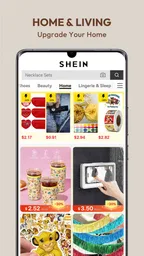
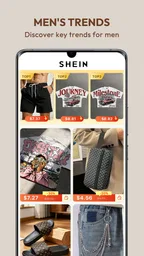

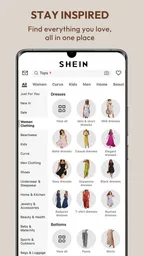

SHEIN-Shopping Online review
 Analysis by Appsdrops
I would consider SHEIN when I want to browse a wide range of fashion and everyday style items without visiting several separate shops. The app turns shopping into a visual, scrollable activity: useful when I have a general idea of what I want, but less satisfying if I need one exact item quickly and already know which retailer carries it. My main advice is to treat it as a place to compare possibilities, not as a guarantee that every appealing image will translate into the right fit or finish.
It is a free shopping app from Roadget Business PTE. LTD., with a Teen content rating. Its long history, broad reach, and strong store presence make it an obvious option to investigate, but popularity does not settle the practical questions: whether the selection suits your taste, whether you can judge an item well from its listing, and whether browsing helps you make a confident choice. Those are the criteria I would use before making it part of my routine.
Choosing the app for the way you shop
The central decision is whether you prefer exploring a large fashion catalog or buying from a focused retailer with a narrower range. SHEIN is built for the first approach. I find that kind of breadth helpful when I am still shaping an outfit or looking for a particular style direction. It is less compelling when I need a dependable replacement for a familiar garment and want as little comparison work as possible.
Before opening any shopping app, I try to define the job: a basic item, a specific occasion, or a bit of browsing for inspiration. That small step matters here because an expansive visual catalog can make it easy to keep scrolling past the original plan. If I am shopping for a particular kind of top, for instance, I can stay focused on cut, fabric description, and fit information rather than saving every attractive option and deciding later.
Another useful criterion is how much uncertainty I am comfortable resolving myself. Online fashion always asks shoppers to interpret photos, descriptions, and sizing guidance without handling the garment first. With a visually led catalog, that judgment becomes part of the shopping task. I would not assume that similar-looking pieces will feel or fit alike; I would evaluate each listing on its own details and read customer feedback when it is available.
The app’s scale is a reason many people discover it: it has more than a billion installs, and its average rating is 4.8 from around 13 million ratings. That context suggests a widely used shopping experience, not a personal guarantee about an individual purchase. I give more weight to the details on the item I am considering than to the overall popularity of the app.
Where SHEIN is most useful
The strongest case for SHEIN is discovery. If I have a loose idea such as “something comfortable for a casual dinner” rather than a precise product name, browsing can help me compare different looks in one place. That is a different kind of value from a specialist shop: the app is useful not only for locating an item but also for seeing options I had not thought to search for.
A practical workflow is to browse with a limit. I might first gather a few candidates, then compare their descriptions, photographs, and sizing information before adding anything to a basket. I avoid treating a saved item as a decision. Coming back to the shortlist after a break can reveal that one option fits the actual need while several others were only appealing in the moment. This helps keep an exploratory shopping session from turning into an unfocused one.
It can also suit someone planning several looks rather than replacing one specific piece. When I am thinking through a small wardrobe update, seeing different styles together can make it easier to notice what is missing and what would duplicate something I already own. The key is to compare items against the clothes and occasions I already have in mind, rather than buying because a product looks good in isolation.
For a busy day, I would use the app in two short passes instead of trying to finish everything in one long scroll. First, I would explore and save possibilities; later, I would check the shortlist carefully and decide what deserves an order. This separates inspiration from commitment, which is especially useful when I am shopping without a fixed deadline. It also gives me a moment to reconsider whether I really need each item.
The shopping format is best for people who enjoy making visual comparisons and are willing to inspect listings. SHEIN has an average rating of 4.8 and about 241,000 written reviews, alongside its very large audience. I regard those figures as signs that plenty of shoppers use and discuss it, but I would still look for feedback connected to the particular product I want. A general app rating cannot answer a garment-specific fit question.
Its age rating is Teen, so it is presented for that audience rather than as an adults-only shopping service. That does not change how I assess an order: a younger shopper still benefits from an adult’s help with spending limits, sizing choices, and deciding whether a purchase is worthwhile. The app is free to install, but shopping decisions still involve costs beyond downloading it.
Where another shopping option may be better
If I need a familiar item in a predictable size, a retailer whose fit and materials I already know may be the calmer choice. That is especially true for something I must wear for a specific event or need by a particular time. A broad catalog can provide more styles to consider, but more choice is not automatically an advantage when the real priority is reducing uncertainty.
For shoppers who want to feel fabric or check construction before buying, a physical shop has a clear practical edge. For those who prefer a small, carefully selected range, a specialist fashion retailer may also make decisions easier. I would not use SHEIN as a substitute for those approaches when tactile inspection, a known fit, or a highly focused selection matters more than variety.
There is also a trade-off between inspiration and efficiency. Browsing can be enjoyable if I have time to compare styles, but it can become a distraction when I only need one straightforward purchase. In that situation, searching a retailer I already trust—or shopping in person—may take less effort. I would skip the app for that task if I know that a large selection tends to make me second-guess rather than decide.
Another sensible reason to choose differently is a need for a highly specific product standard. If I need detailed confidence about fabric feel, construction, or how a garment performs in a particular setting, I would look for the kind of evidence that answers that exact question before ordering. A polished product image is not a substitute for practical detail, and I would not infer quality from styling alone.
Making the switch without losing your bearings
If you are moving from a familiar fashion retailer, the main adjustment is not learning a complicated system; it is changing how you evaluate a large set of options. I would begin with one category and one clear need rather than browsing everything at once. That makes it easier to judge whether the app’s selection actually helps you and prevents a first session from becoming a pile of unrelated possibilities.
Keep a simple comparison habit: check the item’s description, examine its available images, review size guidance, and read relevant customer feedback before deciding. If two choices look similar, compare the details that matter for your use—such as the cut or the way the item is described—rather than assuming the lower-effort choice will be the better one. This is a more reliable approach than letting the first attractive photo settle the decision.
I would also make a short list of what I already own before shopping for a wardrobe refresh. It is easy to mistake variety in a catalog for a genuine gap in a closet. Asking “what will I wear this with?” is a useful filter: if I cannot name an occasion or an existing outfit that the item complements, I leave it for later. That question turns browsing into a practical planning exercise.
The app is currently at version 15.5.8 and supports Android 6.0 or later. If you are deciding whether to install it, those details help establish compatibility, while the free download means you can explore the interface without paying to get started. I would still approach shopping with a budget and a specific purpose, because a free app can make browsing effortless without making every purchase necessary.
Changing apps does not require abandoning other ways of shopping. I would keep using a familiar retailer for essentials where fit matters to me, and use SHEIN when I want to explore styles or compare a wider set of fashion ideas. That mixed approach is more realistic than expecting one app to be the best answer for every wardrobe need.
Who I would recommend it to
SHEIN is a good fit for curious, value-conscious fashion browsers who like comparing looks and are prepared to check product details before buying. Its breadth is most useful when your goal is discovery, outfit planning, or exploring a style you have not settled on yet. It is less suited to shoppers who want a narrowly curated selection, need to inspect garments in person, or prefer to reorder trusted basics with minimal decision-making.
I would recommend trying it if you can shop deliberately: set a purpose, build a small shortlist, and make the final choice only after reviewing each item rather than relying on the overall impression of the catalog. I would recommend a different route when certainty about feel, fit, or timing is more important than seeing many options. That distinction matters more than the app’s popularity.
Overall, I see this shopping app as a useful discovery tool rather than a universal replacement for every retailer. Roadget Business PTE. LTD. has built a service with a very large audience—more than a billion installs—and the 4.8 average rating gives newcomers a reason to take a look. My recommendation is positive, with one condition: browse with a clear idea of what you need, and judge the individual product carefully. That is when the variety feels helpful instead of overwhelming.
What we like
- Frequent promotions can make fashion finds more affordable.
- The app offers a broad selection of styles and product categories.
- Customer reviews and photos help shoppers assess items before buying.
- Wish lists make it easy to save products for later.
- Order tracking keeps delivery updates in one place.
What could be better
- Product quality can vary between listings.
- Sizing may differ from standard measurements.
- Shipping times can be longer for some orders.
- Returns may involve extra steps or costs depending on the region.
- The large catalog can make finding specific items time-consuming.





