




Groupon – Deals & Coupons review
 Analysis by Appsdrops
When I open Groupon – Deals & Coupons, I’m usually trying to solve a specific problem: find a less expensive way to do something I already want to do, or spot a local activity worth trying. That makes it more useful as a shopping companion than as a place to browse aimlessly. The app is free, and its focus on offers for everyday purchases, services, and outings gives me a reason to check it before I commit to a plan. Still, the deal is only the start of the decision. I also need to understand what I’m buying, whether it fits my schedule, and how I’ll use it afterward.
Start with a need, not just a discount
Groupon is a shopping app from Groupon, Inc., built around deals and coupons rather than the broad product catalogs I’d expect from a general marketplace. That distinction matters. I wouldn’t treat it as a replacement for comparing every retailer’s price on a routine purchase; I’d use it when I’m open to a participating offer and can judge whether the saving is worthwhile for me.
The app’s store summary says users can save up to 70% on things they need every day, but I treat that as a ceiling, not a promise about every offer. A large-looking discount doesn’t automatically make a purchase good value. I first ask whether I would have bought the item or booked the experience anyway, then compare the offer’s terms with what I actually need. If I’m buying only because the deal is tempting, the “saving” can turn into an unnecessary expense.
This approach is especially handy when I have a flexible plan: choosing a restaurant outing, looking for a local activity, or considering a service that I can schedule later. It’s less convincing when I need a particular product immediately or want the widest possible choice. In those cases, a retailer’s own app or a conventional price-comparison search may make it easier to check availability and compare like-for-like options.
Make the search specific
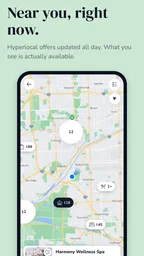
My most useful habit is to enter the app with a category or occasion in mind. “Something to do this weekend” is a workable starting point; “show me any discount” is not. A focused search makes it easier to compare offers on their actual value instead of getting pulled along by whatever looks most dramatic. I also think about location before choosing a local deal: an attractive offer can lose its appeal if getting there takes more time or effort than the outing is worth.
For a realistic example, imagine I’m planning a low-key Saturday with a friend. I can look for an activity or meal that fits the plan, then compare the offer against the ordinary version of that outing. Before buying, I’d check who can use it, when it can be redeemed, and whether the available timing works for both of us. That small pause is more useful than rushing to claim the biggest discount on screen.
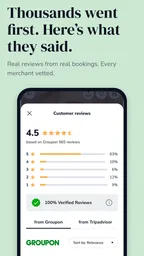
Groupon has been available since July 15, 2010, and its scale is reflected in more than 100 million installs. It holds an average rating of 4.5 from around 1.7 million ratings, alongside about 334,000 written reviews. Those figures suggest a well-established service, but they don’t tell me whether an individual deal suits my plans. I still make that call by reading the offer carefully rather than treating popularity as a guarantee.
Read the offer before deciding
The important work often happens after I find something appealing. I inspect the deal details and look for practical conditions that could change its value: the eligible dates, any booking steps, what is included, and whether the offer applies to the version of the service I want. A voucher is only helpful if I can redeem it without rearranging my life around restrictions I hadn’t noticed.
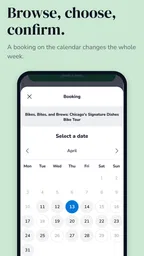
One non-obvious trade-off is that a deal can shift effort from shopping to coordination. A regular purchase may be straightforward: choose the item, pay, and wait for delivery or collect it. An experience or service deal can involve a separate booking with the business. I account for that handoff before buying. If the activity depends on a particular day, I’d rather confirm that the schedule is workable than assume a voucher guarantees my preferred slot.
I also compare the total practical cost, not just the displayed saving. Travel, timing, add-ons, or choosing a more expensive option can affect whether the offer is still worthwhile. I don’t assume those costs apply to every deal; I simply check what matters for the one I’m considering. The useful question is not “How big is the discount?” but “Would I choose this offer on these terms?”
From purchase to the business
Buying through Groupon is not always the end of the process. Depending on the offer, the next step may involve presenting or redeeming a voucher or arranging a visit with the participating business. That means there are two sides to the experience: the app helps me find and purchase the deal, while the business delivers the product or service. Keeping those roles clear helps set reasonable expectations.
For a service appointment, I’d make the booking step part of the plan rather than leaving it until the last minute. I’d check the offer’s instructions, contact or book with the business through the route it specifies, and keep the voucher information accessible when I go. For a shared outing, I’d settle the date with the other person before purchasing if the offer has timing limits. These habits reduce the chance of owning a deal that is technically valid but awkward to use.
This is where Groupon differs from buying directly from a business. Direct booking can be simpler when I have a fixed date, want to ask questions before paying, or need a particular service configuration. Groupon is more appealing when I’m flexible and the terms are clear enough that the savings justify the extra step. Neither route is automatically better; the right choice depends on how much certainty I need before spending.
When the deal becomes a real saving
The app earns its place for me when the offer changes the cost of something I already planned to do without making the experience difficult to arrange. In the Saturday example, I’d count the purchase as a win only if the activity suits both of us, the schedule is practical, and the redemption process goes smoothly. A discount that stays unused is no saving at all.
I’d also use the app differently for repeat needs and one-off treats. For a routine purchase, I’d compare the offer with my usual option and avoid buying extra simply to make the deal feel worthwhile. For a local experience I might not otherwise have considered, the deal can be a nudge to try it, as long as I’m comfortable with the conditions. The first case is about lowering a planned expense; the second is about deciding whether a new experience is worth its final cost.
Groupon’s audience is broad: it has a Mature 17+ content rating, so it isn’t positioned as a children’s shopping app. The current version is 26.17.0, and it supports devices running version 8.0 or later of its minimum operating system. For someone choosing whether to install it, the practical point is simple: it is free to download, but its value depends on finding offers that match your location, interests, and schedule.
Where the flow can break
The main friction is the gap between seeing a deal and using it. Terms can narrow the window or shape how an offer must be redeemed, and coordinating with a separate business takes more effort than completing a straightforward retail order. I wouldn’t buy first and assume the details will sort themselves out later, particularly for a date-specific outing or a service I need at a particular time.
There is also a temptation to browse for bargains without a clear need. That can make the app feel busy while quietly encouraging purchases that weren’t part of the plan. I avoid this by setting a simple limit: I look for a deal for a real purchase or outing, compare it with the ordinary alternative, and stop if the terms or logistics don’t fit. That approach makes the app more useful and keeps the discount from becoming the reason to spend.
If I need an exact product, fast fulfilment, or a guaranteed appointment, I may be better off buying directly from a retailer or service provider. If I want to compare a wide range of everyday goods, a general shopping marketplace is often a more natural starting point. Groupon’s strength is narrower: it can surface discounted offers that make sense when I have some flexibility and am willing to follow the redemption process.
My take after weighing the whole process
I recommend Groupon – Deals & Coupons to people who enjoy finding local offers, can plan around deal conditions, and are willing to check the details before paying. Its free access and long-running presence make it easy to try, but I wouldn’t install it expecting every purchase to be cheaper or every offer to be effortless. The app is most convincing when it supports a decision I was already close to making.
My practical advice is to search with a specific need, read the redemption instructions, and think through the handoff to the business before buying. If the schedule, location, and final cost all work, the deal can be a satisfying way to spend less. If any of those pieces are uncertain, I’d compare a direct purchase instead. Used selectively, Groupon is a useful shopping tool; used as an endless stream of tempting discounts, it can create more errands and spending than savings.
What we like
- Finds local offers for dining and activities.
- Offers discounts on travel and wellness services.
- Lets users save deals for later.
- Includes gift options for many purchases.
- Shows nearby deals based on your location.
What could be better
- Some deals have strict redemption rules.
- Popular offers may sell out quickly.
- Refund eligibility can vary by purchase.
- Merchant availability may differ by location.
- Savings may depend on meeting minimum spend requirements.





