


OfferUp Buy & Sell Marketplace review
 Analysis by Appsdrops
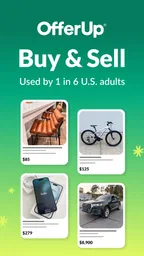
When I want to find a secondhand item nearby, I care less about a polished storefront than whether I can quickly spot something useful and decide if it is worth contacting the seller. OfferUp is built around that local-shopping habit: it is a marketplace app for browsing and selling items, with an emphasis on finding things close to home. In my view, its value is clearest when you have a specific item in mind, some flexibility about condition or brand, and the patience to compare listings rather than expect a conventional retail checkout experience.
What the free starting point gives you
OfferUp is a free shopping app from OfferUp Inc. That makes it easy to try as a place to browse before deciding whether the local secondhand market is useful in your area. The app has a 4.4 average from around 1.3 million ratings, and it has been installed over 50 million times. Those figures suggest a widely used marketplace, though they cannot tell you how many suitable listings are available in your neighborhood today.
The app first appeared on September 25, 2013, and its current version is 2026.46.0. It is rated Everyone and requires iOS 11 or later. In-app purchases are listed from $0.49 to $749.99 per item, so free access does not mean every optional purchase is free. I would treat the app’s basic browsing and marketplace role separately from any purchase you may encounter inside it: check what an optional item does and whether you actually need it before paying.
That distinction matters because the central value here is access to local listings, not a guaranteed bargain or a promise that every transaction will cost nothing beyond the item itself. A free app can still take time to use well. You may need to compare several offers, ask questions, and arrange a practical way to receive an item. I see the no-cost starting point as a low-commitment way to explore, not as proof that every deal will be cheaper or easier than buying new.
How the marketplace earns its place
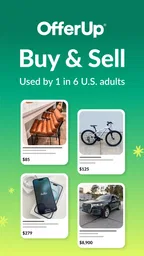
OfferUp makes most sense when the item can be evaluated from its listing and when buying locally is a real advantage. Used furniture, household goods, and other items that are inconvenient to ship are natural examples of the kind of search where nearby sellers can matter. You can look for something specific, compare what is available, and decide whether an imperfect but affordable option suits you better than a new one.
The practical benefit is not simply “cheap stuff.” It is the chance to discover an item that might not be worth buying new, or to find one without waiting for a delivery. If I were furnishing a room on a tight budget, I would use OfferUp to check what is nearby before settling on a new purchase. I would still measure the space, compare condition carefully, and include the time and travel involved in my idea of the total cost.
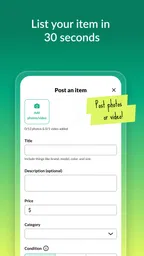
There is also a useful seller-side case. If I had something in good condition that I no longer used, a local marketplace could help me find a nearby buyer instead of leaving the item unused. That can be appealing for bulky goods, where arranging a local handoff may be more practical than packaging and shipping. The trade-off is that selling requires effort: a clear description, useful photos, replies to interested people, and coordination all affect whether the listing is worthwhile.
A more deliberate way to search
One habit I recommend is searching with a short list of acceptable alternatives rather than a single exact model. On a secondhand marketplace, availability and condition vary from listing to listing. If you need a particular size or function, decide which details are essential and which are negotiable before browsing. That makes it easier to recognize a genuinely suitable offer and less likely that a low asking price will distract you from a mismatch.
For anything where condition changes the value substantially, treat the listing as a starting point for questions rather than a complete inspection. Ask for the detail that would change your decision: a closer view of wear, confirmation of dimensions, or whether a key component is included. This is especially useful for furniture and household equipment, where “looks fine” may not answer whether the item will fit your space or serve its intended purpose.
A second practical tip is to plan the handoff before you commit. For a large item, consider whether you have a suitable vehicle, help to move it, and a realistic time to collect it. A nearby listing can still be inconvenient if the logistics are difficult. I would compare the asking price with the cost and effort of collection, then decide whether the local option remains better than a new item or another secondhand source.
Where the trade-offs show up
OfferUp is not the same experience as shopping from a retailer with standardized product pages and predictable inventory. Individual sellers describe their own items, so the amount of useful information can differ. One listing may answer the questions you have; another may leave you needing to ask. That variability is part of buying secondhand, and it means the app works best for someone willing to judge each offer rather than assume every listing has been presented in the same way.
Local availability is another limitation. A broad user base does not guarantee that the item you want is currently listed near you, or that the price and condition are right. If your search is urgent, highly specific, or dependent on a particular model, a conventional retailer may be the better first stop. Retail shopping is also preferable when you want a new item with a standardized specification and do not want to spend time checking an individual seller’s description.
There is a human element too. You may need to message a seller, wait for a response, and coordinate a meeting or collection. That can be perfectly manageable for a useful bargain, but it is less convenient than selecting a new product and following a familiar delivery process. I would not choose OfferUp when my priority was certainty, speed, or minimal coordination; I would choose it when the possibility of a local find justified a little extra effort.
Price deserves the same care. A low asking price is not automatically good value if the item needs repair, does not fit, or takes substantial effort to collect. Compare the actual condition and usefulness, not just the number on the listing. If a seller’s description does not resolve an important concern, pause and ask rather than filling in the gaps with optimistic assumptions. That small discipline is more valuable than browsing quickly through a long list of possibilities.
Who is most likely to get value
I would recommend OfferUp to people who are comfortable buying used, enjoy comparing options, and can arrange a local pickup when needed. It is particularly promising if you are furnishing a home, replacing a household item, or looking for something you do not need to buy brand new. It can also suit people who want to sell belongings locally and are prepared to handle the listing and conversations themselves.
For example, imagine you are moving into a new place and need a small table. Instead of buying the first new one you see, you could browse local listings, compare size and condition, and ask a seller for a measurement before making plans. If a suitable table is close by and collection is manageable, the app may help you make a more economical choice. If the only available options are too far away, poorly described, or not the right fit, you have learned that quickly and can move on to another way of shopping.
OfferUp is less appealing if you need a particular item immediately, expect every listing to include consistent details, or dislike negotiating and arranging collection. It is also not my first choice for purchases where I need the assurance of buying a new, standardized product from a retailer. In those situations, paying more for a predictable product and a simpler buying process may be better value for your time and peace of mind.
Compared with classified-style alternatives, the main reason to try OfferUp is its mobile marketplace focus and its concentration on local buying and selling. Compared with ordinary online retail, its advantage is the possibility of finding an individual nearby listing; its drawback is that listings and seller communication are not as uniform as a retailer’s catalog. I would use it alongside, rather than automatically instead of, other shopping options. A quick comparison helps reveal whether the local secondhand choice is genuinely worthwhile.
My buy-or-skip verdict
I would try OfferUp if I had a flexible shopping list, wanted to explore secondhand options, or had an item to sell locally. The free starting point makes that experiment straightforward, while the app’s scale gives a shopper a reason to look for nearby offers. Its real value, though, depends on what is listed around you and how much time you are willing to spend checking details and coordinating a transaction.
I would skip it for a must-have purchase that cannot wait, a product whose exact specification matters, or a situation where arranging a local handoff would be more trouble than the potential saving. Before agreeing to buy, I would verify the item’s condition and dimensions, clarify anything important in the listing, and account for collection. That approach keeps the appeal of a bargain grounded in the item you will actually receive.
Overall, OfferUp is worth having as a flexible local-shopping option, not as a guarantee of effortless savings. I like it most when I can be patient, compare a few possibilities, and judge the complete deal rather than the asking price alone. If that sounds like your way of shopping, it is a sensible app to explore; if convenience and certainty matter more than finding a local secondhand deal, a traditional retailer is likely the better fit.
What we like
- Local listings make nearby pickup easy.
- In-app messaging helps buyers contact sellers directly.
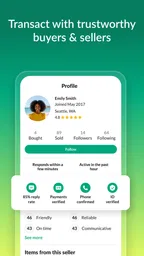
- Seller profiles and ratings offer useful trust signals.
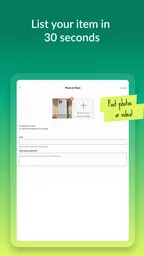
- Posting an item is quick and straightforward.
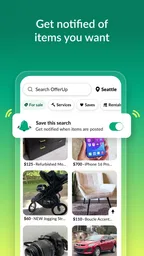
- Search filters help narrow down marketplace listings.
What could be better
- Listing quality and accuracy depend on each seller.
- Popular items may attract competing buyers quickly.
- Some transactions still require arranging pickup in person.
- Negotiating through messages can take extra time.
- Availability and features may vary by location.





