





Linky AI: Chat, Play, Connect review
 Analysis by Appsdrops
When I try a character-chat app, I care less about a long cast list than about whether I can settle into a conversation without constantly steering it back on track. Linky AI is aimed at people who want to chat and roleplay with AI characters, rather than manage a conventional social feed. That distinction matters: it can be an entertaining place to improvise a scene or pass a quiet moment, but it is not a substitute for keeping up with friends.
Choose it for character conversation, not ordinary social networking
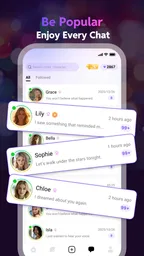
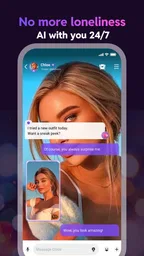
Linky AI is a free social app from Skywork AI Pte. Ltd., built around creating a personal AI chatbot and connecting through character conversations. Its central appeal is the chance to shape an interaction around a persona or scenario. If your idea of social entertainment is making up a story with a character, trying a roleplay premise, or simply having a low-pressure chat, the format makes sense.
I would decide whether to install it by asking one practical question: do I want a conversational partner I can direct, or do I want a place to talk with real people? Linky AI serves the first need. The distinction keeps expectations in check. An AI character can respond on demand and follow a fictional setup, but the experience is still interaction with software, not reciprocal friendship or human advice.
The app has an average rating of 3.9 from around 139,000 ratings, with roughly 16,000 written reviews and more than 10 million installs. Those figures suggest a sizable audience, though they do not guarantee that every character or conversation will suit a particular user. I’d treat the rating as a broad signal of mixed-to-positive reception, not as a promise of consistent response quality.
What the character format is good at
The strongest use case is open-ended play. Instead of looking for a fixed game objective, you bring the premise: a genre, a mood, a role, or a situation you want to explore. That makes the app flexible for short bursts of entertainment. I can imagine using it to sketch a fantasy scene during a commute, test dialogue for a character I’m writing, or unwind with a light fictional exchange after work.
One useful habit is to begin with a compact setup rather than a vague opener. A character’s role, the scene, and the tone give the conversation something to work with. For instance, a request that establishes a mysterious setting and asks the character to respond in a playful, restrained voice is more actionable than simply saying “tell me a story.” If the exchange drifts, a brief reminder of the scene can be easier than restarting from scratch.
That is also a trade-off: roleplay rewards a little direction. People who enjoy building a premise may find that satisfying, while anyone expecting the app to infer every preference may need to adjust their prompts or accept occasional mismatches. I would treat the interaction as collaborative improvisation, not as a perfectly controlled script.
Where Linky AI has an edge
Compared with a standard messaging app, Linky AI removes the need to coordinate with another person. You can open it when you have a spare moment and start a fictional conversation without waiting for a reply. Compared with a conventional social network, it also places the interaction itself at the center rather than asking you to browse posts or maintain a public profile. That makes it a more focused choice for character-based entertainment.
A less obvious advantage is how easily a chat can serve as a low-stakes creative prompt. If I’m stuck on a scene, I can use a character exchange to discover an unexpected response, then take the idea elsewhere. The app is not a writing editor, and I would not rely on its output as finished prose, but conversational back-and-forth can help break a blank-page pause. The same approach works for casual language practice or rehearsing how a fictional character might react—provided I treat the answers as practice material rather than authoritative guidance.
Another practical tip is to keep separate purposes mentally distinct. A chat used for playful roleplay is best judged by whether it stays engaging; one used for brainstorming is judged by whether it sparks useful ideas. Switching between those goals without explaining the change can make an exchange feel incoherent. A clear reset or a fresh conversation is often a cleaner way to move from one scenario to another.
When another kind of app may suit you better
If you want genuine conversation with friends, a regular messaging or community app is the better fit. If you want a structured story with authored scenes and a clear ending, an interactive fiction game may offer more deliberate pacing. And if your main goal is general-purpose assistance—research, planning, or dependable factual answers—I would choose a tool designed for those tasks instead of treating a character-chat app as an all-purpose assistant.
That comparison is not a knock on Linky AI; it clarifies what it can reasonably provide. Character roleplay can be enjoyable precisely because it is imaginative, but that same freedom means responses may not be consistent enough for serious decisions. I would avoid sharing sensitive personal details simply to make a fictional interaction feel more intimate, and I would not use the app as a replacement for professional support or trusted people.
The Mature 17+ age rating is an important part of the decision. I would not recommend it to younger users, and adults should still think about whether character-based chat is comfortable for them. If the idea of emotionally engaging with an AI persona feels unwelcome, or if you prefer social spaces built around real people, skipping it is a sensible choice rather than a missed opportunity.
Try it without letting the cost surprise you
The app is free to download, but it includes in-app purchases ranging from $0.49 to $269.99 per item. That is a wide span, so I would explore the free experience first and avoid buying anything in the middle of an absorbing roleplay session. Check the purchase details in the app store before confirming, and decide in advance what level of spending, if any, feels reasonable to you.
Switching into Linky AI is easy if you already understand that the appeal is conversational play. Switching away is just as simple in practical terms: if you find yourself repeatedly prompting for the same correction, or you wanted a human response all along, the app may not be solving your actual problem. Before paying for anything, I’d try several different premises and see whether the character interactions stay enjoyable across more than one mood or scenario.
For Android users, the current version is 3.42.1 and the minimum operating system is Android 7.0. The app first appeared on July 3, 2023. These details help establish whether an Android device can run it, while the more important question is still whether its style of interaction fits the way you want to spend your time.
My recommendation
I recommend Linky AI to adults who enjoy improvising with fictional characters and want an easy way to turn a spare few minutes into a small roleplay or brainstorming session. Its best moments come when I give a conversation a clear premise, stay flexible about where it goes, and treat the result as entertainment or inspiration rather than dependable advice.
I’d skip it if you are looking for a conventional social network, a human support community, a carefully authored game, or a general-purpose assistant. The broad audience and 3.9 average rating make it worth considering, but the right decision depends on your expectations more than popularity. Start with a simple scenario, see whether the replies feel engaging to you, and keep purchases optional. For the right person, it is a playful character-chat space; for everyone else, a more focused alternative will likely be a better use of time.
What we like
- Offers a variety of AI characters to suit different conversation styles.
- Lets users create personalized characters with custom traits.
- Supports roleplay for interactive and imaginative chats.
- Makes it easy to explore characters created by other users.
- Provides a convenient way to start a chat on a mobile device.
What could be better
- Some conversations may feel repetitive over time.
- Character responses can occasionally seem inconsistent.
- The quality of chats depends on the character's setup.
- Access to some features may require a subscription.
- AI chats may not always provide accurate information.





