
Letterboxd review
 Analysis by Appsdrops
When I finish a film, I often want to do more than give it a thumbs-up and move on. I want to remember what I thought, see how my taste is changing, and find people who care about the same kinds of films. Letterboxd is built around that habit: it turns watching films into a personal record that can also be shared and discussed. For me, that diary-like focus is what makes it more interesting than a general-purpose social feed.
A film diary that becomes a social space
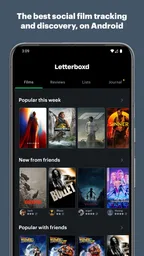
Letterboxd is a social app for film fans, developed by Letterboxd Limited. Its central idea is straightforward: log films you have watched, rate them, and write reviews or shorter notes if you want. You can also keep a watchlist for films you hope to see. These actions give the app a useful rhythm: record a viewing, reflect on it, and use other people’s activity to decide what might be worth watching next.
The important distinction is that the diary remains yours even when you use the social features. A rating can be a quick personal marker, while a written review can capture a reaction you would otherwise forget. Following other users adds a stream of opinions and discoveries, but the value does not depend on posting constantly. I would use it just as happily as a private-minded viewing log as I would as a place to exchange recommendations.
The app has a 3.4 average from around 35,000 ratings, and it has passed 10 million installs. Those figures suggest a substantial audience, though they do not tell you whether its particular style will suit you. Its age rating is Teen, and the app is free to install, with optional in-app purchases ranging from $0.99 to $48.99 per item. I would treat the paid options as something to consider only after deciding that the core diary and community fit the way you watch films.
Why logging matters more than a quick rating
A simple rating is useful when I want to remember whether a film worked for me, but it can flatten the reasons behind that reaction. A short written note preserves context: perhaps I liked the performances but found the pacing slow, or the film landed differently on a second viewing. Later, that detail can be more helpful than a score alone, especially when I am trying to choose something for a particular mood.
The same record can help reveal patterns without turning film watching into homework. If I notice that I keep saving quiet dramas but rarely choose them on a busy evening, I can make a more realistic plan for what to watch. Or I might find that a director or genre I once overlooked has become a regular part of my viewing. The diary is most useful when entries are honest and low-pressure; there is no need to write a polished review after every film.
A practical routine for the app
I would keep the workflow deliberately light. After a film, log it while the details are fresh, choose a rating if that feels useful, and add one sentence about the reaction that might matter later. If I do not have anything to say, the viewing still belongs in the diary. That small distinction helps avoid the trap of postponing an entry until I feel ready to produce a proper review.
For discovery, I would use the watchlist as a holding place rather than a promise to watch everything in it. When a friend mentions a film or I come across an intriguing title, saving it prevents the recommendation from disappearing into a chat or a passing thought. Before choosing something, I can revisit the list and check what has caught my attention over time. It is a more personal starting point than scrolling endlessly through a broad entertainment feed.
Another helpful habit is to follow people whose taste is meaningfully different from yours, not only those who agree with you. Someone with a different perspective can point you toward films you would not have searched for yourself. I would still treat their ratings as clues rather than instructions: a low score from someone I follow might be exactly the reason I want to watch a film, while a glowing review may not match my mood.
Where it fits in an ordinary week
Imagine a friend recommends a film on Monday, but I do not have time to watch it until the weekend. I add it to my watchlist instead of hoping I remember the title. After watching, I record a brief reaction and perhaps check what people I follow thought of it. If the film sparks a conversation, the entry gives me a place to return to rather than relying on a vague memory of whether I liked it.
That routine is especially useful for people who watch across different services or in different settings. The app’s purpose is not to replace the act of watching; it is to keep the record and conversation around films together. It can also help when a group is choosing a movie. A few saved possibilities and the reactions of people whose taste you know can make the decision less random than asking everyone to name something on the spot.
There is a quieter use case too: keeping track of films watched during a festival, a personal challenge, or a period when you are exploring a particular filmmaker. The log can make that stretch feel coherent and give you a way to look back on what stood out. I would avoid treating a viewing target as a competition, though. The app is more rewarding when it supports curiosity than when it makes you feel behind.
Discovery without turning taste into a score
Letterboxd sits between a film database and a social network. A database is often better when you need a reference-style answer, while a broad social platform can be better for casual conversation that is not centered on films. Letterboxd’s particular strength is connecting a personal viewing history with other people’s film activity. That makes recommendations feel more grounded in individual taste than a generic stream of popular entertainment.
At the same time, ratings can create a misleading sense of certainty. A number cannot explain whether a film is right for a particular person, and a popular opinion is not a substitute for your own reaction. I find the app more useful when I read a review for its reasoning rather than scanning only the score. A thoughtful disagreement can teach me more about what I want from a film than a rating that simply confirms my expectations.
The social side can also make discovery feel crowded if you follow too many accounts or feel obliged to react to everything. I would start with a small circle of people whose writing I genuinely enjoy, then expand only when their recommendations lead somewhere worthwhile. That keeps the feed from becoming another stream to clear and helps the diary remain the main reason to return.
Tradeoffs to know before settling in
The app is not ideal if you want a hands-off recommendation engine that chooses a film for you with no effort. Its strongest use depends on your own participation: logging what you watch, keeping a useful watchlist, and deciding whose opinions you trust. Someone who watches films only occasionally may find that a simple note-taking tool or a general streaming app’s saved list is enough.
It may also be a poor fit if you do not enjoy ratings or public discussion. Even when you use a social product quietly, seeing other people’s judgments can influence how you approach a film. I would resist reading reviews before watching if I want to arrive with a fresh response. Logging first and browsing other reactions afterward is a practical way to protect that experience.
There is a time cost, too. A diary becomes valuable through consistent entries, but consistency can turn into a chore if every viewing seems to require a review. I recommend setting your own minimum: record the film and a quick reaction when you have one, and leave longer writing for the few films that genuinely stay with you. That approach keeps the habit sustainable and gives your more considered entries room to stand out.
Who gets the most from it
I would recommend Letterboxd to people who regularly watch films and enjoy remembering what they thought, comparing perspectives, or collecting recommendations from other film fans. It is particularly appealing if your taste is varied and you like revisiting your own history. The app’s current version is 3.6.7, and it supports devices running Android 9 or later, which is worth checking before installing on an older phone.
It is less compelling for someone who only wants to know where a film is streaming, needs a strictly private catalog with no social atmosphere, or prefers not to rate and discuss what they watch. In those cases, a basic personal list or a service focused on availability may be more direct. Letterboxd is not trying to be every kind of film utility; its appeal comes from making personal record-keeping part of a shared film culture.
My advice is to try it with a modest routine rather than expecting an instant library of perfect notes. Log a few films, save recommendations as they come up, and follow only a handful of people whose taste you want to understand. If that makes choosing and remembering films easier, the habit will likely grow naturally. For film lovers who want their viewing history to become a useful conversation with themselves and others, Letterboxd is worth keeping close.
What we like
- Watchlist and diary features make it easy to track films.
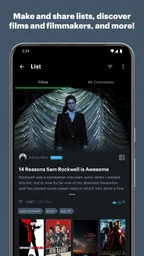
- Film lists help users organize favorites by theme.
- Reviews and ratings offer perspectives from other viewers.
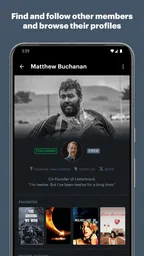
- Profile pages showcase viewing history and personal taste.
- Social features make it easy to follow film fans.
What could be better
- Some features require a paid subscription.
- The catalog may not show where a film is streaming.
- Popular titles can dominate reviews and recommendations.
- Spoiler controls may not catch every revealing review.
- Users need an account to save ratings and diary entries.





