







Etsy: Shop Home, Style & More review
 Analysis by Appsdrops
I find Etsy most useful when I’m shopping for something with a bit of personality rather than trying to replace an ordinary weekly shop. It’s a shopping app built around independent sellers and distinctive items, so browsing can feel more like exploring a collection of small storefronts than scrolling through the same mass-produced options. That variety is a real strength, but it also means I pay closer attention to who is selling an item and what its listing actually promises.
That distinction matters in a household. A shared phone or tablet can make it easy for people to browse ideas together, but it can also blur whose account, saved items, and purchase decisions are involved. I’d use Etsy as a place to compare options and plan a gift, while keeping account access and checkout decisions with the person responsible for the purchase. The app is free to download, and Etsy, Inc. is its developer.
Browsing together without muddling accounts
For a realistic example, imagine a household looking for a housewarming gift. One person wants something useful, another prefers handmade decor, and the recipient has a particular color scheme. Etsy is well suited to that kind of open-ended search: rather than choosing from a narrow set of standard products, you can look across different styles and makers until something feels right.
I’d start by agreeing on the practical requirements before opening the app: what the gift needs to do, the preferred look, and when it must arrive. That small conversation saves time because the range of listings can pull a group in several directions. One person may be drawn to an unusual design while another is focused on delivery timing or whether the item can be personalized.
On a shared device, I would avoid treating one person’s signed-in account as a household account. Saved items and shopping activity can reflect individual tastes, and a purchase can involve personal details and payment choices. It’s safer to let everyone browse together but have the purchaser handle the final decision and checkout on their own account. I would not assume that the app provides household profiles or family controls.
A useful workaround for group browsing is to keep a short written shortlist outside the app: note the item, seller, key specifications, and any questions to resolve. That creates a neutral comparison without relying on one person’s saved list as the group’s shared record. It also makes it easier to revisit choices later without mixing one person’s private browsing with another’s.
Keep the search focused, then inspect the listing
Etsy’s broad selection is most enjoyable when I use it to discover possibilities, but discovery is not the same as verification. Before settling on an item, I read the listing carefully and check the details that matter for that purchase: what is included, the materials or dimensions described, whether customization is offered, and the seller’s stated dispatch or delivery information. Those details can differ from one shop to another, so I don’t assume that two similar-looking listings work the same way.
For shared shopping, this is where coordination becomes practical rather than just conversational. If one person finds a promising item, they can point out the exact listing and explain why it fits. The rest of the household can then assess the same item rather than searching broadly and accidentally comparing different versions, sizes, or customization choices.
I also recommend separating “inspiration” from “ready to buy.” An attractive listing may be a useful reference even if it does not meet the budget, timing, or practical needs. Keeping those questions distinct helps prevent a quick group browse from turning into an impulsive purchase. Etsy is better at showing a range of individual options than making every option directly comparable.
What makes Etsy different from a conventional shopping app
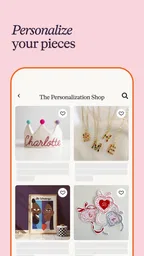
Compared with a general retailer’s app, Etsy is a better fit when originality, craft, personalization, or a distinctive style is part of the point. It can be especially helpful for gifts where a standard shelf item feels too predictable, or for home accents that need to suit a particular taste. The trade-off is that the shopping experience is less uniform: seller practices, item descriptions, and the kind of detail available can vary.
If I know exactly which everyday product I need and mainly care about a standardized specification or a quick, straightforward comparison, a conventional retailer may be easier. Etsy can still have suitable listings, but browsing through separate shops takes more judgment. I wouldn’t choose it as my first stop for a routine purchase where the main goal is simply to find the same familiar item at the lowest effort.
It is also worth treating photos as a starting point, not the whole story. I look for written details that confirm the item suits the intended use, especially if it will be handled often, displayed in a particular space, or given to someone with specific preferences. If a detail affects whether the item will work, I would resolve that before buying rather than relying on assumptions based on an image.
Account boundaries and household coordination
When a household shares a device, the simplest boundary is to decide who is browsing and who is buying. If several people are involved, the purchaser should review the final selection, confirm the listing details, and make the checkout decisions. That avoids treating a group’s casual browsing as consent to use someone else’s account or payment method.
I would also be careful with surprise gifts on a shared screen. Browsing or saved choices may be visible to someone else who uses the same device or account. If keeping a present secret matters, use a separate personal device and account rather than assuming the app has a household privacy mode. That’s a general shared-device precaution, not a claim about a specific Etsy feature.
For collaborative decisions, a simple handoff works well: one person searches, another checks the item details, and the person paying makes the final call. This is more reliable than passing a logged-in phone around without discussing whose account is active. It also gives the purchaser a chance to check the seller’s information directly instead of relying on a secondhand summary.
One non-obvious trade-off is that the person who discovers an item may not be the best person to assess it. The person with the strongest aesthetic sense might find the right style, while someone else knows the room measurements or practical requirements. I’d use Etsy’s variety to generate candidates, then let the person with the relevant knowledge check fit and details before anyone commits.
Age, trust, and a sensible buying routine
Etsy is rated Teen, so I’d still consider the maturity and supervision needs of the person using it, particularly on a shared device. A content rating is not a substitute for household rules about accounts, spending, or personal information. For younger users, I’d keep browsing and purchasing clearly separate: an adult can help assess listings and handle any transaction that requires adult judgment.
Trust also depends on evaluating the specific shop and listing rather than assuming every item follows the same standards. I read the seller’s description, look for clear information, and make sure the item matches the intended purpose. If something important remains unclear, I would pause and seek clarification through the app’s available seller communication options rather than guessing. This matters more for custom or highly specific purchases than for a low-stakes decorative find.
The app has an average rating of 4.8 from around 2.2 million ratings, and it has been installed over 50 million times. Those figures suggest it has broad appeal, but they don’t tell me whether a particular seller or item is right for my household. I treat general popularity as context, not as a replacement for reading the listing and making a careful choice.
Its Teen age rating also makes Etsy more appropriate for supervised exploration than for leaving an inexperienced user to make purchases independently. I’d talk through why a listing looks trustworthy, how to check the details, and why a tempting image is not enough to establish that an item suits the need. That approach teaches useful shopping judgment without implying the app has built-in family approval tools.
Version, polish, and the limits of convenience
The current version is 8.3.0, and the app is available for devices running operating system version 10 or later. In practical terms, that gives prospective users a quick compatibility check before they download it. The app has been around since December 4, 2012, but what matters more to me is whether its marketplace format suits the way I want to shop today.
The main friction is not that Etsy lacks things to browse; it is that abundance can make choosing harder. Similar items may differ in customization, construction, or shop details, and the buyer needs to compare those differences rather than assume a uniform product experience. I find that rewarding when I’m searching for something distinctive, but tiring when I just want a fast, standardized purchase.
Another limitation is that a beautiful listing does not automatically answer every practical question. If timing, size, or a particular material is essential, I slow down and verify it in the listing or with the seller. That extra attention is part of shopping from a marketplace of individual shops, and it’s a sensible trade-off for access to a wider range of personal and less conventional choices.
Who I’d recommend it to
I’d recommend Etsy to people who enjoy finding gifts, decor, and other items that feel less generic, and to households that are willing to compare sellers and read product descriptions. It works particularly well when several people are brainstorming a present or choosing a home accent, provided the group keeps account access and payment responsibility clear.
I’d suggest a different shopping app for someone who wants a quick, predictable transaction, a uniform product range, or minimal comparison. I’d also advise extra care for anyone shopping against a firm deadline: check the seller’s stated timing instead of assuming that an appealing listing will arrive when needed. The marketplace can be inspiring, but it rewards patient, deliberate browsing more than hurried checkout.
Overall, I think Etsy is a worthwhile shopping app when the search itself is part of the fun and finding something individual matters more than convenience alone. For a shared household, its best role is as a discovery and comparison tool, with one clearly responsible purchaser handling the final review. Keep accounts personal, coordinate before buying, and verify the details that affect the item’s use. With those habits, Etsy’s variety becomes an advantage rather than a source of confusion.
What we like
- Favorites make it easy to save finds for later.
- Seller profiles help you explore a shop's other items.
- Gift options make it convenient to shop for special occasions.
- Order tracking keeps delivery updates easy to find.
- Search filters help narrow results to specific needs.
What could be better
- Item quality can vary between independent sellers.
- Shipping times may differ from one shop to another.
- Some listings have limited return or exchange options.
- Custom orders may require extra communication with sellers.
- Prices can be higher than mass-produced alternatives.





