




Depop - Buy & Sell Clothes review
 Analysis by Appsdrops
I’d choose Depop when I want clothes with a point of view rather than another round of scrolling through identical new-season basics. It is a shopping app built around buying and selling clothing, with a particularly strong secondhand and vintage feel. The experience makes most sense if you enjoy discovering individual sellers and distinctive pieces; it is less compelling if your priority is a predictable catalogue, standardized sizing, or the quickest possible purchase.
What matters when deciding whether Depop fits
The first question I’d ask is what kind of shopping I actually want to do. If I have a precise need—say, a plain black jumper in a particular size and fabric—an ordinary retailer or broad resale marketplace may be easier. If I’m open to finding an interesting jacket, unusual accessories, or a pre-owned item that feels personal, Depop is a better match. Its appeal comes from browsing many individual listings, not from treating every item as an interchangeable product.
That difference affects how I search. I get more out of the app when I use a few useful terms, then inspect photos and descriptions rather than expecting the search results alone to settle the decision. For secondhand clothing, the same label or nominal size can fit differently across brands, eras, and cuts. I’d check measurements, condition, and any visible wear before deciding that an item is right for me.
The most useful habit is to treat each listing as its own small buying decision. Look closely at the photographs, read the seller’s wording, and ask a question when an important detail is unclear. That extra attention is not busywork: it is how I compensate for the fact that a vintage shirt and a modern shirt marked with the same size may be very different in practice.
Depop is developed by Depop and is free to download. Its Teen content rating is relevant for families deciding whether it suits a younger shopper, though I’d still talk through sensible online buying habits with a teen: check the item carefully, be deliberate about spending, and use the app’s own purchasing process rather than making assumptions from a listing. The app has a 4.8 average from around 160,000 ratings, which is a strong sign of broad user approval, but a rating cannot tell me whether a particular seller or garment will meet my expectations.
Why its seller-led browsing is the main advantage
Where Depop stands out is the feeling that I’m exploring people’s wardrobes and shops, not just filtering a warehouse catalogue. That can be useful when I’m looking for a specific style but don’t know the exact item name. A browse through vintage and secondhand listings may surface a cut, colour, or combination I wouldn’t have thought to search for. It also makes the app a natural place to look for pieces that are less common in standard retail.
That open-ended discovery has a trade-off. A large collection of individual listings can mean uneven photography and descriptions, and availability depends on what sellers have posted. I can’t assume that a garment I saw yesterday will still be there later, or that another listing will be an exact substitute. When I find something I genuinely want, I should assess it promptly—but not let urgency replace checking the details.
A practical workflow is to decide my limits before browsing: the kind of item I want, the fit I’m willing to accept, and the condition I consider reasonable. Then I can save my attention for listings that meet those standards instead of being pulled along by every appealing photo. For a planned purchase, I’d search narrowly and compare several candidates; for inspiration, I’d browse more freely and keep a note of the styles that repeatedly catch my eye.
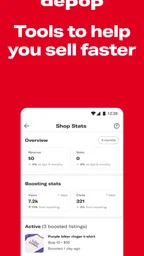
There’s also a useful seller perspective. If I have clothes in good condition that I no longer wear, the app gives me a place to present them to people already interested in secondhand fashion. But listing an item takes thought: clear photos, accurate condition details, and measurements can help a buyer judge it more confidently. I wouldn’t treat selling as an instant way to clear a wardrobe; I’d first decide whether I’m willing to prepare listings and respond to questions.
When another kind of shopping app may be better
For new clothing with consistent product pages, dependable stock information, and a standardized range of sizes, a conventional retailer is usually the simpler choice. That format helps when I need a replacement item quickly or want to compare several colours of the same garment. Depop’s individual listings are more distinctive, but they also ask me to do more checking and accept that a particular item may be one of a kind.
A broad resale marketplace may suit someone who wants to search across many kinds of used goods rather than focus their browsing on fashion. A specialist resale service may be preferable if the shopper values a narrower product range or a more standardized shopping process. I’m not choosing between one universally good platform and one bad one; I’m choosing between different ways of finding secondhand items. Depop makes the most sense when the social, style-led discovery of clothing is part of the fun.
It may also be the wrong fit if I dislike uncertainty in fit or condition. Even attentive photos cannot replace trying a garment on, and a seller’s description is only useful when it covers the details I care about. If I’m buying for a fixed event with no room for a size mismatch, I’d favor a source with a return and sizing experience that suits that particular need. I would not choose a listing just because it looks appealing in a thumbnail.
For a realistic everyday example, imagine I’m refreshing my wardrobe for cooler weather and want a distinctive knit rather than a basic new one. I’d search for the colour and style I have in mind, compare the garment’s measurements with a jumper I already own, and inspect the photos for signs of wear. If the listing leaves the fit or condition unclear, I’d ask before committing. If I need a guaranteed fit by a certain day, I’d stop browsing and use a more predictable option instead.
The small costs of changing how you shop
Switching from ordinary retail to a seller-led marketplace changes where the effort goes. Instead of relying mainly on a product’s standardized size chart and store description, I need to judge each listing individually. That can take longer, especially if I’m learning how to compare measurements or recognize condition details. The reward is access to pieces that may feel more individual; the cost is more responsibility before buying.
Switching from another resale app has a different cost: I may need to rebuild my browsing habits and learn which search terms help me find the styles I like. I’d start with a small, specific search rather than trying to overhaul my wardrobe in one session. That makes it easier to see whether the available listings and the app’s browsing style suit me, without turning a casual experiment into a pile of impulse purchases.
If I’m moving to Depop as a seller, I’d begin with a few items I can describe accurately. Photograph them in good light, show relevant details, and include measurements when they help explain the fit. I’d also make sure my description distinguishes an ordinary sign of wear from a flaw a buyer would reasonably want to know about. Clear presentation takes more preparation, but it can reduce avoidable back-and-forth and help the right buyer decide.
The app has been available since February 10, 2014, and its current version is 2.416. It supports devices running operating system version 10 or later. Those details matter mainly when checking whether an older phone can run it; for most readers, the more important question is whether they’re happy using a marketplace where the quality of the shopping experience depends substantially on evaluating individual listings.
My recommendation for buyers and sellers
Depop is worth trying if you enjoy secondhand fashion, vintage finds, and browsing for pieces with character. It is especially suitable for people who are comfortable comparing measurements, reading descriptions carefully, and making a considered choice from seller-specific listings. A reported 10 million or more installs suggests that it has reached a wide audience, but I’d still judge it by whether its style of discovery works for me—not by its popularity alone.
I’d skip it, or use it only occasionally, if I want a tightly standardized shopping experience, need a highly predictable fit, or find open-ended browsing tiring. A conventional clothing retailer is better for a straightforward replacement purchase; a broader resale service may be more convenient when I’m searching for items beyond clothing. Those alternatives do not make Depop less useful—they simply answer different shopping needs.
For me, the strongest reason to use it is the chance to find clothing that feels chosen rather than mass-selected. The strongest reason to pause is that every appealing listing still needs a careful check. If I approach it with a clear idea of what I want, inspect the details, and avoid buying on a photo alone, Depop can be a rewarding place to shop or sell. If I want certainty first and discovery second, I’d choose a more conventional route.
What we like
- Easy listing tools help sellers post pre-loved clothes quickly.
- In-app messaging makes it simple to ask sellers questions.
- Saved searches help shoppers keep track of items they want.
- Seller profiles provide a useful view of a shop's style.
- Shipping options are available for many listings.
What could be better
- Item condition and sizing can vary between sellers.
- Popular pieces may sell before you decide to buy.
- Shipping costs can make low-priced items less appealing.
- Returns depend on seller policies and purchase protections.
- Search results may include listings that are no longer available.





