






DealSeek: Coupons & Discounts review
 Analysis by Appsdrops
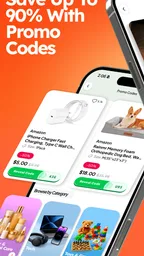
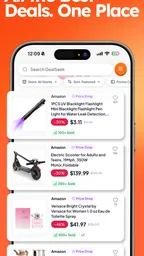
I like the idea behind DealSeek: Coupons & Discounts: instead of beginning a shopping trip with a particular retailer’s app, I can start by looking for a way to spend less. That makes it most appealing when I already have a purchase in mind but have not settled on where to make it. It is a free shopping app from DealSeek LLC, and its focus is finding promotional savings rather than replacing a store’s checkout or serving as a general-purpose shopping destination.
That distinction matters. A coupon app can be useful without making every purchase cheaper, and a discount only has value when it applies to something I actually intended to buy. I would treat this as a search tool to check before placing an order, not as a reason to shop for things I do not need. Used with that mindset, it can fit neatly into an ordinary routine without turning bargain hunting into a hobby.
Where the free access fits
The clearest point about cost is that the app itself is free. I can try it without paying an upfront purchase price, which lowers the risk of finding out whether its daily promotion approach suits my shopping habits. That is different from claiming that every deal is free of conditions or that using a coupon guarantees a lower final total; the savings depend on the offer and the purchase.
For me, free access makes the most sense when I use DealSeek as a quick check before buying something I had already planned to get. If I find a relevant promotion, it may improve a purchase I was going to make anyway. If I do not, I can move on to the retailer or another option without having paid for the search itself.
The app has an Everyone age rating, so its stated audience is broad. It was released on July 1, 2025, and its current version is 1.63.29. Those details help identify the product, but they do not tell me how much I personally will save. I would judge the value by whether the promotions match my actual shopping, rather than by expecting a particular discount on every visit.
What the popularity figures do—and do not—tell me
DealSeek has a 4.8 average from around 19,000 ratings, with roughly 1,500 written reviews, and it has passed 1 million installs. That level of uptake suggests plenty of people have been willing to try it, and the strong average is encouraging when deciding whether a free app is worth a look. Still, popularity cannot tell me whether a specific code works for a specific order; that has to be checked at the point of use.
I would also keep the difference between a rating and a personal outcome in mind. A shopper who regularly finds a useful offer may love the experience, while someone looking for one particular retailer or product could come away empty-handed. The useful question is not whether the app is broadly popular, but whether its available promotions line up with the things I buy.
How I would use its savings focus
The practical value of DealSeek is in making discount discovery part of the buying decision. Rather than browsing offers at random, I would first name the item or category I need, then check whether a promotion could influence where I buy it. That simple order matters: it keeps the search anchored to a real need and makes it easier to recognize when an offer is irrelevant.
For example, imagine I am replacing a household item and have not yet chosen a retailer. I could check DealSeek before committing, compare any relevant promotion with the retailer’s ordinary offer, and then decide whether the saving justifies switching stores. If the discount comes with a condition that changes what I need to buy, I would compare the whole basket rather than fixating on the headline reduction. A smaller saving on the right purchase can beat a larger-looking deal that leads me to spend more.
One useful habit is to keep the app’s role narrow: use it at the moment a purchase is being considered, not as a feed to browse whenever I am bored. That makes the result easier to evaluate. I can ask, “Does this reduce the cost of the thing I need?” instead of, “Can I find something to buy because it is discounted?” For a coupon app, that difference is a meaningful safeguard against false economies.
Another practical trade-off is time. Searching is worthwhile when the expected purchase is large enough, or when I am choosing between merchants anyway. For a very small, urgent purchase, checking several sources may cost more attention than the possible saving is worth. I would set a personal limit: if a quick look does not surface something clearly relevant, I would stop rather than keep chasing a marginal deal.
It is also sensible to verify the final order before paying. A promotion can look promising in isolation, yet the checkout total is what matters. I would make sure the intended offer has actually been applied and compare the final amount, including any purchase conditions shown by the seller. This is not a special claim about DealSeek’s checkout; it is a general way to avoid mistaking an advertised reduction for money saved.
How it compares with familiar shopping options
The usual alternatives are a retailer’s own app, a general search, or a coupon site. A retailer’s app can be more direct when I already know where I want to shop, because its offers are tied to that store’s own products and ordering process. DealSeek is more attractive earlier in the decision, when I am open to checking for a promotion before choosing a retailer.
Compared with a broad web search, a dedicated shopping app can give me a more focused place to begin looking for savings. But I would not assume it replaces comparison shopping. If I am making a costly purchase, I would still compare the actual price and terms across the sellers I am considering. A coupon is one input, not proof that the best deal has been found.
There is also a difference between finding a code and getting a dependable result. A shopper who prefers to buy directly from one trusted store may be better served by that store’s own offers, especially if changing merchants is not worth the effort. DealSeek is a stronger fit for someone willing to compare options; it is less compelling when the purchase decision is already fixed and the retailer’s own channel is the only one the shopper wants to use.
Where the friction can show up
The main limitation of a discount-focused app is that usefulness depends on relevance. A daily stream of promotions is not automatically useful to every person every day. If I am not shopping, or if the available offer does not match my needs, the app may add little to my routine. I would not interpret a quiet session as a failure; it may simply be the wrong time to look.
There can also be a temptation to value the percentage or the word “deal” more than the total cost. I would resist that by deciding what I need before opening the app and checking whether the terms fit that need. If using a coupon requires buying more than planned, choosing a less suitable product, or abandoning a preferred retailer, the apparent saving may not be worth the compromise.
Another point to consider is how much effort I am willing to spend. People who enjoy comparing offers may find the search itself worthwhile, while those who want one familiar store and a quick checkout may find an extra step irritating. The app’s free price removes an upfront cost, but it does not remove the time required to browse and evaluate offers. That time is part of the real trade-off.
I would also avoid building a budget around uncertain discounts. A promotion is helpful when it appears for a planned purchase, but I would not count on a particular offer being available when I need it. For repeat essentials, I would compare the ordinary price and convenience as well as any coupon. A one-time saving can be welcome without making the same seller the best choice every time.
Who is most likely to get value
I can see DealSeek fitting people who shop across different retailers, are flexible about where they place an order, and enjoy checking for a saving before paying. It may also suit a careful household shopper who keeps a short list of planned purchases and checks promotions only when an item is due. That approach makes the app a small part of a sensible buying process rather than a source of impulse spending.
It is less suited to someone who expects a coupon for every purchase, wants the app to make all shopping decisions, or never wants to compare merchants. A person who buys only from a preferred retailer may get more direct value from that retailer’s own promotions. Likewise, if I rarely shop online or do not want another step before checkout, I may not use a separate savings app often enough for it to matter.
For a newcomer, I would suggest trying it on a purchase that is planned but not urgent. That gives me room to compare the offer with my other choices without feeling pressured to accept the first result. I would also make a habit of checking the final total before completing an order. Those two steps help answer the practical questions that matter most: whether an offer applies to my purchase and whether it actually improves the price I will pay.
My buy-or-skip verdict
I would try DealSeek if I wanted a free, dedicated place to look for shopping promotions and was comfortable making my own comparison. DealSeek LLC has built an app with a clear purpose, and its strong rating and more than a million installs make it a reasonable candidate to test. The strongest case for it is not that it will always find a bargain, but that it gives me another chance to check before I commit to a purchase.
I would skip it if my shopping is already tied to one retailer, if I need a guaranteed discount, or if deal hunting tends to make me buy more than I planned. In those situations, a direct retailer offer or simply buying the item at the best known total may be easier. No coupon is worth turning a straightforward purchase into a longer search unless the potential saving matters to me.
My bottom line is that the free price makes a low-pressure trial sensible, while the value remains personal and purchase-dependent. I would keep it as a pre-check for planned shopping, compare the complete cost, and close it when nothing relevant appears. With that restraint, DealSeek: Coupons & Discounts can be a useful extra step for flexible shoppers—not a promise that every shopping trip will end with a better deal.
What we like
- Combines offers from multiple retailers in one place.
- Makes it easy to browse deals by category.
- Can help shoppers discover discounts they might otherwise miss.
- A convenient option for comparing promotional offers before buying.
- Useful for planning purchases around available deals.
What could be better
- Offer availability may vary by location.
- Some deals may have expiration dates or limited quantities.
- Discounts can require a minimum purchase.
- Retailer terms may apply before a deal can be redeemed.
- Browsing deals can encourage unplanned spending.





