
Crunchyroll Manga review
 Analysis by Appsdrops
I like the idea behind Crunchyroll Manga: a focused place to read manga without ads interrupting the page. In practice, though, the appeal depends on what you expect from a digital comics app. It is most convincing for readers who already spend time in Crunchyroll’s anime-and-manga world and want a straightforward reading option, rather than people looking for a broad, publisher-agnostic comic library.
Published by Crunchyroll, LLC, this free Comics app is rated Mature 17+ and has an average rating of 4.6 from around 3,200 ratings. It has passed 100,000 installs, which suggests a meaningful audience, while still feeling more like a focused service than a universal manga destination. The current release is version 1.5.8, and the app requires Android 8.0 or later. Those details matter most if you are checking device compatibility or deciding whether to make it your regular reading app.
Reading speed and the feel of everyday use
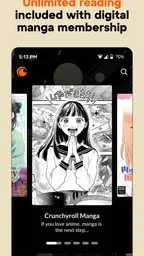
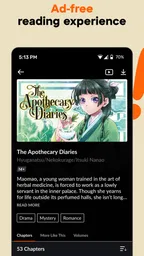
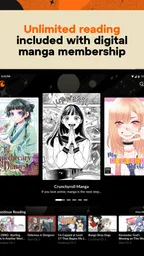
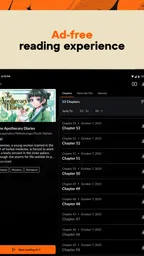
For manga, “fast” is not just how quickly an app opens. What matters is whether I can get from choosing a series to reading a page without a lot of friction, and whether moving through a chapter feels natural. Crunchyroll Manga’s clearest promise is a reading experience without ads, with offline access available. That combination is especially useful when I want to settle into a chapter rather than keep stopping for interruptions or depend on a steady connection.
I would still treat speed as something that depends on the device and connection, rather than assume every page will appear instantly. A large chapter, a weak network, or a phone already busy with other apps can make any image-heavy reader feel less responsive. If a page seems slow to load, I would first check whether the connection is the bottleneck before deciding the app itself is at fault. Offline reading is the more practical answer when I know I will be somewhere with unreliable service.
There is also a useful distinction between quick browsing and serious reading. If I only have a few minutes, I want to locate a title and begin without turning the app into another task. If I am reading for longer, an ad-free session is a real quality-of-life improvement: it keeps the visual rhythm of the pages intact. Manga depends on pacing, panel composition, and deliberate pauses, so interruptions can be more disruptive here than they are in a feed of short articles.
When a reading session gets demanding
The app makes most sense during the moments when reading is competing with everyday constraints: a commute, a waiting room, or a break between other responsibilities. I would prepare for an offline session before leaving a reliable connection, rather than wait until I am already on a train or in a place with poor reception. That small habit reduces the chance that a chapter becomes a loading exercise at the exact moment I want to read.
For a longer session, I would also avoid opening a large number of other apps and then expecting any comics reader to remain equally responsive. Image-heavy pages can put more strain on a modest phone than plain text does, and battery use can become more noticeable when the screen stays on for a long stretch. I cannot promise a particular battery or memory profile across devices, but it is sensible to lower screen brightness and close things I do not need if I plan to read for a while.
One practical way to use offline access is to treat it as session planning, not just an emergency feature. Before a trip, decide what you actually want to read and make it available while you still have a dependable connection. That keeps the library manageable and avoids discovering midway through a journey that the title you hoped to read is not ready. It is a simple workflow, but it turns the offline option into something useful rather than a setting you remember only after connectivity disappears.
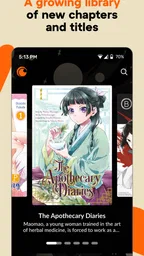
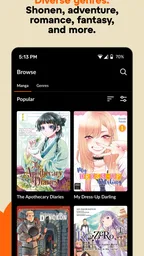
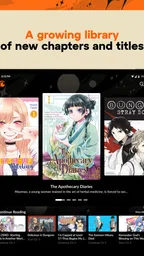
Heavy use can also expose a different limitation: the app is only as valuable as the manga selection that suits your taste. I would check whether the titles I care about are available before making it my main reading habit. Readers who follow a narrow set of series may find a dedicated service convenient, while people who jump across many publishers may prefer a broader catalog even if that means using more than one app.
Reliability, interruptions, and getting back to reading
Reliability is not only about crashes. For me, it includes whether I can resume a reading routine without having to rethink the whole process each time. The ad-free and offline aspects are appealing because they remove two common sources of interruption, but I would still keep my expectations realistic: an offline option helps with connectivity, not with every possible device or app issue.
If the app stops responding or a chapter fails to load, I would use a simple recovery sequence: check the connection, leave and reopen the reading session, and try again before assuming the title or account is broken. When I know I will need offline reading, preparing in advance is safer than relying on a last-minute download attempt. These are ordinary precautions, but they matter because a comic reader is only relaxing when the technical side stays out of the way.
The release history and audience figures give a useful sense that this is an active, established app, but they are not a guarantee of identical performance on every phone. A newer device and a stable connection may feel very different from an older handset with little free storage. I would judge reliability by how it behaves during my own normal routine, especially when switching between short reading breaks and longer sessions.
There is no need to turn a small delay into a verdict on the whole service. If the app feels sluggish only in a low-signal location, offline preparation is likely the better fix. If it repeatedly struggles on a strong connection and a compatible device, that is a more meaningful reason to reassess whether it fits your habits. Separating network problems from app friction helps avoid blaming the wrong part of the experience.
Device fit and the cost of committing
Android users need version 8.0 or later. That is a clear baseline, but operating-system compatibility does not tell the whole story: available storage, device age, and how many apps are running can all affect the comfort of reading. If your phone is older or already short on space, I would be cautious about treating any offline library as limitless. Download only what you expect to read soon and review it occasionally, especially before a trip.
The app is free to install, with in-app purchases listed from $13.99 to $179.99 per item. That wide range is a reason to look carefully at the purchase details in the app before spending, rather than assume that every reader will pay the same amount or need the same option. My advice is to begin with the free experience, see whether the catalog and reading routine actually suit you, and only then consider a purchase that matches your use.
The Mature 17+ rating is another practical point, particularly for families sharing a device. I would not treat the app as a general children’s comic shelf; the age label is a cue to make a deliberate choice about who uses it. That does not tell me what every individual title contains, so readers should use their own judgment about specific manga rather than assume the overall app rating answers every content question.
Compared with general comic-reading alternatives, Crunchyroll Manga’s advantage is its focused identity and the appeal of an uninterrupted, offline-capable reading setup. A broader comics service may be a better fit if you want to bring many kinds of comics and publishers into one place. A publisher-specific app may suit you more if your reading is concentrated elsewhere. I would choose based on the titles I actually follow, not on the assumption that one app must replace every other source.
Who will get the most from it
I would recommend giving it a try if manga is already part of your routine, you value reading without ad breaks, and you want the option to prepare chapters for periods without reliable internet. It is also a reasonable choice for someone who prefers a dedicated manga destination over a general-purpose comics app. The strongest everyday scenario is a reader who picks a title before commuting, gets it ready at home, and uses a quiet stretch of travel to read without depending on mobile coverage.
I would hesitate if you expect one app to cover every publisher, if your favorite series are not available to you, or if you are uncomfortable with the purchase choices shown in the app. It may also be a poor match for someone with an older or constrained device who wants to store a large amount of reading material locally. In those cases, a different service with a catalog or storage approach better suited to your needs may be the more satisfying option.
For new users, I suggest testing the app in the way you would really use it: find a manga you are interested in, read for a short stretch, then try preparing an offline session before you need one. That tells you more than a quick glance at the opening screen. Notice whether the reading flow feels comfortable, whether the selection keeps you interested, and whether the app fits your device without making routine reading feel like maintenance.
My performance verdict
Crunchyroll Manga has a sensible performance pitch for manga readers: keep the reading session clear of ads and make offline access part of the routine. Those strengths can make it feel dependable in the situations that matter most, especially when a connection is unreliable or a brief break turns into a longer read. I would not mistake those benefits for a guarantee of instant loading or identical smoothness on every phone; connection quality and device limits still shape the experience.
My overall view is positive but selective. The app is worth considering if its catalog fits your interests and you want a dedicated place to read, while readers who need a much wider mix of comics should compare alternatives before settling in. Start free, check the purchase choices carefully, and prepare offline reading ahead of time. If those habits match the way you already read manga, this is a practical option; if not, a broader or differently focused service is likely to serve you better.
What we like
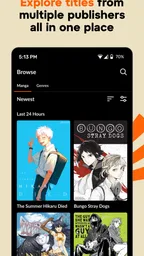
- Browse manga chapters in a dedicated mobile reader
- Follow series to keep track of new releases
- The familiar Crunchyroll account makes access convenient
- A clean interface keeps reading controls easy to find
- A legal source supports manga publishers
What could be better
- The manga catalog may be limited in some regions
- Many titles are available only in English
- A subscription is needed for full access
- Offline reading may not be available for every title
- The service offers fewer titles than major manga platforms





