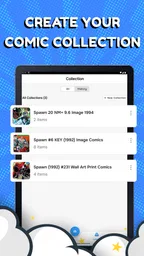
Comic Book Value Scanner review
 Analysis by Appsdrops
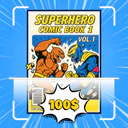
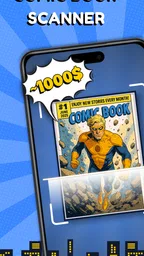
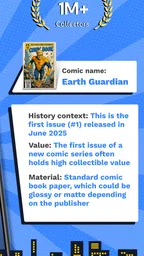
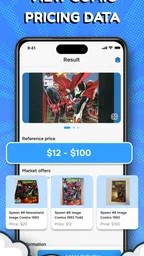
I would treat Comic Book Value Scanner as a quick reference tool for the moment a comic catches my eye, not as a final authority on what it is worth. Its focus is narrow and practical: identify a comic from a scan and help me look into its price. That can be useful when sorting a box, checking a possible purchase, or trying to make sense of an unfamiliar issue. The important distinction is that a scan can start the research; it does not replace careful condition checks or a considered sale-price estimate.
What to decide before relying on a scan
The app is a comics-focused Android app from Identifier Studio. It is free to install, and its current version is 1.3.1. The age rating is Everyone, while optional in-app purchases range from $4.99 to $39.99 per item. I would keep those purchase prices in mind before treating it as an unlimited valuation service: install it first, test whether its basic workflow suits your needs, and only consider paying if you understand what the paid option gives you.
My first decision criterion would be the kind of question I want answered. If I have a cover in front of me and need a quick clue about its identity and price, a scanner is more convenient than manually searching through listings. If I already know the title, issue, printing, and condition, a dedicated price guide or recent marketplace sales may be a better route to a defensible estimate. Those approaches answer related questions, but they are not interchangeable.
Before scanning a collection, I would also decide how much precision matters. A comic’s value can depend on details that are easy to overlook: the exact issue, edition or printing, visible damage, and whether the copy is graded. A cover match is a useful lead, but it does not by itself establish that two copies are equivalent. For a casual inventory, an approximate reference may be enough. For a sale, insurance decision, or expensive purchase, I would verify the identification and compare like-for-like copies independently.
Where the scanner is most useful
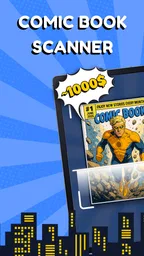
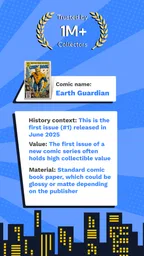
The strongest case for Comic Book Value Scanner is reducing the friction of the first lookup. Instead of beginning with a vague description in a search box, I can use the comic itself as the starting point. That is especially handy when I am dealing with a mixed stack and cannot immediately remember which series an issue belongs to. The app’s stated purpose is identification and price checking, so I would judge it by whether it gets me from an unfamiliar cover to a useful next step without unnecessary hunting.
Consider an ordinary weekend sorting session: I find a comic tucked behind a row of familiar issues, but I do not recognize the character or cover. A scan can help me narrow down what I am holding, then I can check the issue details and condition before deciding whether to keep it, list it, or ask a collector. The practical gain is not that the app makes the decision for me; it is that it can make the initial research less cumbersome.
A less obvious benefit of using a scan-first tool is that it encourages a repeatable sorting routine. I would separate comics into three groups: confidently identified, needing a closer edition check, and too worn or unclear to judge from a quick look. That keeps a possible match from being mistaken for a confirmed one. For the second group, I would photograph or note the relevant cover details and verify them later rather than interrupting the whole sorting session.
Lighting and presentation matter when using any camera-based identification workflow. I would place the comic flat, avoid glare across glossy cover art, and make sure the edges and title are visible before scanning. If the result seems off, I would try again with the book aligned and the cover unobstructed, then compare the returned identification against the printed issue information. These are simple steps, but they help distinguish a genuinely useful match from a result that only looks plausible.
The app has an average rating of 4.4 from around 1.5 thousand ratings, with 67 written reviews. It has passed 50 thousand installs. Those figures suggest that it has attracted a real audience, but I would not use popularity as proof that a particular valuation is correct. For my purposes, the useful test is still whether the scan identifies the specific comic in my hand and gives me a sensible starting point for further checking.
When another approach is the better fit
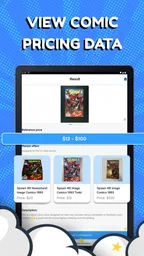
Compared with browsing a general search engine, a comic scanner has a clearer starting point when I do not know the title or issue number. Compared with a specialist catalogue, though, a quick scan may be less useful for resolving fine distinctions between editions. And compared with checking completed sales, a price guide may not reflect what buyers have recently paid for a comparable copy. Each alternative serves a different stage of the task: identification, reference, or market comparison.
If I am pricing a collection for a serious sale, I would not rely on one scan and stop there. I would confirm the issue information printed on the comic, inspect the condition in consistent light, and compare copies that match both edition and condition as closely as possible. A rough value can be misleading if the reference copy is a different printing or much better preserved. The app is most helpful as a shortcut into that process, not as a substitute for it.
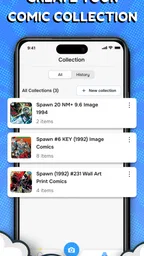
It may also be the wrong choice for someone who already maintains a detailed catalogue or prefers typing known issue information into a reference source. If my main need is tracking what I own, recording purchase history, or organizing a collection over time, I would first check that the app’s actual workflow supports those tasks rather than assume that identification and pricing imply collection management. Likewise, a collector who wants formal grading should use an appropriate grading service; a camera-based lookup is not a grade assessment.
There is a useful trade-off between speed and confidence here. Scanning can make an unfamiliar comic less intimidating, but the faster the lookup, the more tempting it is to accept the first result without checking. I would treat a match as a candidate, especially when several covers in a series look similar. Checking issue numbers and any edition clues before recording a value is a small extra step that can prevent a much larger mistake later.
Trying it without disrupting your collection
Switching to a new comic reference tool does not need to mean rebuilding an existing catalogue. I would begin with a small batch of comics whose identities I already know, including a few with similar-looking covers. That gives me a practical sense of whether the scanner is helpful on familiar material before I trust it with a box of unknowns. If a result differs from what I expect, I can investigate the reason rather than silently carrying an error into my records.
For a collection with handwritten notes or a spreadsheet, I would keep that record as the main inventory and use the scanner for discovery. After identifying an issue, I would transfer only the details I have checked, rather than copying a price estimate as though it were a guaranteed selling price. This approach avoids making the app a single point of failure and keeps the useful part of the workflow—the quick identification—without forcing a full change in how I organize comics.
Another practical tip is to separate identification from valuation. First confirm the title and issue; then examine condition; only then compare prices. If the first step is uncertain, any price comparison that follows is shaky. If the issue is clear but the condition is not, I would describe the copy conservatively and look at comparable examples rather than assuming that a clean-looking cover means a high grade. The scanner can help with the first step, while the later judgments still need a human eye.
The app is free to install, but the presence of in-app purchases means I would check the available options in the app before paying. I would not buy an upgrade just because I have a large stack waiting; I would first test a few representative comics and decide whether the results save enough effort for my particular routine. The listed purchase range runs from $4.99 to $39.99 per item, so it is worth being deliberate rather than treating every paid option as necessary.
My recommendation for comic collectors
I would recommend Comic Book Value Scanner to casual collectors, curious readers, and people sorting comics who want a convenient first pass at identification and price research. Identifier Studio has kept the app’s purpose easy to understand, and the 4.4 average rating gives a prospective user some context without guaranteeing that every scan will fit every collection. Its release date is May 6, 2025, and it is rated for Everyone, making it approachable for a broad audience interested in comics.
I would be more cautious if I were buying an expensive key issue, preparing a formal valuation, or deciding what to charge for a graded copy. In those cases, I would use the scan as one clue and verify the edition, condition, and comparable prices elsewhere. I would also skip it if I wanted a full collection-management system and had no reason to use image-based identification.
For everyday browsing, its appeal is straightforward: point the research in the right direction without first knowing exactly what to search for. Used carefully, that can turn a mystery comic into a manageable investigation. My recommendation is to try it on a handful of known and unknown issues, check its results against the comics themselves, and keep independent price research in the loop whenever the decision has real money behind it.
What we like
- Quick scans make it easy to check a comic while browsing a collection.
- Useful for estimating a comic's value before buying or selling.
- Can help collectors organize and assess books more efficiently.
- A convenient option for researching comics away from a desktop.
- Useful for newcomers who need guidance on comic pricing.
What could be better
- Scan results may be inaccurate if the cover is damaged or poorly lit.
- Estimated values may not reflect current local sale prices.
- Key features or price data may require a paid plan.
- A barcode or cover scan may not identify every edition correctly.
- The app's usefulness depends on its supported comic catalog.





