



Comic Book Price Value Scanner review
 Analysis by Appsdrops
Sorting through a box of comics can turn into a surprisingly involved job: first you need to work out what each issue is, then figure out what it might be worth, and finally keep track of what you own. Comic Book Price Value Scanner is built around that collector’s workflow. It scans comic covers to help identify books, provides real-time value information, and gives you a way to manage your collection. I like that practical focus: instead of treating comic collecting as a simple cataloging task, the app connects identification with the question most collectors eventually ask—what is this issue, and where does it fit in my collection?
From a mystery comic to a useful record
The app comes from petraapps and sits in the comics category. It is free to download, with in-app purchases priced from $5.49 to $69.99 per item. It has an average rating of 4.5 from 509 ratings, and more than 10,000 installs. Those figures suggest that it has found an audience among people looking for a phone-based tool to organize and research their comics, while the purchase options are worth keeping in mind if you are comparing it with a simple free catalog.
Starting with the book in your hand
The most natural place to begin is with a comic whose details you do not immediately know. Maybe it came from a family collection, a recent purchase, or a box that has been sitting untouched for years. Rather than starting by typing what you can read from the cover, the app’s central idea is to scan that cover and use it to identify the comic. That makes the first step feel approachable, particularly when you are dealing with a stack and do not want to look up every issue from scratch.
In practice, a cover scan is a handoff between the physical book and the app’s digital catalog. You present the cover; the app works to turn that image into an identification. That transition is the feature’s main appeal, because comic titles, issue numbers, and editions can be easy to mix up when you are moving quickly. A camera-based starting point can reduce the amount of manual searching involved and help make the process feel more like sorting than data entry.
It is still useful to approach scanning as a starting point rather than a substitute for paying attention. A cover is an obvious clue, but a collector may also care about the exact issue, edition, or the condition of the copy on the table. When an identification appears, take a moment to compare it with the physical book before treating the result as the definitive record. That little pause is a sensible part of any collection workflow, especially when you are handling comics that look similar at a glance.
Moving from identification to value
Once a comic has been identified, the next question is often its value. The app brings that step into the same general workflow by offering real-time values. I find that pairing useful: identification without a value reference can leave a collector with only half the answer, while a value attached to an unclear issue can be difficult to interpret. Bringing the two tasks together gives the app a more purposeful role than a scanner that merely names what is in front of the camera.
There is an important distinction between a reference value and a guaranteed selling price. A real-time value can help you get your bearings, compare items in a collection, or decide which books deserve closer research. It should not automatically be treated as a promise of what a buyer will pay for a particular copy. Condition, demand, and the details of the specific issue all matter to collectors. I would use the app’s value information as a helpful research signal, then apply my own judgment before making a buying, selling, or insurance decision.
This is where the app’s workflow can save time without removing the collector’s role. The scanner can help narrow down what you are looking at; the value information can then give that identification more context. Instead of switching immediately between separate tools, you can approach both questions within one collection-focused experience. For a quick pass through a box, that tighter sequence is appealing, as long as you remain attentive to whether the result matches the comic you actually own.
Keeping the collection together
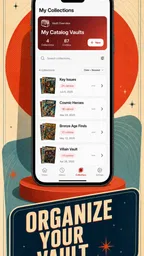
After identification and value checking comes the handoff that matters over the long term: recording the comic as part of your collection. The app is designed to help manage a collection, so its purpose extends beyond a one-off lookup. That can make it useful during a first inventory, when you are trying to understand what is on your shelves, and later when you want to revisit what you have already cataloged.
A collection tool is only as helpful as the habits it supports. If you add books as you identify them, the collection can become a practical reference rather than a pile of one-time searches. You can work through a box in manageable batches, confirm each result, and keep the record aligned with the comics you still own. That approach is more reliable than trying to scan everything quickly and sorting out mistakes afterward.
The app’s three-part promise—scan covers, identify comics, and track values while managing a collection—gives it a clear direction. For someone just starting to catalog, the combined workflow may feel less intimidating than building a spreadsheet from nothing. For an experienced collector, it offers a focused mobile option for looking up books and keeping an inventory in one place. Whether it becomes your main collection record depends on how closely its identification and organization fit the way you personally track your comics.
Where the workflow feels most useful
The strongest idea here is the connected journey from cover scan to collection record. Each stage answers a different practical need: identify the book, get a current value reference, and keep the item organized. That sequence is easy to understand, which is a real advantage for a utility app. You do not have to begin with a complicated cataloging plan; you can start with one comic that has caught your attention and decide whether the process suits you.
I can also see the appeal when a collector is evaluating a mixed box. A quick identification step can help separate familiar books from the ones that need more research. The value reference adds another layer of context, while collection management gives the lookup somewhere to lead. It is a sensible progression for people who want a more organized view of their comics rather than just an occasional answer about an individual issue.
That said, the workflow depends on the handoffs working well. A scan must lead to the right identification, the value needs to be interpreted in the context of the specific copy, and the collection record should accurately represent what you own. If you rush through any of those stages, the convenience can turn into extra cleanup later. My preferred approach would be to scan, check the match, consider the value as a reference, and only then add the comic to the collection.
Where the flow can break
The most obvious friction point is the physical-to-digital transition. Scanning is convenient when a cover is easy to present and recognize, but a result still needs a collector’s attention. A quick scan should not encourage you to overlook details that distinguish one book from another. If a match does not look right, it is better to stop and verify than to let an uncertain identification become part of your collection record.
Value checking has its own limits. A real-time value is useful for orientation, but it cannot replace careful evaluation of the individual comic. Collectors know that two copies of what appears to be the same issue can have very different appeal depending on their condition and other particulars. The practical way to use the app is as a companion to your judgment, not as the final authority on what a comic is worth in every situation.
There is also a cost consideration beyond the free download. In-app purchases range from $5.49 to $69.99 per item, so it makes sense to explore the core experience and decide what you need before spending. That range is broad enough that casual users and collectors with larger cataloging ambitions may evaluate the app differently. I would focus on whether its scanning, value references, and collection management fit your routine rather than assuming every purchase option is necessary.
For compatibility, the listed minimum operating system is version 7.0. The content rating is Everyone, which makes the app suitable for a broad audience interested in comics and collection organization. It was released on December 4, 2025, and the current version is 1.0.13. These details are useful when checking whether the app fits your device and when comparing it with other tools, but the day-to-day decision still comes down to whether the workflow feels comfortable for your own collection.
Who should give it a try?
Comic Book Price Value Scanner is most appealing to readers who want one mobile workflow for identifying comics, checking real-time values, and organizing what they own. It may suit someone starting a first inventory, a collector sorting through a box, or a fan who wants a convenient lookup tool close at hand. Its focus is specific and easy to grasp, which helps it avoid the feeling of being a general-purpose organizer dressed up for comics.
If you already have a detailed cataloging system that works well, the question is whether adding another tool would make your process simpler. If you are currently relying on memory or scattered notes, the app’s scan-to-record approach may be a more inviting first step. Either way, I would treat it as a practical assistant: let it help with the initial identification and research, then check the result before making important decisions about a book’s value or place in your collection.
A practical collector’s companion
Overall, Comic Book Price Value Scanner has a clear purpose and a workflow that makes sense for everyday comic collecting. It starts with the cover, moves into identification and value research, and finishes with collection management. That structure is its main strength: each step leads naturally to the next, giving the app a useful role whether you are working through a stack or looking up one issue.
The experience will be most rewarding when you treat each result as part of a careful process, not as an automatic answer. Confirm the comic, use its value as a reference, and keep your collection record tidy as you go. With that approach, the app offers a straightforward way to bring a little more order to comic collecting. Its free download makes it easy to consider, while the in-app purchase range is something to weigh against the features you actually plan to use. If cover scanning and collection organization are the parts of comic collecting you would like to simplify, it is a focused option worth exploring.
What we like
- Quick scans can make it easier to check a comic while browsing a collection.
- A price guide can help collectors estimate a book’s potential value.
- Useful for spotting comics that may deserve closer inspection.
- Can support collection organization and record keeping.
- Handy for comparing a comic’s condition with its estimated market value.
What could be better
- Scanner results may vary with cover glare or poor lighting.
- A scan may not identify rare editions or printing variants correctly.
- Estimated prices can differ from actual sale prices.
- Condition grading still requires careful manual inspection.
- Some features may require a subscription or in-app purchase.





