

Zoo 2: Animal Park review
 Analysis by Appsdrops
I like the idea behind Zoo 2: Animal Park because it gives a familiar zoo-building game a clear, gentle purpose: make a place for animals, arrange its spaces, and keep expanding as the park grows. In my experience, that kind of game is most enjoyable when I can make a little progress in a short visit and then return later with a plan. It is an adventure game from upjers GmbH, free to start, and suitable for Everyone. Its appeal is less about quick action than about shaping a park at my own pace.
How the park-building pace feels
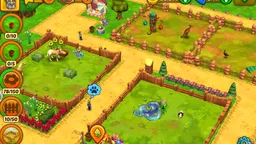
The basic rhythm is easy to understand: build and improve the zoo, create enclosures, and make room for more animals. That makes the game approachable even if you have not played many management-style adventures. I would approach it as a series of small decisions rather than expect a fast, linear campaign. The fun comes from seeing the park take shape, not from racing through a story or mastering demanding controls.
That pace suits short breaks. I can imagine opening the game while waiting for a ride, checking what the park needs, making a modest change, and leaving with a clear next step. It also gives longer sessions a purpose: when I have time, I can think about how new spaces fit into the layout instead of simply tapping through tasks. A useful habit is to decide on one goal before a session—such as improving an existing area or preparing room to expand—so the many small choices feel connected.
The trade-off is that a zoo builder is naturally less immediate than an action adventure. If you want every minute to bring a dramatic new event, this may feel measured. I would pick it for relaxed ownership and gradual design, not for a burst of combat, precision challenges, or a tightly directed plot. The store description promises a park that can grow, but the most satisfying way to read that promise is as ongoing creative work rather than instant transformation.
Busy sessions and thoughtful layouts
When I spend longer with a building game, I tend to notice the friction that a quick check-in hides: there are more choices to weigh, and a layout that seemed sensible at first may need reconsidering as I add enclosures. My practical tip is to leave a little room for future changes instead of filling every available patch as soon as it appears. That is not a special trick; it is a way to avoid making expansion feel like a chain of awkward rearrangements.
Another useful approach is to separate “keep the park moving” sessions from “make it look right” sessions. In the first, I would focus on whatever immediate park task is available. In the second, I would take time to consider where an enclosure belongs and how the overall space feels. That distinction helps because building and decorating scratch different itches: one is about progress, the other about personal taste. If I try to do both at once, I can spend a whole visit fiddling without feeling that I achieved either goal.
I would also resist treating every expansion as automatically worthwhile. More space sounds appealing, but each new area adds another design decision and can make the park harder to organize. For players who enjoy planning, that is part of the draw. For someone who prefers a compact, finished experience, keeping a smaller park tidy may be more rewarding than chasing growth for its own sake.
Reliability and what to expect on a phone
I would set expectations for a mobile builder rather than assume every visit will feel identical. A game centered on placing and managing a growing park may feel more involved as the scene becomes busier, but I cannot responsibly promise a particular frame rate, loading time, or battery impact across different devices. Those depend on the phone or tablet as well as the game. The sensible expectation is to judge it on your own device during both a quick visit and a longer building session.
For reliability, the best everyday precaution is simple: avoid closing the app at the exact moment you are making a change, and give it a moment to settle before switching away. I do not treat that as a claim about a special save system; it is just sensible practice for any game where you are adjusting a persistent personal space. If a session is interrupted, reopen the game and check the park before immediately repeating the last action. That small pause can prevent confusion about whether a change took effect.
Players often wonder whether a free game can be enjoyed without spending. Here, the price is free, while optional in-app purchases range from $0.99 to $274.99 per item. That spread is worth noticing before browsing purchase offers, especially if you are handing the device to a child. I would begin without paying and see whether the natural pace suits me; only consider a purchase if it addresses a specific frustration and fits a budget you have already set.
Device fit, age, and the game’s audience
The minimum operating-system requirement is 7.1, so the first practical check is whether your device meets that baseline. Meeting a minimum does not guarantee the same experience on every model, especially when one player has a newer phone and another is using an older device. If performance matters to you, try a short session before settling into a long design project. Notice whether the controls feel comfortable and whether the game remains responsive while you move around your park.
The Everyone age rating makes the game an easy candidate for a shared family device, but I would still explain the purchase option before a younger player starts exploring. The building theme is much easier to understand than a complex strategy game, and the creative element can give children a reason to make choices and take ownership of a space. Adults who enjoy careful planning may appreciate the same things for different reasons. It is less suited to someone who wants a competitive challenge or a game that can be completed in a single sitting.
Compared with more typical mobile adventure games built around levels, combat, or a fixed route, this one asks you to invest attention in a place that is yours to shape. Compared with a purely decorative sandbox, its zoo premise gives the building a recognizable purpose: enclosures and park growth are central rather than incidental. That middle ground is its strongest niche. If you want a calm project with a clear theme, it is a better fit than a reflex-heavy game; if you want a defined ending and constant plot momentum, a conventional story adventure will probably serve you better.
What its community and history suggest
The game has an average rating of 4.0 from around 300,000 ratings, with about 12,000 written reviews, and it has passed 10 million installs. I see that as evidence of broad interest in the zoo-building idea, not a guarantee that every player will enjoy its pace. Those figures make it easier to feel that this is an established choice rather than an obscure experiment, but they cannot tell you whether its style matches your habits. The best test is whether you like returning to improve a place over time.
It was released on June 25, 2018, and the current version is 16.0.3. That long-running presence is useful context for anyone deciding whether to invest time in a park: this is not presented as a one-off novelty. Still, version numbers and longevity are not substitutes for personal fit. I would base the decision on whether the central loop—planning enclosures, growing the park, and revisiting it—sounds pleasant rather than treating the game’s age as a promise about support or performance.
My verdict: a patient builder, not a speed test
The main strength is the steady sense of ownership: the zoo gives small building choices a shared purpose, so a short session can still feel like part of a larger project. I would recommend it to someone who enjoys arranging spaces, likes animals as a theme, and is happy to let a park develop gradually. It also works for a casual player who wants a low-pressure game to revisit during spare moments, provided that “casual” does not mean expecting nonstop action.
I would skip it if I were looking for a tightly paced adventure, a clearly bounded campaign, or a game whose appeal depends on quick competitive rounds. I would also be cautious if I dislike optional purchase prompts or find open-ended building hard to enjoy without a definite finish line. In those cases, a level-based adventure or a simpler offline puzzle game may be a more satisfying choice.
Overall, I think Zoo 2: Animal Park is worth trying if the idea of gradually shaping an animal park sounds more relaxing than demanding. Start with a small, deliberate goal, leave room to adjust the layout, and assess how it runs on your own device before committing to long sessions. Its measured pace is a feature for patient builders and a limitation for players who want constant intensity. For me, that makes it a pleasant, specific kind of mobile project—not an all-purpose adventure, but a convincing one for the right mood.
What we like
- Build a zoo with flexible paths and decorations.
- Breed animals to discover new species.
- Complete quests for rewards and unlocks.
- Visit friends' zoos for inspiration.
- Regular events add fresh goals to pursue.
What could be better
- Progress can feel slow without frequent play.
- Energy limits how much you can do at once.
- Some upgrades require long wait times.
- Premium currency can be tempting to buy.
- Managing many animals and tasks can feel repetitive.







