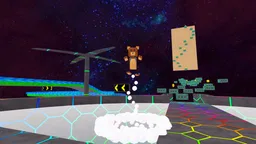
Super Bear Adventure review
 Analysis by Appsdrops
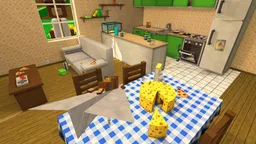
What makes Super Bear Adventure stand out to me is the way its three-dimensional worlds invite wandering instead of pushing me down a single narrow route. It is an adventure game built around exploring broad spaces, spotting things that catch my eye, and working out where to go next. That freedom is the appeal, but it also means the game suits a curious, patient player better than someone who wants a tightly guided, nonstop action experience.
Exploration is the main attraction
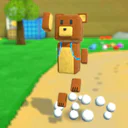
Made by Earthkwak Games, this free adventure game has the approachable feel of a platforming journey, with a sandbox-like emphasis on looking around. The key difference from a strictly linear platform game is how much the surrounding world matters: I’m not simply watching for the next obstacle on a fixed track. I can take a moment to inspect the space, notice possible routes, and decide what seems worth pursuing.
That freedom changes the pace in a useful way. A short play session can be about making progress, but it can also be about getting a feel for an area and choosing a small goal. I like that the game can accommodate both moods. When I want direction, I can focus on what appears to be the next task; when I want a looser session, I can explore without turning every minute into a race.
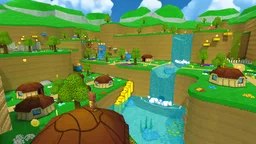
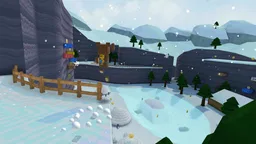
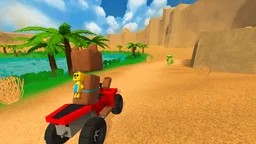
The setting is presented in 3D, so paying attention to space is part of the experience. A route that looks obvious from one angle may deserve a closer look, and moving through an area is as much about observation as quick reactions. Exploration rewards looking around before committing to a route, which gives the game more personality than a sequence of disconnected jumps.
How the open-world feel works in practice
In practice, I would treat each area as a place to learn rather than a hallway to clear as fast as possible. When I reach a new spot, I pause to scan the nearby terrain and look for paths or points of interest that I might have missed while moving. That simple habit makes exploration feel deliberate, and it can save the frustration of repeatedly trying the same obvious approach.
A useful way to play is to give a session one modest purpose: explore a section, make progress toward a visible objective, or revisit a route that seemed promising. This keeps the open-ended structure from feeling aimless. If I try to do everything at once, I can lose track of what drew me into an area; a small self-chosen goal makes the freedom easier to enjoy.
The same approach helps when I get stuck. Instead of assuming I need a perfect jump or faster reactions, I first reconsider the route and look for another way through. That is a practical strength of a game centered on spacious exploration: changing my perspective can be more useful than repeating an attempt. It is not a guarantee that every obstacle has an easy alternative, but it gives me a sensible first move when progress stalls.
For an everyday example, this is the sort of game I would open during a quiet break when I have enough time to settle into an area, but not necessarily enough time to finish a long, tightly scripted chapter. I can explore for a while, pick up where my curiosity takes me, and stop when I have reached a natural pause. Players who need every session to produce a clearly defined milestone may find that looser rhythm less satisfying.
When the freedom feels best
The strongest use case is relaxed play with room for curiosity. If I enjoy noticing details, testing a route, and making my own small plans, the open spaces give me a reason to stay engaged between major moments. It is also a good fit for someone who likes platform adventures but wants more breathing room than a level-by-level gauntlet usually allows.
That makes it easy to recommend for casual play, particularly when I want something more involved than a quick reflex game but less demanding than a competitive session. The Everyone age rating also makes it broadly approachable for families. I would still suggest that younger players who dislike uncertainty have an adult nearby at first, not because the premise is difficult to understand, but because open-ended exploration can leave them unsure about what to try next.
It is less suited to players who want a strong sequence of instructions, constant new prompts, or a narrow story route that keeps them moving. The sandbox-like structure places some responsibility on the player to decide what is interesting. If that sounds like freedom, it is a strength; if it sounds like being left to figure everything out, a more guided adventure may be a better choice.
Tradeoffs worth knowing before you play
The biggest tradeoff is that spaciousness can blur direction. I enjoy having room to explore, but there are moments when I would rather be told more clearly what deserves my attention. A practical fix is to decide on a nearby goal before roaming, then give myself permission to change plans if something more interesting appears. That preserves the game’s open feel without letting a session dissolve into aimless wandering.
Another tradeoff is that exploration asks for patience. Players who measure a game mainly by rapid combat or constant forward momentum may find that looking around takes time away from the action they want. Here, observing the environment is not a detour from the core appeal; it is part of how the adventure works. The game is a poorer match if that slower, more spatial style sounds like busywork to you.
Compared with a typical linear platform adventure, this one gives me more reason to inspect the world and choose where to go. Compared with a large, complex open-world game, it is a more approachable place to enjoy that general sense of freedom without expecting a sprawling simulation. That middle ground is a clear strength, although players seeking elaborate systems, a heavily guided narrative, or a highly competitive challenge may be happier elsewhere.
There are optional in-app purchases, priced from $1.99 to $4.99 per item, so the game is free to start but not entirely free of spending prompts. I would approach those purchases as optional rather than assume they are necessary for the basic appeal: the central reason to play is exploring the world. If you are setting it up for a child, it is sensible to review purchase controls on the device beforehand, as with any game that offers paid items.
Who gets the most from this bear’s adventure
With a 4.4 average from around 1.2 million ratings and over 100 million installs, Super Bear Adventure has found a wide audience. Those figures suggest that its accessible, exploratory style reaches many players, but they do not mean it will suit every taste. I would choose it for someone who likes relaxed 3D adventures, enjoys making small discoveries, and does not mind setting their own pace.
The game was released on June 10, 2017, and its current version is 13.0.8. It requires Android 7.1 or later, and its age rating is Everyone. Those practical details make it easier to judge whether it fits a device and household, while the free price means trying the basic experience does not require an upfront purchase.
My most useful advice is to resist sprinting through the spaces as if they were conventional obstacle courses. Stop, look for routes, and choose one small thing to investigate; if you are unsure where to go, change your viewpoint before repeating the same attempt. That way of playing brings out the game’s strongest quality and makes its open structure feel intentional rather than vague.
I recommend it to curious players looking for a friendly adventure they can enjoy at their own pace. I would skip it if I wanted tightly directed objectives, constant high-intensity action, or a game that explains every next step. For everyone else, its spacious 3D exploration is a pleasant reason to pick it up—and the best measure of whether it is right for you is simple: do you enjoy choosing your own way through a game world?
What we like
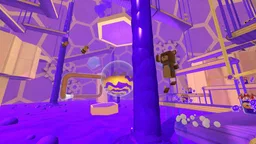
- The colorful 3D world is easy to explore.
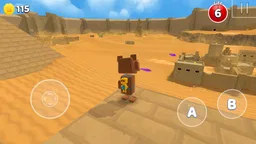
- Simple controls make movement quick to learn.
- Collectibles encourage revisiting earlier areas.
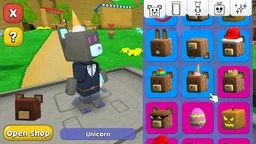
- The bear has a charming range of animations.
- Offline play suits gaming away from Wi-Fi.
What could be better
- Some jumps require precise timing.
- Camera angles can obscure nearby platforms.
- Finding every collectible may take patience.
- Visual detail can feel basic on larger screens.
- Touch controls may be less precise than a controller.







