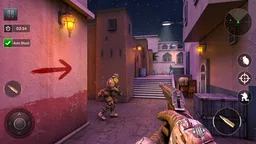
FPS Commando Shooting Games review
 Analysis by Appsdrops
I find FPS Commando Shooting Games easiest to judge through a practical question: can I get into a firefight quickly and comfortably, even when I’m not sitting down for a long session? This free adventure shooter from Hazel Mobile Games is built around commando-style combat, with an offline-play emphasis that may suit players who want action without depending on a live match. It is a straightforward premise, but how well it works for you depends on more than the shooting: visual clarity, touch control, and the setting you play in all matter.
How the game feels to read and navigate
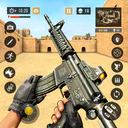
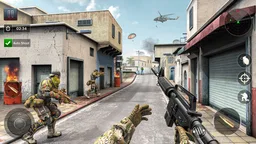
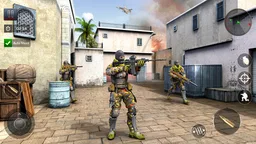
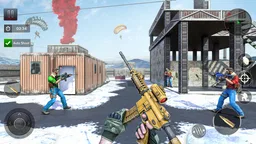
The game presents itself as a first-person shooter, so its main appeal is direct: look through the character’s perspective and engage enemies. I appreciate that this kind of focused setup gives a new player an obvious starting point. There is less conceptual overhead than in a sprawling action game with several genres competing for attention. If you want a quick commando-themed game rather than a long role-playing campaign, that simplicity is useful.
At the same time, first-person action puts a lot of information on screen at once. During combat, players need to notice threats, understand where they are, and react to controls without losing track of the scene. That can make visual readability more important than it is in a slower adventure game. I’d recommend trying a short session first and paying attention to whether enemy shapes and the action remain easy for you to follow on your device. A screen that feels comfortable for menus may feel crowded once combat begins.
With a 4.3 average from around 444,000 ratings, FPS Commando Shooting Games has attracted a large audience, but that popularity does not mean its presentation will suit every player. Ratings are a useful sign that many people enjoy the basic concept; they cannot tell you whether small visual details, fast movement, or touch input will be comfortable for your eyes and hands. I would treat the first few minutes as a personal fit check rather than assume that a popular shooter is automatically accessible.
Give yourself a low-pressure first run
My practical suggestion is to begin when you have a few uninterrupted minutes, not when you are already rushing somewhere. Use that time to learn how the view responds and where the controls sit, then decide whether you can keep your attention on the action without straining. This is a more helpful test than judging a shooter from a brief glance at its store page, especially if you usually play with one hand, use a smaller display, or prefer slower games.
If you are deciding whether the game is suitable for a younger player, keep its Teen age rating in mind and consider the person’s comfort with shooting themes. The game’s commando-versus-terrorist premise is plainly combat-focused, so it is not the best pick for someone looking for gentle exploration or a nonviolent adventure. For adults who want a direct action game, the theme is central rather than incidental.
Motor and sensory considerations in combat
First-person shooters ask for a particular kind of coordination: noticing a target, moving the view, and responding to danger in close succession. That can be satisfying if you enjoy active touch play, but it can also become tiring for players with limited dexterity, hand pain, tremor, or difficulty making repeated precise movements. I would not choose this as a default recommendation for someone who needs slower, low-input play. The most honest approach is to try a brief session and stop if the control demands become uncomfortable.
Sensory comfort is another individual question. A shooter’s quick changes in focus and bursts of action may be engaging for some players and overwhelming for others. If sudden visual activity makes it hard to concentrate, consider playing in a calm setting and taking breaks rather than pushing through a long stretch. That advice is useful even for experienced players: attention tends to slip when you are tired, and in a first-person game that can turn an enjoyable challenge into frustration.
One non-obvious trade-off with offline-oriented shooting is that it can be a better fit for a private, self-paced play session than a competitive environment, but it does not remove the physical demands of aiming and reacting. Offline availability is helpful when connectivity is unreliable; it does not, by itself, make the game suitable for every ability. I would separate those two questions when choosing: “Can I play without a connection?” and “Can I comfortably manage the action?” are not the same thing.
For a more manageable routine, I’d use short play windows and treat each one as a focused break rather than background entertainment. That makes it easier to notice fatigue and put the game down before hand or eye strain sets in. If you prefer games that let you pause often, make progress at your own pace, or rely on simple menu-based decisions instead of quick aiming, a slower adventure title is likely a better match.
Where offline play fits into everyday life
The offline emphasis is one of the most practical reasons to consider this game. I can imagine launching it during a commute, while waiting for an appointment, or somewhere with patchy reception, provided I have the device and time to play safely. It can fill a short gap without requiring the social coordination or live connection that often comes with multiplayer shooters. That makes it more convenient than a match-based alternative when you simply want a bit of solo action.
There is an important limit to that convenience: “offline” should not be read as “ideal in every situation.” A bus ride may be noisy and full of interruptions, and a first-person shooter is not something I’d play while walking, crossing a street, or needing to watch my surroundings. If you’re in a crowded place, a calmer puzzle or audio-friendly game may be safer and less demanding. I’d save the shooting for when you can give the screen your attention.
For a realistic everyday example, picture having ten minutes before an appointment and no dependable Wi-Fi. A short offline session can be a better fit than trying to join a live team match that could be interrupted. If you have only one hand free or need to keep looking up, though, it is a poor moment for an action game. The value is not that the game suits every spare minute; it is that it can suit a quiet, self-contained break when conditions are right.
The game is free to start, while optional in-app purchases range from $0.99 to $199.99 per item. That wide spread makes it sensible to review purchase prompts carefully, especially if a child uses the device or if you prefer games with a predictable total cost. I’d approach the action as something to try without paying first, then decide whether any purchase is genuinely worthwhile to you rather than treating spending as a requirement for enjoying the premise.
How it compares, and what may get in the way
Compared with large online shooters, FPS Commando Shooting Games is easier to consider as a casual, solo option because its pitch centers on offline shooting rather than live competition. That can be a real advantage for people who dislike matchmaking, voice chat, or the pressure of keeping up with other players. On the other hand, players who want a social team experience, a deep competitive scene, or carefully adjustable accessibility options should look at alternatives designed around those priorities.
It also differs from slower adventure games, where exploration and story can give you time to absorb each scene. Here, the appeal is the first-person combat premise, so quick visual attention and active control are part of the experience. If you are drawn to the setting but not to rapid aiming, a third-person action game or a slower tactical title may offer a more comfortable way to enjoy combat themes. The right comparison is not simply “which shooter is best?” but “which pace and control style can I enjoy without strain?”
The version available is 16.2.6, and the game supports Android 7.1 and later. Those details can help you check basic device compatibility, but they do not guarantee that every screen size or device will feel equally comfortable. I’d also keep a little storage and battery headroom in mind for mobile gaming generally, and avoid assuming that an older device will deliver the same smooth experience as a newer one. Those are practical precautions, not a promise about performance.
The scale of its audience is notable: it has passed 100 million installs and has around 1,800 written reviews. That suggests plenty of people have tried it, but a high install count is not a substitute for checking your own comfort with its pace and controls. The most useful test remains personal: can you see what is happening, respond without awkward hand movements, and enjoy the session rather than merely endure it?
Who I would recommend it to
I’d suggest trying it if you like direct first-person action, want a free game to sample, and value being able to play without relying on a live connection. It may also suit someone who wants a simple combat-focused diversion rather than a large, social shooter with a steep learning curve. Hazel Mobile Games has kept the central idea easy to understand, and that clarity is part of its appeal for casual players who want to get to the action.
I would steer away from it if you need relaxed pacing, highly precise control is difficult for you, fast visual action causes discomfort, or you want a story-rich adventure rather than repeated combat. I’d also be cautious if you are managing purchases for a child, since the Teen rating and optional spending both deserve a quick conversation before installation. Players who need extensive control customization should verify that the available experience meets their needs before committing time to it.
Overall, I see FPS Commando Shooting Games as a convenient, combat-first mobile option, not a universal recommendation. Its strongest practical case is a short offline session when you can focus on the screen and are comfortable with touch-based shooting. Its biggest caveat is that the same direct action that makes it easy to understand can be demanding for players who need slower pacing or less precise input. If that trade-off sounds right for you, it is worth a careful try; if not, a calmer adventure or a more deliberately accessible shooter would be a better choice.
What we like
- Responsive controls make aiming and movement easy to learn.
- Mission objectives provide clear goals during each level.
- Weapon variety lets players adapt to different combat situations.
- Offline play is useful when an internet connection is unavailable.
- Short missions suit quick gaming sessions.
What could be better
- Enemy behavior can feel predictable after repeated encounters.
- Some stages reuse similar environments and objectives.
- Frequent ads may interrupt the pace of play.
- Weapon upgrades can require substantial grinding.
- Touch controls may feel less precise than a controller.







