




Survivor.io review
 Analysis by Appsdrops
I find Survivor.io easiest to enjoy when I treat it as a quick, focused burst of action rather than a game that needs a long, uninterrupted session. Its appeal is the constant pressure of a crowded screen and the small decisions that come with trying to stay alive. It is an adventure game from Habby, available for free, and the basic idea is simple to understand: keep moving, handle the threats around you, and make each run count.
How the pace feels in a typical run
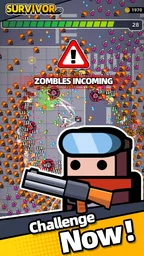
The game gets to its central challenge quickly: you are navigating danger while trying to keep enough space to react. That makes it a natural choice for a short break, such as waiting for a ride or taking a pause between tasks. I can picture starting a run with a few minutes free, then deciding whether I have the attention to continue once the screen becomes busier.
That growing intensity is part of the fun, but it also changes how I play. Early on, I can watch the action and make deliberate moves; as pressure rises, I focus more on staying clear of danger than on admiring what is happening. The pace rewards attention, not just tapping quickly. If I am distracted by a conversation or trying to play while doing something else, it is easy to lose track of the space I need.
Survivor.io works best for players who like an action game that is readable at first and demanding once a run develops. It is less suited to someone looking for a calm, story-led adventure or a game where progress depends mainly on careful exploration. The central pleasure is reacting under pressure, so the moment-to-moment action matters more than a leisurely sense of discovery.
Why short sessions suit it
A useful way to fit the game into everyday life is to begin a run only when you can give it some attention. A short wait can be enough to get started, but I would not choose it if I had to put the phone down every few seconds. The action may be simple to pick up, yet the later moments ask for more focus than the opening suggests.
That distinction helps set expectations. “Easy to start” does not mean “effortless throughout.” The rising pressure can make a run feel lively, while also making interruptions more costly. If you tend to play in brief windows, you may enjoy its immediacy; if you need to stop at unpredictable moments, a more forgiving puzzle or turn-based game may fit better.
When the screen gets crowded
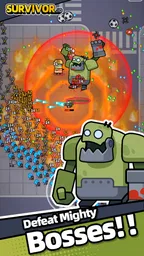
The most demanding moments are also where the game’s strengths and limitations meet. A busy screen creates urgency and gives movement real purpose, but it can make it harder to keep your attention on every threat. I would avoid making precise decisions while walking, commuting through a crowded place, or sharing attention with another task. This is a game that benefits from looking at the screen, not merely glancing down now and then.
One practical habit is to use the calmer opening of a run to settle into the controls and get a feel for the available space. Then, when the action becomes more intense, I can spend less attention working out what is happening and more on positioning. That is a small adjustment, but it helps turn hectic moments into a challenge rather than a blur.
Another trade-off is that fast action can make a failed run feel abrupt. The game’s appeal comes from surviving the pressure, so a mistake can end a satisfying stretch before I am ready to stop. If that kind of setback frustrates you, it may be better to approach each attempt as a self-contained session rather than expecting every run to deliver steady progress.
Reliability and picking up again
I would judge reliability here by whether the game suits the way you actually use a phone. Its run-based action naturally lends itself to coming back for another attempt, but the same structure means it is not the ideal choice when you need every session to be immediately interruptible. Before starting, I would make sure I have enough time to focus on the run rather than assuming I can always pause at a convenient point.
For a player who likes repeating a challenge and improving through practice, that structure can feel satisfying. Each attempt gives you another chance to respond more carefully to pressure. For someone who prefers a continuous narrative that can be resumed at a precise scene, the repeated-run format may feel less personal and less relaxing.
The game has a 4.5 average from around 1.1 million ratings, with roughly 64,000 written reviews. Those figures suggest broad interest, but they do not tell me whether its fast, crowded action will suit a particular player. I would use them as a sign that it has reached a large audience, not as a guarantee that every device or play style will feel equally comfortable.
Device fit and practical expectations
The listed minimum operating system is Android 8.0, so compatibility is one useful first check for Android players. That alone cannot tell you how the game will feel on a particular phone. If your device is older, already struggles with other action games, or has little free space, it is sensible to check its behavior on your own hardware before planning long sessions.
I would also pay attention to heat, battery use, and responsiveness during a longer play period rather than judging performance from a brief opening. Those are practical checks for any action game, especially one that can keep the screen busy. If your phone begins to feel uncomfortable to hold or the controls stop feeling responsive, take a break instead of pushing through and blaming yourself for mistakes.
The current version is 5.4.0, and the game has been available since August 9, 2022. It has passed 50 million installs, a scale that makes it easy to find in the mobile gaming conversation, but popularity does not replace a quick personal compatibility check. I would install it on a device that meets the system requirement and try a short session before deciding whether it belongs in my regular rotation.
Free to start, with spending to consider
The game is free to download, and its in-app purchases range from $0.49 to $199.99 per item. That is a wide range, so I would go in with a clear boundary if I prefer not to spend. A free entry point is useful for testing whether the action clicks, but it does not mean every optional purchase will feel small or relevant to your own play.
My advice is to decide before playing whether you are comfortable with optional spending, then keep that decision separate from the excitement of a difficult run. If you like earning progress through repeated attempts, you may prefer to play without buying anything. If you are sensitive to purchase prompts or feel pressured by optional offers, that friction could outweigh the enjoyment, and a fully paid game with a single upfront cost may be a better fit.
Who is likely to enjoy it—and who may not
I would recommend it to someone who enjoys mobile action, likes responding to escalating pressure, and is happy to replay a challenge. It is especially convenient for players who want to get into the action without committing to a long story first. Its Everyone 10+ content rating also gives families a useful starting point when considering suitability, though I would still check the game together if age-appropriate play is a concern.
I would be more cautious about recommending it to players who dislike crowded screens, want a quiet adventure, or find repeated attempts discouraging. It is also not my first choice for someone who needs to interrupt play constantly. A slower exploration game is better if atmosphere and story are the priority; a turn-based title is a safer pick when you want to stop at any moment without losing your train of thought.
Compared with the usual mobile survival-action alternatives, its strongest appeal is the directness of its challenge: stay alert, manage space, and see how long you can handle the pressure. That focus is also a limitation. If you want a broad world to explore or a more deliberate pace, this may feel narrow beside those alternatives. If what you want is an energetic run that asks for quick attention, the narrow focus becomes a benefit.
My performance verdict
For me, the best way to approach Survivor.io is as a demanding little action session: start when you can concentrate, use the early moments to settle in, and do not mistake a simple premise for a completely hands-off experience. Its busy stretches are the reason to play, but they are also where distraction, device comfort, and tolerance for setbacks matter most.
Habby’s game is free to try and has clearly attracted a large audience, with over 50 million installs. I would recommend giving it a short test if you enjoy fast survival action and repeated runs. I would skip it if you want a relaxed, interruption-proof adventure or prefer to avoid optional in-app spending altogether. My verdict is positive, with one important condition: it is most enjoyable when your phone and your attention are both ready for the pressure.
What we like
- Runs smoothly on a wide range of mobile devices.
- Short stages make it easy to play in quick sessions.
- Controls are simple to learn with one-handed play.
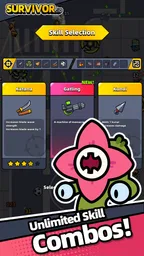
- Random skill choices add variety to each run.
- Offline play is available for much of the game.
What could be better
- Progress can slow without frequent upgrades.
- Later stages can feel repetitive.
- Random skill drops may limit a run's potential.
- Ads and purchase offers can interrupt the experience.
- Some modes and rewards require an internet connection.







