
School Party Craft review
 Analysis by Appsdrops
When I want a relaxed game where the fun comes from making a place feel like my own, School Party Craft is an easy one to reach for. It has a bright, playful take on a school-age social world, with fashion and creative play at its center. I would not choose it for a tightly guided adventure or a demanding challenge; its appeal is the freedom to wander, experiment with a look, and invent little scenarios at my own pace.
A creative social world rather than a traditional adventure
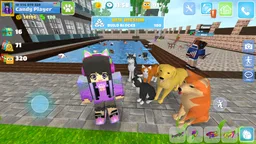
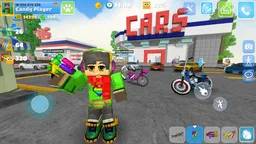
Although it is listed as an adventure game, the experience is closer to an open-ended playground than a story-led quest. The school-party theme gives the game a clear mood, but the main attraction is the chance to shape how you look and what kind of day you want to create. That makes it especially approachable for players who enjoy expressive, low-pressure play more than objectives that must be completed in a set order.
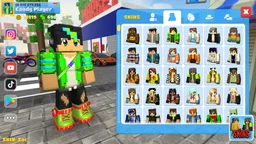
The fashion angle is more than decoration: choosing a style gives each play session a simple personal goal. I find that useful when I want a game I can dip into without remembering a complicated plot. You can decide on a theme first—something festive, casual, or deliberately silly—and use that idea to guide your session. The pleasure is in making a small, self-directed plan and seeing it through, rather than chasing a score.
That open structure is also the main trade-off. If you prefer clear missions, escalating difficulty, or a strong narrative that tells you what to do next, the game may feel loose. I would treat it as a creative hangout in game form, not as a conventional adventure with a sequence of plot milestones.
Who is likely to enjoy it
I can see it working best for children and teenagers who like dress-up, playful role-play, and building their own imaginary situations. It can also suit an adult looking for something uncomplicated to share with a younger player: instead of teaching a complicated control scheme or explaining a long backstory, you can begin by choosing a look and deciding what sort of school-party scene to imagine.
A realistic use is a short break after school or while waiting for an appointment. Rather than starting a long campaign that is awkward to pause, you can use the time to try a style idea or play out a small scene, then put the game down when you are ready. The same flexibility can help siblings or friends take turns, each suggesting a different outfit or scenario. That works best when everyone is happy to make their own fun; players who need structured cooperative goals may want a more objective-driven game.
Its age rating is Everyone 10+, which gives families a useful starting point when deciding whether it suits a particular child. I would still encourage a parent or guardian to look at the game together first, especially if the child is new to mobile games. An age label is helpful context, but a shared first session is the most practical way to see whether its style and play feel right for them.
How I would approach a session
One small habit makes open-ended games like this more satisfying: decide on a theme before you start. For example, I might pick a color, a party mood, or a character idea and try to make the whole session fit it. That gives the fashion choices a purpose and prevents browsing from becoming the entire activity. If a younger player is involved, asking them to invent a character’s reason for attending the party can turn simple outfit choices into a little story without needing the game to provide one.
I would also set a modest goal for each visit rather than expecting a single session to reveal everything. Try one style direction, explore the setting with that character in mind, and stop when the idea feels complete. This approach suits the game’s relaxed character and makes it easier to return later with a fresh theme. It is a practical way to keep an open-ended experience from feeling aimless.
For a parent, another useful approach is to make the play session collaborative without taking over. Let the child choose the look, then ask what kind of party their character is going to. That encourages imagination while keeping the activity simple. If the child is more interested in direct challenges than in inventing scenes, that is a good sign that a different style of game may be a better fit.
What its long-running presence means today
Developed by Candy Room Games & RabbitCo, the game first appeared on February 2, 2018, and its current version is 1.8.55. Those facts show that it has remained available across a substantial period, but they do not tell me exactly what changed between releases. I would not assume that a particular feature, control, or world detail was added or improved without a clear record of that change.
For someone returning after a break, the sensible expectation is to check the current build on their device and judge the experience they actually get, rather than relying on memories of an earlier version. The version number is useful when comparing installation details or discussing a problem with someone else, but a higher number by itself is not proof that every part of the game has been redesigned. I see that distinction as important: release information can establish the present build, while claims about specific improvements need evidence of what those improvements were.
The game is free to install, which makes trying it a fairly low-commitment decision. It has an average rating of 4.4 from around 2.2 million ratings, and has been installed over 100 million times. That broad reception suggests it has found a large audience, but popularity is not a guarantee that its unstructured style will suit you. I would use those figures as context, then make the decision based on whether fashion-led, self-directed play sounds enjoyable.
For existing players, the continuing version number is a reason to keep an eye on the build shown in the app store, particularly if they have not opened the game for a while. It is not, on its own, a reason to expect a dramatic change in how they play. If a familiar routine still appeals—choosing a look and inventing a scene—the core attraction is clear. If you left because you wanted more direction or a deeper adventure, I would wait for concrete details before assuming an update has addressed that preference.
Where the freedom can become friction
The same flexibility that makes the game welcoming can leave some players unsure what to do next. With no strong goal-setting structure at the center of the experience, the player has to supply much of the momentum. I enjoy that when I have an idea, but it can feel like a drawback when I open a game expecting it to provide a compelling next task.
Fashion-focused play also depends on whether experimenting with appearance is rewarding for you. If you are more interested in solving puzzles, mastering combat, or moving through a carefully written story, this is not the alternative I would recommend first. A mission-based adventure is likely to offer a clearer sense of progress, while a dedicated dress-up game may be a better choice for someone who wants clothing and styling to occupy nearly all of the playtime.
There is a practical difference between “something to do” and “a reason to keep playing.” School Party Craft is stronger at the former when you bring your own idea to it. Before installing, I would ask a child whether they enjoy inventing characters and situations, not only whether they like the idea of a school party. That question gives a better indication of whether the game’s open approach will hold their attention.
Device support is another straightforward point to check: the game requires Android 5.0 or later. If you are considering it for an older device, confirming that the device meets that requirement is more useful than assuming every phone or tablet will run it. The stated platform requirement is a baseline, not a promise about how smoothly a particular device will perform.
How it compares with other choices
Compared with a conventional adventure game, this one puts more weight on player-imagined scenarios than on a fixed sequence of tasks. That can make it easier to play in short, casual bursts, since you do not need to follow a plot thread to enjoy a session. The trade-off is that players looking for a guided story or a clear progression path may find a traditional adventure more satisfying.
Compared with a pure dress-up app, the school-party framing gives the fashion choices a setting and a role-play context. That can help younger players turn styling into a broader pretend-play activity. But someone who wants a focused styling tool, with appearance choices as the whole point, may prefer an app built specifically around that narrower interest. I would choose this game when the combination of fashion and imaginative play is the draw, rather than when either one alone is enough.
It is available as a free game, so the decision is less about an upfront purchase and more about whether the play style fits. I would still use the usual care when installing any mobile game: review the current app-store page and settings with a parent if a child will be playing. That is a sensible step for family use, not a claim about any particular feature or policy.
What I would watch before recommending an update
If you already play, I would pay attention to the version displayed in the app store and read the accompanying update notes before expecting a change to a specific part of the experience. A version change is concrete evidence that the build has changed; it does not reveal the practical impact unless the release notes explain it. For a new player, the more useful test is simpler: install it, try a session built around one clear character idea, and see whether the freedom feels inviting or aimless.
For families, I would also watch how the child chooses to play after the novelty of the theme wears off. If they keep inventing new looks and stories, the open structure is doing its job. If they repeatedly ask for missions or a clear next step, that is useful feedback rather than a failure on their part; another adventure with more direction may suit them better. This is a game to choose for creative freedom, not because every player will find the same kind of motivation in it.
My overall view is that School Party Craft is a pleasant option for players who want fashion, pretend-play, and a relaxed setting they can approach on their own terms. Its long-running presence and broad audience make it an easy game to consider, while its loose structure is a real limitation for anyone who needs guided goals. I would recommend it to a child who enjoys making up scenes and changing character styles, and skip it for someone who wants a tightly paced adventure. If you go in expecting a creative playground rather than a mission-driven story, you are much more likely to enjoy what it offers.
What we like
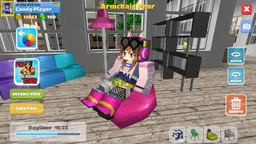
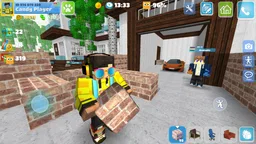
- Creative building tools make it easy to personalize homes and spaces.
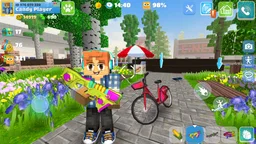
- The open world encourages relaxed exploration at your own pace.
- Character customization adds a personal touch to play.
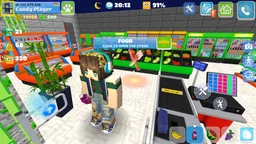
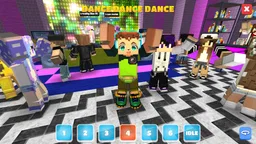
- Mini-games offer a change of pace from building and exploring.
- The colorful 3D art is easy to recognize on small screens.
What could be better
- The large number of activities can feel unfocused for some players.
- Touch controls may take time to get used to.
- Some areas and objects may feel repetitive after extended play.
- Progress can feel slow without spending time on in-game tasks.
- The game may run less smoothly on older devices.







