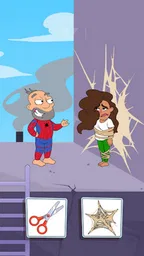
Save the Bro 2 review
 Analysis by Appsdrops
I approached Save the Bro 2 as a quick-play adventure game built around an unusual premise: rescuing someone by choosing between odd decisions. That makes the appeal less about mastering a complex control scheme and more about seeing where a strange choice leads. My overall impression is that it suits short sessions and players who enjoy playful dilemmas, but it is harder to recommend to anyone seeking a deep adventure with detailed exploration or a strong sense of long-term progression.
What the choices make you curious about
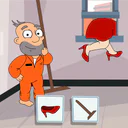
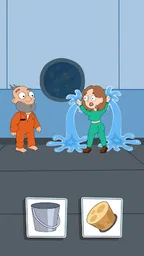
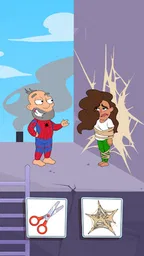
Brightika, Inc. made this free game for an Everyone-rated audience. Its central idea is easy to grasp: help Bro through situations by picking an unexpected response. The fun comes from the contrast between a serious rescue goal and the deliberately weird decisions you are asked to make. I found that setup naturally encourages a little experimentation: when a choice looks ridiculous, the question is whether it is the clever answer or the start of a comic mishap.
That structure makes the game approachable for people who do not usually play adventure games. You do not need to learn an elaborate set of controls before you can engage with the main idea. It can also work as a casual option when I have a spare moment and want a small puzzle of judgment rather than a long session. The best fit is someone who likes light, choice-led entertainment and does not mind that the humor and surprise are central to the experience.
There is a trade-off in that simplicity. Players who want to wander through a large world, manage an inventory, or build skills over a lengthy campaign may find the choice-based premise too narrow. Compared with conventional adventure games, this is a more compact, immediate kind of play: the decision itself is the attraction, not navigation or a broad toolkit. If you are choosing between this and an exploration-heavy game, pick the latter when atmosphere and discovery matter more than quick reactions to a scenario.
How to get more from a short session
A useful way to play is to treat each decision as a small experiment rather than trying to guess a single “correct” answer. If a choice surprises you, remember the reasoning behind it before replaying or moving on; that can make the joke or outcome more satisfying than tapping the first option that sounds sensible. This is particularly helpful for players who enjoy noticing how a game plays with expectations. It is not a promise of branching depth, just a way to get more engagement from the unusual-choice format the game is built around.
For a realistic everyday use case, I would reach for it while waiting for a coffee or taking a short break between tasks. The premise is easy to return to, and a brief decision-making game does not demand the same commitment as a sprawling adventure. On the other hand, if I had only a few seconds or wanted something I could play entirely on autopilot, this would not be my first choice: the point is to consider the odd options, not merely keep tapping.
Progress without assuming a pressure system
The available purchase details establish that the game is free to download and offers in-app purchases priced at $4.99 to $7.99 per item. That is useful context for deciding whether to try it, but it does not establish what each purchase contains or whether spending is needed to continue. I would therefore approach the game as a free starting point and make any purchase decision only after checking the item and its terms in the app store.
That distinction matters for a game whose appeal depends on trying choices. A purchase price alone cannot tell me whether an item is cosmetic, optional convenience, extra content, or something else, so I would not assume that paying improves progress or gives an advantage. If you are playing with a child, it is sensible to review purchase controls on the device beforehand. The Everyone age rating describes the intended content audience; it does not remove the need for a household to manage purchases according to its own preferences.
I also would not read the game’s premise as evidence of a particular progression design. The rescue framing tells me what the decisions are about, but it does not by itself confirm how many situations there are, whether choices carry over, or how a session ends. That makes it wise to set expectations around the core interaction—making quirky decisions—rather than expecting a long campaign or a specific reward loop. Players who need a clear account of progression before installing should check the current in-game presentation and store details first.
Fairness, ratings, and the limits of comparison
For a casual adventure game, fairness is less about competitive rankings and more about whether the experience feels enjoyable without paying. I see no basis for claiming that purchases affect a contest or provide an edge over other players. The game has an average rating of 4.3 from around 20 thousand ratings, which suggests a substantial audience response, but a rating cannot tell me whether its humor or decision style will match your taste. Its install count is over one million, another sign that many people have tried it, not proof that every player will find lasting value.
The fairest comparison is with other light, choice-driven games, not with action adventures or large narrative worlds. Compared with a conventional puzzle game, the unusual decisions seem to promise more personality and surprise than strict logic. Compared with a story-rich adventure, the trade-off is likely to be less emphasis on sustained world-building and more on the immediate novelty of a choice. I would pick this when I want something playful and uncomplicated; I would choose a deeper narrative game when character development and consequential long-term choices are the main attraction.
One practical tip is to judge the game by whether the decisions make you curious, rather than by how quickly you can finish a situation. That helps separate its specific appeal from a standard reflex game. Another is to avoid spending just because an option appears in the purchase flow: first decide whether the free experience already gives you the kind of amusement you wanted. Since each listed item falls within the stated $4.99–$7.99 range, checking the exact item before confirming is a sensible habit, especially on a shared device.
What I would check before committing
The game is listed as released on October 29, 2024, and its current version is 0.1.168. It requires Android 7.0 or later, so that is the key compatibility check for Android users before installing. Those details are more useful than guessing from the game’s simple premise: an older phone may still meet the minimum operating-system requirement, while a device below it will not. The title is free, so trying it is a relatively low-commitment way to find out whether the decision humor works for you.
There are several details I would not infer from the short premise or from the purchase range: what the paid items unlock, whether choices lead to persistent consequences, how much content a typical player encounters, and whether there are particular systems for replaying decisions. Those points can change whether the game feels like a brief diversion or something worth returning to. I would check the current store presentation and in-game purchase screens for answers that matter to me, rather than treating assumptions about other choice games as facts about this one.
For parents, the Everyone rating makes the game broadly positioned for a general audience, but the presence of paid items still deserves attention if a child can use the device. For adults, the same purchase context is a reminder to distinguish “free to start” from “nothing can ever cost money.” Neither point makes the game a poor choice; they simply help set a fair expectation before play.
My trust verdict
Save the Bro 2 is easiest to recommend to someone who likes quirky choices, quick sessions, and a light adventure tone. I would suggest it to a friend looking for an easy game to sample during downtime, especially if they enjoy trying the unexpected answer just to see what happens. I would steer a friend toward a more substantial story adventure if they want extensive exploration, carefully developed characters, or a clearly documented progression system.
Brightika, Inc.’s game has a straightforward hook and a free entry point, with optional purchases listed at $4.99 to $7.99 per item. Its rating and broad reach show that it has attracted plenty of players, but neither figure settles the question of whether its specific humor will land for you. My recommendation is to try it with modest expectations: enjoy the odd decisions for what they are, keep spending optional, and move on if you find yourself wanting richer consequences than this premise promises.
What we like
- Quick levels make it easy to play in short sessions.
- Simple controls are easy for newcomers to learn.
- Puzzles offer a light challenge without complex rules.
- The humorous scenarios add personality to each level.
- The sequel provides fresh situations for returning players.
What could be better
- Some puzzles rely on trial and error.
- Repeated mechanics can make later levels feel familiar.
- Ads may interrupt play between levels.
- The humor may not appeal to every player.
- Progress can feel slow without optional rewards.







