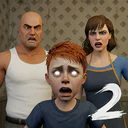
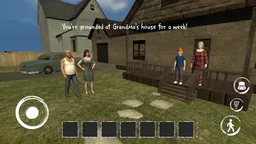
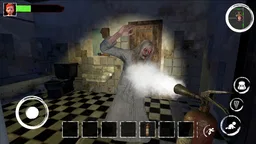
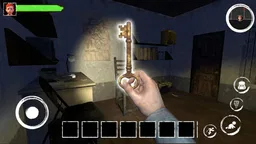
Runaway Boy 2: Horror Escape review
 Analysis by Appsdrops
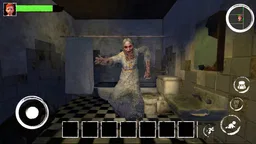
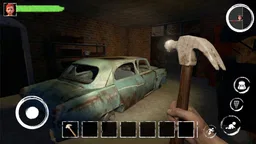
I would treat Runaway Boy 2: Horror Escape as a short-session suspense game rather than something to build a daily routine around. Its central appeal is easy to grasp: you are trying to get out of a threatening mansion while a dangerous granny makes every move feel risky. That simple setup gives the game an immediate hook, especially when I want a tense distraction and do not feel like learning a complicated adventure system.
It is an adventure game from Sprigame, offered free, with a general-audience age rating. The current version is 0.3.6, and it has passed five million installs. Those figures suggest plenty of people have tried it, but the average rating is 3.0 from around 2,500 ratings, so I would approach it with measured expectations rather than assume it will satisfy every horror fan. The smaller pool of written reviews also means the overall score is more useful as a caution than as a complete verdict.
Why the first sessions can work
The mansion-and-pursuer premise gives each moment a clear purpose: stay alert, avoid being caught, and look for a way forward. I like that kind of direct objective when I have a few spare minutes. There is no need to invest in a long story before the danger makes sense, and the basic escape fantasy is recognizable without turning the game into a puzzle-heavy mystery.
The best time to try it is when you want an uncomplicated burst of tension: perhaps during a quiet break, or while waiting for a ride. I would choose a calm moment rather than open it while distracted. Horror escape games depend on attention; if I am switching between the game and messages, I am more likely to miss a cue or make a careless move, and the suspense can turn into irritation.
For a first play, I recommend resisting the urge to rush. In a setting built around evading a pursuer, pausing to understand the space is often more useful than immediately charging toward the next apparent objective. Notice where you have already been and what seems to draw danger closer. That small mental map can make a second attempt feel more deliberate, even if the game itself does not provide a formal planning tool.
The main early strength is clarity of purpose, not depth. The premise tells you what kind of experience you are getting, while the appeal comes from the pressure of trying to escape. If you enjoy being hunted in a confined horror setting, that is enough to make an initial session engaging. If you need a rich cast, a carefully developed plot, or a wide world to explore, the setup may feel too narrow from the start.
Who is likely to enjoy the chase
I can see this working for players who like simple horror scenarios and prefer reacting under pressure to managing a large inventory or a complicated progression system. It may also suit someone curious about the genre who wants to test whether being pursued in a mansion is fun before committing to a longer, more elaborate horror adventure.
It is less suitable for players who dislike being chased, get frustrated by repeating a section, or want a relaxed game to play while doing something else. The general-audience age classification describes the intended content category, but it does not mean the tense pursuit will feel comfortable for every player. Anyone sensitive to horror pressure should decide based on that atmosphere, not on the age label alone.
What remains after the novelty wears off
The first sessions have a clear advantage: the escape premise is easy to understand, and the threat supplies an immediate reason to keep moving. The longer-term question is whether that loop keeps offering enough new decisions. From what the game’s core pitch promises, I would expect its staying power to depend more on how much I enjoy repeating the basic hide-and-escape rhythm than on discovering a broad collection of activities.
That is a meaningful distinction when comparing it with other adventure and horror games. Some alternatives lean on exploration, story chapters, or a larger set of puzzles; others focus on a polished chase that is meant to be replayed. Runaway Boy 2 is most appealing if the central pursuit itself is the part you want. If you mainly play horror games to uncover story details or solve layered mysteries, a more narrative-led option is likely to reward your time better.
A practical way to judge its month-to-month value is to ask whether you still enjoy making careful choices after you already understand the basic premise. When I return to a compact escape game, I want the tension to make familiar spaces feel worth navigating again. If a later session feels like merely repeating a route without fresh interest, there is little reason to force a habit. A free game can be easy to try without needing to become a permanent fixture on your home screen.
For an everyday scenario, imagine opening it on a short evening break. If you have enough quiet to focus and want a quick dose of suspense, the mansion setting can be a good fit. If you have only a moment between errands, or you are likely to be interrupted, the same pressure may be a poor match: losing concentration in a chase can make the session feel abrupt rather than satisfying. I would save it for a stretch of uninterrupted attention instead of treating it as a game to check constantly.
Keeping it installed without turning it into a chore
The maintenance burden seems low in the ordinary sense: the game is free to download, and its listed minimum operating-system requirement is Android 7.1. I would still check that my device meets that requirement before installing, particularly if it is an older phone. For someone deciding whether to keep it, the more important upkeep is personal: do I still want this particular kind of tension, or am I keeping it only because I played it once?
In-app purchases are listed at $2.99 per item. I would not assume that paying is necessary to enjoy the escape premise, nor would I spend before I know whether the basic experience holds my attention. A sensible approach is to try the free game first, decide what is genuinely missing for you, and only then consider whether an optional purchase has a clear purpose. That keeps a small horror diversion from quietly becoming a series of impulse buys.
Version 0.3.6 is a reminder to be attentive to how the game feels on your own device rather than expecting a finished, expansive adventure by default. I would check for updates through the app store when returning after a long break, but I would not treat updates as proof that the experience has changed in a particular way. More importantly, I would base the decision to keep it on whether it runs comfortably and remains enjoyable in my own sessions.
Where fatigue can set in
The narrowness that makes the game approachable can also limit its replay appeal. Once the mansion escape and the granny’s threat are familiar, the same basic idea may no longer feel surprising. That is not automatically a flaw: focused horror games can be satisfying precisely because they do one thing. But if I want a game that continually adds new places, mechanics, or story layers, I would look elsewhere rather than expecting this premise to provide that kind of variety.
The rating is another reason I would keep expectations grounded. A 3.0 average is neither a reason to dismiss the game outright nor a guarantee that its rough edges will suit me. With around 2,500 ratings and only a small number of written reviews, the broad score tells me reactions are mixed, but it cannot explain which specific friction points matter most to an individual player. I would use the first session as a personal test: does the chase feel exciting, or does it quickly become repetitive?
There is also a trade-off between tension and convenience. A game centered on escaping a pursuer is less forgiving of distracted play than a casual puzzle or a relaxed exploration game. That makes it a poor choice for noisy commutes, stop-and-start waiting, or moments when I cannot give it attention. It is not a problem unique to this title so much as a direct consequence of the kind of experience it offers, and it matters when deciding whether it will fit into a real routine.
Some players may also find that horror loses its effect once the threat becomes familiar. If the granny’s presence is the main source of excitement, repeated exposure can dull the surprise. I would not try to solve that by playing every day. Leaving it for occasional sessions may preserve more of its appeal than turning it into a daily obligation, especially if the game’s core loop is what you enjoy most.
My long-term verdict
I would give Runaway Boy 2: Horror Escape a try if I wanted a free, straightforward horror-adventure built around getting out of a threatening mansion. Its clear premise makes it easy to sample, and the pursuit can suit short sessions when I am ready to focus. The game is also a reasonable starting point for someone who wants to see whether a chase-driven escape scenario appeals to them before trying more elaborate horror adventures.
I would skip it if my priority were deep storytelling, a broad range of activities, or a low-pressure game I could play while multitasking. I would also avoid buying optional items until I had established that the basic experience was worth returning to. The 3.0 average rating tells me to expect mixed reactions, so I would treat my own first session as more decisive than the install count.
For lasting space on my phone, this feels like an occasional suspense pick rather than a dependable everyday game. Its value is strongest when the mansion escape still gives me a reason to pay attention; it weakens if the familiar chase turns into repetition. I would install it for a focused trial, return only when I am in the mood for that specific kind of tension, and remove it without regret if the novelty fades. That is a fair bargain for a free game, and a more honest recommendation than promising it will become a long-term favorite.
What we like
- Stealth encounters make hiding and timing important.
- Exploration rewards players who inspect rooms carefully.
- A range of puzzles adds variety to escape sequences.
- The horror setting creates suspense during chases.
- Short objectives make it easy to play in brief sessions.
What could be better
- Chase sequences may feel stressful for younger players.
- Some puzzles can be difficult without clear clues.
- Repeated attempts may make encounters feel predictable.
- Touch controls may take time to get used to.
- Ads or in-app purchases may interrupt play.







