




Last Pirate: Survival Island review
 Analysis by Appsdrops
I can see Last Pirate: Survival Island fitting a particular kind of shared-device moment: one person has a few minutes to poke around a stranded island, then hands the phone to someone else who wants to try surviving too. It is an adventure game built around making do with what the environment offers, rather than a quick puzzle you finish in one sitting. The appeal is the mix of scavenging, crafting, farming, building a raft, and facing zombies and a pirate ship. In my view, that combination makes it more interesting than a simple survival checklist, but it also asks for patience and a willingness to learn through play.
Developed by RetroStyle Games UA, the game is free to start and has a Teen content rating. It has a 4.4 average from around 228,000 ratings and more than 10 million installs, which suggests that its survival-adventure approach has found a broad audience. I would still treat those figures as background, not a promise that the game will suit everyone. If your household likes exploration and gradual progress, it is worth a look; if you want a calm, self-contained game that needs little attention, this is a less natural fit.
One island, several ways to spend a short session
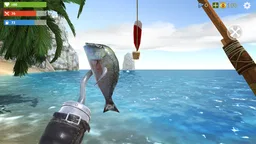
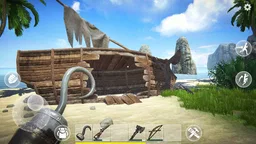
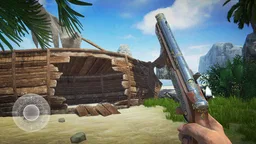
The basic pleasure here is turning a difficult situation into a workable routine. You explore, gather useful materials, make items, and gradually establish ways to stay supplied. Farming gives the survival loop a slower, more deliberate side, while raft-building points toward exploration beyond simply staying in one place. The zombies and pirate-ship threat add a sharper edge. Those elements give the game a distinct identity: it is not only about collecting supplies, and it is not only about combat.
For a shared phone or tablet, that variety can help. One player might enjoy scouting and collecting, while another is more interested in crafting or deciding what to build next. That does not mean the game provides separate roles or household sharing tools; it simply means there are different parts of the survival loop to talk about. A useful handoff is to say what you were trying to accomplish and what you gathered, rather than expecting the next person to guess your plan.
A realistic use case is a short break when someone wants to make one small piece of progress: collect materials, tend to a practical task, or think through what the next step should be. I would not assume every session will feel equally productive. Survival games often make preparation matter, and this one’s blend of crafting, farming, travel, and threats rewards a bit of continuity. It works best when players are happy to return to an ongoing situation instead of demanding a neat ending every time they pick up the device.
That creates a small but important shared-device trade-off. Passing the device around can make the island a group conversation, but frequent handoffs may also interrupt a player’s sense of direction. If several people use the same device, agree on a simple routine: let the current player finish their immediate task, then hand it over with a quick explanation of what they were working toward. This is a practical habit, not a special in-game feature, and it can prevent the next person from undoing a plan by accident.
Why the survival loop feels different from a conventional adventure
Compared with a conventional adventure game that steers you through a sequence of clear objectives, Last Pirate: Survival Island puts more weight on managing your situation. Gathering is not just a detour between story moments; it is part of the reason to explore. Farming shifts the pace again, asking you to think about ongoing supplies rather than only the next encounter. Building a raft gives exploration a concrete purpose, while the hostile elements keep the island from feeling entirely safe.
That combination is a strength when you enjoy setting your own priorities. It is also a limitation if you prefer a tightly directed story, predictable combat, or a relaxed building game with little danger. Someone who mainly wants to decorate or construct at their own pace may find the threats distracting. Someone who wants constant action may find gathering and farming too measured. I would choose this over a straightforward action adventure when I want to plan and improvise, but choose a more focused alternative if I want either pure combat or peaceful construction.
One useful way to approach the game is to avoid treating every available activity as equally urgent. When a survival game presents several needs at once, chasing all of them can make progress feel scattered. I’d pick one immediate objective—such as improving supplies, preparing for a journey, or making a needed item—and let that guide the next stretch of play. This keeps exploration purposeful and gives a shared-device player a clear handoff point. It is a general play strategy, not a claim about a hidden feature or a guaranteed route through the game.
Setting expectations before the device changes hands
There is no reason to assume that a shared device automatically means separate personal progress. Before several people start playing, decide whether the game is being treated as one ongoing island or as an individual activity for the person holding the device. If the device is already used by more than one person, it is sensible to check who is opening the game and what they intend to do before making changes. I would not build a household plan around account separation or family controls unless those options are actually available on the device and in the game.
That boundary matters more than it may seem. In a survival game, choices can shape what the next player sees: one person may be preparing to explore, while another may want to stay close to current resources. A quick verbal handoff helps keep those intentions aligned. If everyone wants an independent experience, a shared device may not be the best arrangement; use separate access only where the platform and game support it, rather than assuming that different players will automatically receive distinct progress.
The game is free to download, but it includes optional in-app purchases priced from $0.99 to $79.99 per item. For a household, I would make that visible before a younger player starts, and use the device’s purchase protections where appropriate. The free entry point is useful for trying the game, but it does not mean every possible purchase is free. Agreeing in advance that purchases require an adult’s approval is a straightforward way to avoid surprises, without making assumptions about how the game handles payment prompts.
Another practical consideration is the minimum operating-system requirement: Android 7.1. Check the device’s software compatibility before planning a shared session, especially if the household has an older phone or tablet set aside for games. The current version is 1.14.322, so if someone is helping troubleshoot, it is useful to know which version is installed. I would keep that as a simple device check rather than assume that every older device will run the game in the same way.
Age, trust, and the right kind of supervision
The Teen rating is a useful starting point for deciding whether the game belongs on a family device. Its survival framing includes zombies and hostile pirate-related danger, so I would consider how the intended player responds to those themes rather than relying on the word “adventure” alone. A teen who enjoys tense exploration may be comfortable with it; a younger child or a player who dislikes threatening encounters may not be. The rating offers context, but a parent or caregiver still knows the player better than a label does.
I would describe the experience as something to try together first if there is uncertainty. Watch how the player reacts to the threats, and talk about the optional purchases before handing over the device. That is more useful than promising the game is suitable for every teen or assuming the rating settles every household question. The game’s mix of resource gathering and danger can appeal to players who like planning, but those same pressures may frustrate someone who wants a gentler pace.
Trust also means being clear about turns and changes. If a sibling or parent is sharing the same device, say whether it is okay to continue the current run, make a major decision, or simply explore for a while. There is no need to turn casual play into a formal schedule; a brief agreement is enough to reduce disputes. The game’s open-ended survival structure makes this especially helpful because two people can have different ideas about what counts as useful progress.
Who will enjoy it—and when I would choose something else
I’d recommend this to players who enjoy the feeling of building up from limited resources and who do not mind balancing several kinds of activity. It has a stronger case for someone who likes to gather, craft, farm, and prepare for exploration than for someone looking for a story-led adventure with a clearly defined finish. The raft and the island setting give the survival loop a sense of direction, while zombies and the pirate ship provide a reason to take the surroundings seriously.
I would be more cautious about recommending it to a household looking for a child-friendly, low-pressure game, or to anyone who wants uncomplicated sessions that can be interrupted without losing their train of thought. It may also disappoint players who expect a purely social experience: the most useful household coordination happens outside the game, through agreeing on turns and intentions. For peaceful building, pick a calmer option; for a guided narrative, choose an adventure with a more direct story structure.
The free starting point makes it reasonable to test whether the rhythm suits you, but I would approach spending carefully. With individual purchases reaching $79.99, the best household rule is to treat any purchase as a separate decision rather than part of ordinary play. That keeps the game’s value clear: try the survival loop first, see whether everyone enjoys the balance of preparation and danger, and only then decide whether spending anything makes sense.
My household verdict
Last Pirate: Survival Island is a better shared-device choice for people who enjoy discussing plans than for people who expect independent, neatly separated play. Its strongest quality is the way several survival activities—scavenging, crafting, farming, raft-building, and dealing with threats—give players different reasons to return. Its main friction is that an ongoing survival adventure can be awkward when the device changes hands without a clear handoff, and its purchase range calls for sensible boundaries.
RetroStyle Games UA has made a free adventure that has drawn a large audience, and its 4.4 average reflects plenty of interest, though neither popularity nor rating guarantees a personal match. I’d try it on a compatible device with a clear understanding of who is playing and how purchases are handled. If your household likes resourceful, slightly tense island survival and can coordinate turns, it is a distinctive option. If you want a quiet game, separate progress for each player, or a strongly guided story, I would look elsewhere.
What we like
- Exploration rewards players with useful supplies and hidden locations.
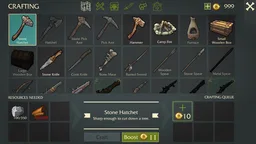
- The crafting system supports several ways to prepare for survival.
- Offline play lets you continue without a constant internet connection.
- The island setting creates a clear sense of adventure.
- Progression gives you new goals as you improve your equipment.
What could be better
- Survival meters require frequent attention during longer sessions.
- Some crafting recipes depend on resources that are hard to find.
- Combat can feel repetitive after facing the same threats.
- Ads may interrupt the experience for players using the free version.
- Touch controls can make precise actions awkward on smaller screens.







