Jurassic Clash Primal Dino Sim review
 Analysis by Appsdrops
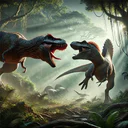
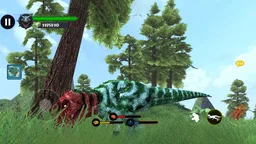
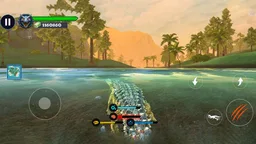
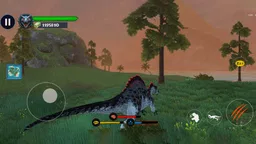
I’d approach Jurassic Clash: Primal Dino Sim as a game for a particular mood: you want dinosaurs, a prehistoric setting, and direct action rather than a long, carefully guided adventure. That distinction matters more than the dramatic premise. A dinosaur theme can attract players who enjoy anything from peaceful creature care to sprawling survival games, but this is presented as an adventure game built around a primal clash. If you want the fantasy of stepping into a dinosaur-centred battle, it has an obvious appeal; if you’re looking for a detailed simulation of animal behaviour, the name alone isn’t enough reason to choose it.
What to consider before you play
The practical starting point is that the game is free to download, while optional in-app purchases range from $0.99 to $99.99 per item. I’d treat that wide spread as a reason to decide your own spending limit before getting invested, not as a reason to assume you need to buy anything. Try the free experience first and judge whether the core loop holds your attention. If you’re shopping for a child or sharing a device, the Teen content rating and the presence of in-app purchases are worth discussing together.
There is also a useful distinction between “dinosaur game” and “dinosaur sim.” Jurassic Clash is an adventure game from Techouse Games, and its central promise is a prehistoric battlefield. That points toward active play, not necessarily the slow observation, habitat management, or scientific detail that some players expect from a simulation. I’d choose it when the appeal is being part of a dinosaur-themed confrontation, and look elsewhere if your main goal is to build or care for a dinosaur world.
The game has a 4.0 average from around 14,000 ratings, with more than 5 million installs. Those figures suggest that plenty of players have given it a try, but they can’t tell you whether its particular style will suit you. For me, the better test is simple: do you want a quick adventure with a prehistoric action premise, or do you want a deep, leisurely game that rewards patient planning? Being honest about that preference will save more frustration than relying on popularity alone.
Why the prehistoric battle angle can work
The strongest reason to try this game is also its clearest one: it places dinosaurs at the centre of an adventure rather than treating them as background decoration. If you’re drawn to the idea of a primal contest, that gives you a direct starting point. You don’t need to arrive with a complicated strategy-game mindset or a particular interest in collecting and cataloguing creatures. The premise is easy to understand, which makes it a plausible pick for a short break when you want something more forceful than a puzzle but don’t feel like committing to a lengthy story.
That focused identity can be a benefit when you’re choosing among the crowded range of dinosaur-themed games. Some alternatives lean toward construction, others toward survival, and others toward child-friendly creature interaction. Jurassic Clash is more appealing when you want the conflict itself to be the draw. My advice is to use the first few sessions to decide whether the actual play keeps that fantasy engaging, rather than judging the game solely by its prehistoric setting. Theme gets you through the door; a satisfying rhythm is what makes you return.
A useful way to test that rhythm is to pay attention to how a session feels when you have limited time. For example, if you have a short wait before an appointment, start a session only when you can comfortably stop afterward. Notice whether the game makes it clear when you have reached a natural pause, and whether you feel pulled into “one more” round or simply ready to close it. That small check helps you work out whether it suits occasional play or is better saved for a longer stretch of free time.
For younger players, the dinosaur premise may be the immediate attraction, but I wouldn’t use the Teen rating as a substitute for checking whether the tone is appropriate for the person playing. It’s also sensible to set expectations around optional spending before handing over a device. A parent can agree on a no-purchase rule or require permission before any transaction. That approach is more useful than assuming a free download means the whole experience has no financial prompts.
Where it differs from other dinosaur adventures
If you’re comparing it with a dinosaur park or habitat-building game, the choice comes down to what you want to do with the creatures. A management-focused alternative is likely to suit someone who enjoys arranging a world and making gradual decisions. Jurassic Clash is the more natural fit if your interest is an adventure shaped by confrontation. Neither approach is automatically better; they answer different questions. One asks how you’ll develop a dinosaur setting, while this game’s framing asks whether a prehistoric battle is an entertaining way to spend your time.
Against survival-style dinosaur games, I’d make a similar distinction. Survival usually attracts players who want pressure, resource decisions, and a sense of keeping going in a hostile environment. The battlefield framing here gives a more immediately combative expectation. If what you want is a harsh world to endure, a survival alternative may be a better match. If you want to get straight to a dinosaur-themed clash, Jurassic Clash is the more relevant category to try. I wouldn’t pick one based on the word “sim” alone, since that word can suggest very different kinds of play.
There’s also a case for choosing a story-led adventure instead. Players who value memorable characters, a carefully paced plot, or exploration between major encounters may be happier with a narrative-first game. This title’s appeal is more direct: prehistoric action is the hook. That can be exactly right when you’re tired of dialogue-heavy games, but it can feel thin if you need a strong story to stay interested. Before committing, ask yourself whether a compelling setting is enough, or whether you need the characters and plot to carry the experience.
One non-obvious trade-off is that a focused theme makes the game easy to recommend to dinosaur fans, but can also narrow its appeal once the novelty fades. I’d pay attention to whether you enjoy the moment-to-moment activity independently of seeing dinosaurs. If you do, the theme is a bonus. If the only thing keeping you engaged is the subject matter, you may be better off with an alternative that offers a second interest—building, exploration, narrative, or collection—alongside its creatures.
How to try it without overcommitting
The game is free, so there’s no purchase price to weigh before installing it. Still, “free to start” and “right for me” are different questions. I’d give it a short, deliberate trial: play enough to understand the basic feel, then stop and ask whether you want to return because the play is enjoyable or because you’re waiting for the premise to develop. That’s a practical way to avoid spending simply because you’ve already invested time.
In-app purchases run from $0.99 to $99.99 per item, so the upper end is substantial. I’d avoid buying anything during an early session, especially if you haven’t yet worked out what the game’s ordinary pace feels like. If you later consider a purchase, first decide what specific frustration or enjoyment it would address. If you can’t name that clearly, waiting is the safer choice. Players who prefer games with no optional spending at all may be more comfortable choosing a paid game with a clear upfront cost instead.
Switching from another dinosaur game is easy in one sense: there’s no reason to abandon a favourite before trying this one. The harder part is managing expectations. A player arriving from a tranquil park builder may find the battle-led premise less relaxing; someone coming from an intense survival game may want more open-ended pressure than an adventure format provides. I’d keep your existing game installed and treat this as a separate flavour of dinosaur entertainment until you know which one you actually reach for.
It also helps to make the first session a fair test rather than an idealized one. Play when you can give it a little attention, not while juggling several distractions, and don’t mistake a first impression of the theme for a verdict on the whole experience. Then try it again in the kind of everyday window you normally have available. A game that feels entertaining for a brief break may be more valuable to you than a bigger alternative that requires planning a long session.
Who should skip it, and who should give it a chance
I’d skip Jurassic Clash if you specifically want a realistic wildlife simulation, a peaceful dinosaur-raising experience, a deep management layer, or a story that takes priority over action. Those are reasonable preferences, but they point toward different games. I’d also pass if you dislike optional purchases strongly enough that their presence spoils the experience, or if the Teen rating doesn’t fit the intended player. Free access is helpful, but it doesn’t make those mismatches disappear.
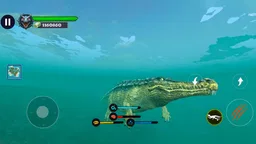
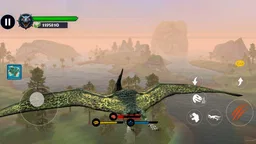
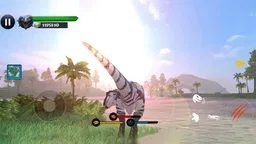
I’d give it a chance if you enjoy adventure games, like prehistoric settings, and are curious about an action-oriented dinosaur premise. It may also suit someone who wants to sample a game without paying upfront, provided they’re comfortable setting boundaries around optional purchases. The developer is Techouse Games, and the current version is 0.4.6; the listed release date is May 19, 2026. It supports Android 6.0 or later, which gives older compatible devices a route to trying it, though compatibility alone doesn’t guarantee that every device will feel equally comfortable to play on.
My recommendation is to download it for the battle-focused dinosaur fantasy, not because you expect a complete wildlife simulator or a sprawling story. Start without spending, see whether the actual play—not just the concept—keeps you interested, and compare that feeling with what you enjoy in other dinosaur games. For players who want a straightforward prehistoric adventure, it’s a reasonable free game to test; for players seeking calm management or realistic simulation, a different kind of dinosaur game will be a better fit.
What we like
- The prehistoric setting gives the game a clear identity.
- Dinosaur battles offer a direct and easy-to-follow objective.
- Short play sessions suit casual mobile gaming.
- The primal theme may appeal to dinosaur fans.
- Offline play can be convenient when internet access is limited.
What could be better
- Combat may feel repetitive after extended play.
- Progression can require patience between upgrades.
- Touch controls may take time to master.
- Visual quality may vary across older devices.
- Ads or in-app purchases may interrupt play.







