



June's Journey: Hidden Objects review
 Analysis by Appsdrops
I enjoy hidden-object games most when looking closely feels like part of a mystery rather than a test of speed. June’s Journey works well in that lane: it’s an adventure game from Wooga where searching detailed scenes for clues feeds into a larger story. Its defining pleasure is simple but effective—settling into a picture, learning how its objects are arranged, and noticing the one detail that seemed invisible a moment ago.
Why searching scenes is the heart of the game
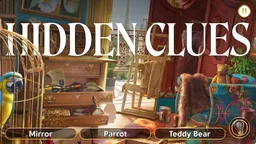
The main activity asks me to find named objects within illustrated scenes. That sounds familiar if you have played the genre, but the appeal here comes from the way a scene invites a slower, more deliberate look. Instead of treating each image like a pile of icons to tap as quickly as possible, I find myself scanning it in passes: first the obvious foreground, then the edges, then the busy corners where a small shape can blend into the artwork.
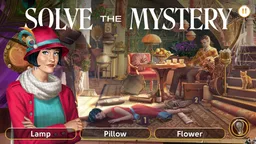
That search is tied to an unfolding mystery, so the objects feel like part of a detective-style adventure rather than disconnected targets. The store summary points to clues and puzzles, and the game’s central hook is the expectation that careful observation will help reveal what is going on. I would recommend it to someone who likes a narrative reason to keep playing, but who is also happy to pause and inspect a picture instead of rushing through action.
It is free to play, though optional in-app purchases range from a few cents to just under two hundred dollars per item. I’d go in expecting the core appeal to be the scene searches, not assuming that every part of progression will be equally relaxed or that spending is necessary. The game is rated Teen, a useful consideration for parents choosing a story-driven mobile game.
How the search feels from one scene to the next
In practice, I get the most out of a scene when I resist the urge to tap randomly. I read the object list, choose one target, and scan for its outline or color before moving to the next. That small change makes the game feel less like frantic clicking and more like a visual puzzle. When an item is hard to spot, switching from a broad sweep to checking likely hiding places—behind other objects, near the borders, or among similarly colored details—can be more useful than staring at the whole image again.
A practical tip is to remember what has already caught your attention. If I keep circling the same obvious area, I deliberately shift to a different part of the picture and look for shapes rather than names: a narrow curve, a small bright patch, or an object partly obscured by its surroundings. This is a general search approach rather than a guaranteed shortcut, but it helps make difficult scenes feel manageable without turning the session into random tapping.
The game’s format suits short breaks because a single scene gives me a clear task and a natural stopping point. It can also work for a longer sit-down when I want to follow the mystery and keep moving through the adventure. I would not call it an ideal game for every spare minute, though: the pleasure depends on being willing to focus on a still image, and that can feel repetitive if I’m in the mood for movement, reflexes, or a constant stream of new mechanics.
A good fit for a quiet break
Picture an ordinary pause after lunch: I have a few minutes, want something more engaging than scrolling, but don’t want to start a complicated game that demands a long uninterrupted session. A scene search is a good match. I can settle into the artwork, find a handful of listed objects, and leave when I’m ready. The mystery gives that small task some context, while the visual hunt remains understandable even if I’m not fully immersed in the story at that moment.
It is also a reasonable choice to share informally with someone who enjoys looking for details. Two people can scan the same picture and notice different things, which makes the scene itself a natural conversation starter. I would keep expectations modest: it is still a mobile game built around an individual search task, not a dedicated group activity or a substitute for a more involved cooperative puzzle.
For a longer session, I’d play when I can give the screen my attention. The same image can become frustrating if I’m distracted and repeatedly lose track of the remaining objects. I find the game more satisfying when I treat concentration as the point, rather than trying to squeeze it into a moment when I’m already multitasking.
Where the genre’s familiar limits show
The main tradeoff is repetition. Hidden-object play depends on inspecting scenes, so anyone who tires quickly of searching illustrations may find that the core loop wears thin, even with a mystery to provide narrative motivation. If you want combat, platforming, spatial exploration, or puzzles that change their rules constantly, this is probably not the right adventure game for you. A more action-oriented title will offer a different kind of challenge.
There is also a balance between careful observation and patience. A scene that hides an object well can be satisfying once it clicks, but it can also stall a session when I can’t tell whether I overlooked a detail or simply need another pass. My best remedy is to change my scanning method rather than tapping every plausible spot. That keeps the hunt engaging, though it does not remove the possibility of getting stuck on a particularly elusive item.
Because the game is free with optional purchases, I’d decide in advance how I want to approach spending. If I’m comfortable playing at my own pace and taking breaks when I reach a point where progress feels slow, I can enjoy the basic appeal without treating purchases as part of the experience. If I tend to spend impulsively when a game asks me to wait or makes a challenge feel inconvenient, I’d set a personal limit before starting. The listed purchase range is broad, from $0.09 to $199.99 per item, so checking each offer carefully matters.
Compared with a typical quick-match puzzle, this game asks for visual attention rather than rapid pattern matching. Compared with a conventional adventure game, its exploration is focused on examining composed scenes instead of navigating a space in real time. That makes it distinctive for people who like detail-spotting, but it also narrows its audience. I’d choose it over a reflex-based game when I want a calmer challenge; I’d choose another option when I want active movement or more varied moment-to-moment play.
Who is likely to enjoy it most
I think June’s Journey is best for players who like mysteries, illustrated settings, and the small satisfaction of finding a cleverly placed object. It is especially suited to someone who wants a game that can be picked up for a focused scene, then put down without needing to remember a complicated control scheme. Its adventure framing may also appeal to readers who prefer a continuing story around their puzzles, rather than a series of unrelated rounds.
It is less suitable for anyone who dislikes repeated visual searches, needs constant novelty, or wants a game that rewards quick reactions. People who are easily frustrated by hidden items should know that the challenge comes from patient looking, not from mastering a complex set of controls. I would also steer away from it if the prospect of optional purchases is a concern and setting firm spending boundaries would make play feel stressful.
Wooga released the game on October 3, 2017, and it remains a substantial presence on mobile: it has over 50 million installs, around 1.2 million ratings, and an average rating of 4.4. It has about 99,000 written reviews. The current version is 4.17.6, and it requires Android 7.0 or later. Those figures suggest a well-established audience, but they don’t guarantee that its particular pace or search style will suit you; the deciding factor is whether careful scene inspection sounds relaxing or repetitive.
My recommendation is to try it if you want a gentle, clue-focused adventure built around looking closely. I especially like the way the scene search gives a short break a clear purpose, and the story gives those searches a reason to continue. I’d keep my expectations grounded: this is not an action game, and its central activity does not transform into something entirely different from one moment to the next. For the right player, though, that consistency is a strength. It offers a familiar, satisfying routine—study the picture, spot what others might miss, and follow the mystery at a comfortable pace.
What we like
- The hidden-object scenes reward careful observation.
- Clue hints help when a search becomes difficult.
- New chapters provide a steady stream of story content.
- Decorating the island adds a creative goal beyond solving scenes.
- Daily events offer extra rewards and limited-time challenges.
What could be better
- Energy limits how many scenes you can play in one sitting.
- Some progress can feel slow without spending premium currency.
- Repeated scenes may become familiar over time.
- Timed events can pressure players to check in regularly.
- The story unfolds gradually across many chapters.







