
Hello Neighbor review
 Analysis by Appsdrops
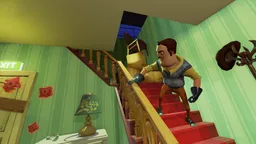
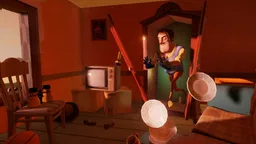
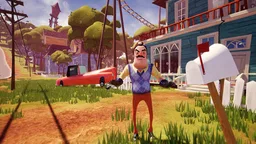
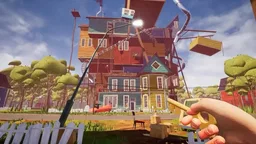
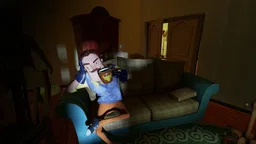
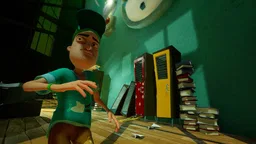
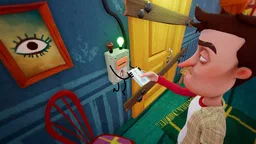
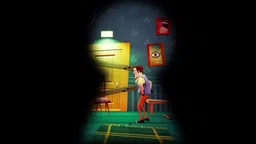
I found Hello Neighbor most compelling when I treated it as a place to explore rather than a straightforward horror story. The premise puts me in a neighbor’s house, where sneaking, noticing details, and solving puzzles matter more than fighting. That mix gives the adventure an immediate hook: I want to find out what is behind the next door, but every attempt to get there can turn into a tense detour.
Developed by tinyBuild, this free adventure game is rated Everyone 10+ and has attracted more than 50 million installs. Its average rating is 3.9 from around 550,000 ratings, which feels consistent with a game that can be memorable when its stealth-and-puzzle loop clicks, yet frustrating when a clue or route is hard to read. I would recommend it most readily to players who enjoy experimenting and don’t mind occasionally retracing their steps.
Why the first few sessions pull you in
The early appeal comes from a simple but effective tension: I can see places I want to reach, but getting there takes observation and a little nerve. The house feels less like a corridor of assigned tasks and more like a puzzle space. A locked route, an unfamiliar room, or a suspicious sound can all prompt the same useful question: what can I learn by looking around before I make another move?
That makes the game a good fit for short sessions with a clear personal goal. I might decide to investigate one part of the house, test a route, or work out how a puzzle connects to an obstacle I noticed earlier. Even when I don’t make obvious progress, a session can feel worthwhile if I leave with a better understanding of the layout or a new idea to try.
The horror tone helps, but it is not the only reason to keep playing. The real draw is the push and pull between curiosity and caution. Rushing toward a mystery can be exciting, while taking a moment to inspect the surroundings can save a failed attempt. Careful observation is often more useful than speed, so players who enjoy piecing together environments should get more out of it than those looking for constant action.
For a practical first-session approach, I suggest choosing one nearby objective and learning the route around it before trying to solve everything at once. Pay attention to obstacles and alternative paths, and treat a setback as information rather than proof that the whole attempt was wasted. That mindset makes the game feel more like a sequence of experiments and less like a test of patience.
A different sort of adventure game
Compared with a conventional action-adventure, Hello Neighbor puts less emphasis on combat and more on stealth, exploration, and figuring out how the environment works. Compared with a puzzle game built around clean, self-contained rooms, its challenges are tied to moving through a house that can feel tense and unpredictable. That blend is its main strength, but it also means the pacing can be uneven: a player may spend time exploring without immediately understanding which discovery matters.
If I wanted a relaxed game that clearly explains each objective, I would choose a more guided puzzle adventure instead. If I wanted fast action, I would look elsewhere. This is better for someone who enjoys being a little unsure, testing possibilities, and gradually forming a plan. The appeal is not that every puzzle is instantly satisfying; it is that a small discovery can change how I think about the next attempt.
What keeps it interesting after the novelty
The game’s recurring value depends on whether I enjoy learning its spaces and revisiting an idea from a new angle. The first surprise of entering a strange house cannot carry every later session by itself. What lasts is the process of remembering where I got stuck, noticing a detail I overlooked, and deciding whether a different route or approach might work.
A useful habit is to make each play session about one question rather than vaguely trying to “make progress.” For example, I can focus on understanding a particular barrier, checking whether a route is safe to approach, or connecting a puzzle clue to a part of the house I already explored. This keeps wandering purposeful without turning the game into a checklist. It also makes it easier to stop after a short session without feeling that I have lost the thread.
That approach is especially handy on a casual evening when I have a little time but don’t want to commit to a long, uninterrupted story. The game can provide a compact challenge: explore, try something, and leave with a useful observation. It suits players who like discussing theories or comparing what they tried with a friend, although the enjoyment still comes from working through the environment firsthand.
The trade-off is that progress may not feel equally rewarding every time. A breakthrough can be satisfying, but an unclear puzzle or a failed attempt can leave me repeating ground before I find a better plan. If I tend to forget where I was going between sessions, I would make a quick mental note of the current obstacle before putting the game down. That small routine can make returning feel much smoother.
How much upkeep it asks from you
There is no complicated daily routine needed to get value from this kind of adventure. I can come back when I feel like exploring, rather than maintaining a streak or keeping up with a schedule. In that sense, the maintenance burden is light: the main effort is remembering my current goal and being willing to spend time observing instead of expecting the game to point out every useful clue.
On Android, the listed minimum operating system is version 8.0, and the current version is 2.3.16. The game is free to start, with optional in-app purchases priced from $0.99 to $14.99 per item. I would treat those purchases as a separate decision rather than a reason to assume the core experience requires spending. If I am considering a purchase, I would first play enough to know whether I enjoy the stealth-and-puzzle rhythm; paying won’t make that particular style a better fit.
Because it is a game built around moving through spaces and reacting to what happens, I would also choose a moment when I can concentrate. Playing while distracted makes it easier to miss environmental details and then mistake confusion for a puzzle that has no logic. A quiet few minutes can be more useful than a longer session split between interruptions.
The age rating is Everyone 10+, which gives families a useful starting point when deciding whether the horror atmosphere suits a younger player. I would still consider the individual child’s comfort with suspense and being pursued, rather than relying on the rating alone. For adults, the tone is more playful and eerie than a reason to expect a deeply realistic horror simulation.
Where repetition and frustration can creep in
The same freedom that makes exploration appealing can make the game feel opaque. When I cannot tell whether I missed a clue, chose a poor route, or simply need another attempt, the uncertainty can shift from intriguing to tiring. Players who want explicit directions, predictable pacing, or a puzzle that signals each step clearly may find that friction outweighs the atmosphere.
Stealth also creates a particular kind of repetition. If an attempt goes wrong, I may need to revisit a space or rethink how I approach it, and that can be tense at first but less exciting after several similar setbacks. I would avoid treating every failed run as a reason to repeat the exact same plan. Instead, change one thing at a time: inspect a different route, slow down, or reconsider what the obstacle is telling you. That turns repetition into an experiment, though it cannot guarantee that every stretch will feel brisk.
Another possible source of fatigue is the gap between the game’s strange atmosphere and the clarity of its puzzles. A player who enjoys surreal, mysterious settings may welcome the ambiguity; someone who prefers a neatly explained story may feel that the game is withholding too much. I would not pick it as my first recommendation for a player who wants a calm, linear narrative or a purely relaxing pastime. The tension is part of the point.
Its store rating of 3.9 reflects a mixed overall response rather than universal enthusiasm. I read that as a reminder to match expectations carefully: Hello Neighbor is an unusual adventure, not a polished substitute for every kind of horror or puzzle game. Its best moments depend on curiosity and persistence, while its weaker moments are most noticeable when I want fast, obvious progress.
Who should make room for it
I think it earns a place on a phone for players who like exploring suspicious spaces, solving environmental puzzles, and setting their own small goals. It is also a reasonable choice for someone who wants an adventure they can dip into without a daily commitment. The free entry point makes it easy to judge the central gameplay for yourself before deciding whether it deserves more time or any optional spending.
I would skip it if I know I dislike stealth, repeated attempts, or puzzles that ask me to infer the next move from the surroundings. A more direct action game is a better fit for instant momentum, while a guided puzzle adventure will suit someone who wants clearer feedback and a steadier sense of completion. That is not a knock on Hello Neighbor; it is simply a game whose strengths depend on enjoying uncertainty.
After the initial novelty fades, I still see a reason to return when I want a compact, curious challenge, but not necessarily as an everyday habit. The experience rewards attention more than routine, and its long-term value comes from the satisfaction of understanding a space rather than from a stream of unrelated activities. If that kind of slow-burn exploration sounds appealing, Hello Neighbor is worth trying. If I need dependable, friction-free progress every time I open a game, I would choose something more guided.
What we like
- Stealth mechanics reward careful observation and timing.
- The neighbor adapts to repeated routes and tactics.
- Compact environments encourage exploration and experimentation.
- Cartoon visuals create a distinctive and approachable style.
- Multiple ways to approach obstacles support creative play.
What could be better
- The neighbor's unpredictable behavior can make progress feel unfair.
- Some puzzles offer little guidance when you get stuck.
- Repeated failed attempts can slow the pace.
- Touch controls may feel imprecise during tense escapes.
- The story can be difficult to follow without close attention.







