


GTA: Liberty City Stories review
 Analysis by Appsdrops
I would choose GTA: Liberty City Stories for its particular kind of adventure: a sprawling city to move through at my own pace, with missions and trouble waiting around the next corner. It suits short visits as well as longer sessions, but it is not a lighthearted or especially gentle game. Its Mature 17+ rating reflects the adult tone, so I would not treat it as a family-friendly pick.
What to expect from the pace
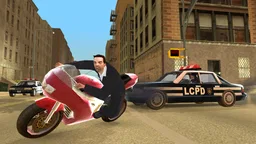
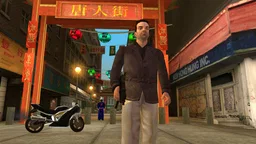
This is an adventure from Rockstar Games built around Liberty City, not a quick, self-contained puzzle or a simple arcade run. The appeal is having room to roam between objectives and letting the city itself provide the backdrop for play. When I want a game that offers a change of pace from a tightly guided level, that open-city feel is a strong reason to try it.
Its overall tempo depends on how I approach it. I can focus on moving from one objective to the next, or spend time exploring and seeing where an unscripted detour leads. That freedom is enjoyable, but it also means the game may feel less immediately brisk than an adventure that keeps every encounter on a short, fixed track. If I have only a few minutes, I prefer to start when I can give a mission some attention rather than assume every session will fit neatly into a tiny gap.
The game is free to download, with in-app purchases listed at $6.99 per item. I would think of the free entry point as a chance to decide whether this older, open-city style works for me before spending anything. The key question is not whether the setting sounds familiar, but whether I enjoy returning to a city and making my own way through it.
When the city gets demanding
Busy stretches are where the open-world structure asks more of the player. A mission can require attention to the immediate objective while the surrounding streets keep pulling focus. I find it useful to avoid rushing through those moments: take a second to understand where I need to go, and treat a small setback as part of the route rather than proof that the game is unfair.
One practical way to make play feel smoother is to separate focused mission time from casual roaming. If I am trying to make progress, I stay with the objective instead of repeatedly breaking off to explore. If I only want to dip in, I roam without setting myself a strict goal. That simple choice helps the game feel less stop-start, especially for someone who is still getting comfortable with its city and its older design sensibilities.
The trade-off is that freedom can create friction. Players who prefer a clean sequence of short stages may find the open setting less efficient, and a detour can interrupt momentum. I would not recommend it as the first choice for someone who wants every minute to deliver a clearly marked burst of action. Its strengths show up when I am willing to spend time in Liberty City rather than treating it as a corridor between checkpoints.
Reliability and getting back into a session
I judge reliability here less by expecting every play session to be identical and more by whether I can settle back into the game without turning play into a chore. Because this is a city-based adventure, it helps to resume with a clear idea of what I was doing. Before stopping, I make a mental note of the next objective or the area I meant to explore; that tiny habit makes returning feel more deliberate.
I would also avoid beginning a demanding mission when I know I may need to put the device down immediately. The game’s open structure invites detours, and a rushed interruption can make it harder to pick up the thread. For a commute or a short break, casual exploration is the safer fit; for concentrated progress, I prefer a session where I can stay engaged long enough to see an objective through.
There is a useful distinction between a game being unreliable and a game simply having a pace that does not match a player’s routine. I would not promise identical performance across every phone or tablet. The current version is 2.4.379, and the stated minimum operating system is version 9, but meeting that requirement alone does not tell me how smoothly it will feel on a particular device. I would check that the device is compatible in the app store and try a brief session before planning a long one.
Choosing a device and the right player
For a mobile game centered on a large city, I would give the device a little breathing room: close other demanding apps if play feels sluggish, and avoid judging the experience from a moment when the phone is already busy. That is a sensible troubleshooting step, not a guarantee of a particular frame rate or battery life. I would also make sure the device is comfortable to hold for the kind of sessions I intend to play; roaming and mission-focused play can both tempt me to keep going longer than planned.
The game has more than 10 million installs and an average rating of 4.0 from 133,000 ratings, with 4,700 written reviews. Those figures suggest that it has found a broad audience, but they do not settle whether its style will click for me. Rockstar’s city-focused approach is the main draw, while its adult content, open-ended pacing, and older-game feel are reasons some players may prefer a different adventure.
I would recommend it to someone who likes exploring a named urban setting, enjoys missions with room for side trips, and does not need every activity to be explained in a modern, streamlined way. I would steer younger players away because of the Mature 17+ content rating. I would also suggest that players who want a calm, low-stakes experience or a tightly directed story look elsewhere; the tone and structure are not designed around those preferences.
Compared with many adventure games that divide play into compact stages, Liberty City Stories puts more emphasis on navigating a shared-feeling urban space and choosing how to spend time between objectives. That difference is its identity, not an automatic improvement. A level-based adventure is usually the better option when I want predictable session length and a clear stop point. Here, the pleasure comes from the city’s continuity, and the cost is that a session can feel less neatly contained.
How I would approach a first play
I would begin by following the game’s central direction rather than trying to see everything at once. That gives me a feel for its rhythm before I start taking every tempting detour. Once I understand how it expects me to move around Liberty City, I can decide whether exploration is adding to the experience or pulling me away from the parts I enjoy most.
A second useful approach is to use separate sessions for separate moods. When I want momentum, I focus on a mission and keep distractions to a minimum. When I want something more relaxed, I treat the city as the activity and accept that I may not make much structured progress. This is a small distinction, but it avoids the common disappointment of expecting a free-roaming game to behave like a short, linear stage.
If performance seems uneven, I would first try a simple reset of the session and reduce background activity rather than assuming the game itself is at fault. If the device meets the minimum system requirement but still feels uncomfortable to play, I would not push through just because the title is familiar. A mobile game should fit the device and the player’s routine, and an older city adventure is a poor match for anyone who needs consistently effortless handling.
My verdict on its mobile performance and appeal
As an adventure game, this is a distinctive option for players who want to spend time in Liberty City rather than race through a string of brief levels. I like that it leaves room for both mission progress and unscripted wandering, and I think that flexibility makes it easy to return to when I am in the right mood. Its main performance caveat is practical: the experience may vary with the device, so I would test it on the hardware I actually plan to use rather than infer smoothness from the minimum operating-system requirement.
Ultimately, I would recommend GTA: Liberty City Stories to adults who enjoy open-city adventures and are comfortable with a less tightly managed pace. I would skip it if I wanted a child-friendly game, a quick level-based distraction, or a mobile experience whose performance I could assume to be identical on every device. For the right player, the city and its flexible rhythm are the point; for everyone else, those same qualities can feel like friction.
What we like
- Portable missions fit well into short play sessions.
- The compact city makes navigation quick and easy.
- A wide range of vehicles adds variety to exploration.
- Custom music support lets players personalize the soundtrack.
- The story offers a fresh perspective on the GTA series.
What could be better
- Some missions can feel unforgiving after a failed attempt.
- The dated visuals may disappoint players used to newer games.
- Touchscreen controls can make precise driving challenging.
- The open world has fewer activities than later GTA games.
- Frequent combat can become repetitive over longer sessions.







