

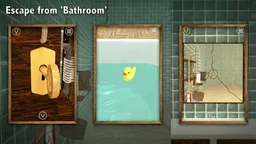


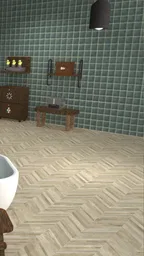
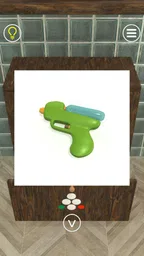
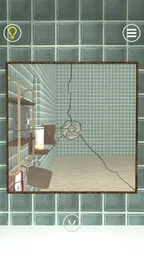

EXiTS:Room Escape Game review
 Analysis by Appsdrops
I like escape-room games best when the challenge comes from noticing a useful detail, not from wrestling with awkward controls. EXiTS:Room Escape Game is aimed at that sort of short, focused puzzle session: you explore a room, work out what its clues are telling you, and try to find a way out. It is a free adventure game from NAKAYUBI CORPORATION, and its steady popularity—an average rating of 4.4 from around 66,000 ratings, with more than a million installs—suggests it has found an audience among mobile puzzle fans.
Finding the clue that actually matters
The central pleasure of EXiTS is the familiar escape-room loop: look carefully, connect what you see, and test a solution. That sounds simple, but the useful clue is not always the most conspicuous object on screen. I find these games most satisfying when I pause before tapping and ask what a detail might mean in relation to something else. A mark, arrangement, or object can be more useful as part of a pattern than as an isolated thing to collect.
That also explains the most common kind of friction. When progress stops, it is tempting to tap every visible spot repeatedly or cycle through guesses. That can make a puzzle feel more arbitrary than it is. I get better results by revisiting the room in a consistent order: scan each area, note anything that looks unusual, then check whether the same visual idea appears elsewhere. If an attempted answer fails, I move on and return later with a fresh interpretation instead of immediately repeating it.
This is a good fit for a quiet break because the challenge is contained. You do not need to set aside an evening for a sprawling adventure; you can focus on a puzzle, put the game down, and come back when you have time. The trade-off is that anyone looking for fast action, a strong narrative drive, or a large world to roam may find the room-by-room format too narrow. Its appeal is observation and deduction, not spectacle or speed.
A more useful way to approach a stuck puzzle
When I feel stuck, I try to separate observation from interpretation. First, I look again for details I may have overlooked. Then I consider what kind of answer the puzzle seems to want, rather than assuming every clue must be a code or a number. That small change helps avoid a common escape-game trap: forcing one familiar solution style onto a clue that may be asking for a different kind of connection.
A practical habit is to make a brief mental inventory of unresolved things before leaving a room: a clue whose meaning is unclear, an object that has not helped yet, or a pattern that might connect to something elsewhere. When I return, I test one relationship at a time. This is slower than random tapping, but it makes the reasoning easier to follow and the eventual solution more satisfying. It also helps me tell the difference between a genuine puzzle and a missed interaction.
Patience matters because mobile play encourages quick inputs. A tap that lands on the wrong part of a small visual detail can look like a failed idea, even when the reasoning was sound. I slow down and aim deliberately before deciding that a clue is misleading. If repeated careful attempts still do nothing, I stop treating that spot as the answer and look for another piece of context.
Before blaming installation or the game
For a smoother start, I check the basics before opening a puzzle: the device should meet the Android minimum of version 7.0, and the game should be updated to its current version, 24.5. EXiTS is also available on iOS, so the platform choice is straightforward for people who switch between the two mobile ecosystems. These checks do not solve a riddle, but they can prevent an avoidable setup issue from being mistaken for a gameplay problem.
If a screen seems unresponsive, I first make sure I am tapping the intended area rather than assuming the game has failed. I try a deliberate tap, wait a moment, and then recheck the clue or object I was working with. If the app itself appears to have stopped responding, closing and reopening it is a reasonable basic recovery step. I would avoid repeatedly entering guesses while the screen is behaving oddly; that only makes it harder to tell whether the input registered.
Keep the distinction clear between puzzle difficulty and a technical problem. A clue that remains confusing while the rest of the game responds normally is usually a reasoning problem, not a setup failure. Conversely, if inputs consistently do not register or the game will not open, reviewing the device’s compatibility and the installed version is more useful than trying random puzzle answers. This simple diagnostic split can save time and frustration.
It is free to download, with in-app purchases listed from around $0.79 to $23.99 per item. I would treat those purchases as optional unless I already know I want to spend on the game; the basic appeal is the act of solving rooms, not buying something before I have decided whether that style suits me. The content rating is Everyone, which makes it approachable for a broad audience, though younger players may still appreciate a little help when a clue requires patient observation.
Recovering your train of thought
One useful workflow is to avoid switching between several half-solved puzzles in your head. I finish a room when I have the time, or, if I need to stop, I make a short note for myself about the clue that was puzzling me. That note need not contain a solution: “look for a matching shape” is often enough to restart the reasoning later. This is especially handy when playing in brief gaps during a commute or while waiting for an appointment.
If you return and cannot remember why an object mattered, do not try to reconstruct every tap. Re-scan the room as if seeing it anew, then compare the current clues with your note. A fresh pass often reveals that the object you fixated on was only one part of a larger relationship. This approach also keeps the game from turning into a frustrating sequence of guesses when your attention is divided.
Another helpful trade-off is knowing when to take a break. After too long on the same puzzle, I tend to repeat the same interpretation. Stepping away for a few minutes can make a visual connection stand out when I come back. If you prefer immediate, explicit guidance at every impasse, a game with a more prominent hint-oriented structure may be a better match. EXiTS is more rewarding for players who are comfortable sitting with uncertainty for a little while.
When the problem may be outside the puzzle
Not every stalled session means the game is at fault. A rushed tap, a distracted moment, or a small screen can make a detail easy to miss. I try the puzzle again when I can give it my full attention, especially if I am playing on a phone while moving around. For a clue that depends on careful visual comparison, a larger screen can make inspection more comfortable, although the game remains a mobile experience rather than a reason to buy new hardware.
It is also worth checking whether the device is generally running well. If other apps are struggling too, the cause may be broader than this game. I close anything I do not need and reopen the game before drawing conclusions. This is ordinary troubleshooting, not a special trick, but it helps separate a temporary device hiccup from a puzzle that simply has not clicked yet.
Compared with action adventures, EXiTS asks for very little reflex skill and rewards deliberate looking. Compared with paper escape-room puzzles, it puts the room and its interactive clues on a screen, which is convenient when you want a quick solo challenge. The compromise is that touch controls can make careful inspection less tactile than handling real objects, and a phone session can be interrupted more easily than a dedicated tabletop game. I would choose it for compact, visual problem-solving, not for a social escape-room night or a story-led game.
Who will enjoy it, and who should pass
I would recommend it to people who enjoy noticing patterns, testing ideas, and taking a small puzzle break without needing a long play session. It can work well for a casual player who wants an accessible entry into adventure puzzles, as well as for someone who already likes escape rooms but wants a solo mobile alternative. NAKAYUBI CORPORATION has kept the premise focused, and the game’s 4.4 average gives a useful indication that many players respond well to that approach.
I would skip it if you mainly want constant movement, competitive play, or a game that tells a continuous story. It is also not ideal if you dislike being stuck without an immediate answer or find close visual inspection tiring on a small display. Those are not defects so much as the natural limits of a puzzle-first room escape game; another genre will suit those preferences better.
For me, the best way to judge EXiTS is to try it in a calm moment and give each room a fair, methodical look. It is free, rated for Everyone, and currently at version 24.5, with a broad audience already playing it. I value it most as a low-pressure way to exercise observation: slow down, check the clues, and change your approach when a guess does not work. If that sounds enjoyable, EXiTS:Room Escape Game is an easy recommendation; if you want action or hand-holding instead, I would look elsewhere.
What we like
- Room puzzles offer a satisfying mix of observation and logic.
- Hint support can help when a puzzle becomes difficult.
- Short stages make it easy to play in brief sessions.
- The escape-room format gives each stage a clear goal.
- Touch controls make examining objects feel straightforward.
What could be better
- Some solutions rely on subtle visual clues.
- Repeated puzzle patterns can make later stages feel familiar.
- Hints may reduce the challenge for players who use them often.
- Small objects can be easy to overlook on a phone screen.
- Players who prefer a story-driven game may find the plot light.







