







Barbie™ Horse Ride & Rescue review
 Analysis by Appsdrops
The first thing I notice about Barbie™ Horse Ride & Rescue is how clearly it aims for a gentle equestrian adventure rather than a demanding riding simulator. The idea of caring about the horse, the stable, and the look of the ride gives the game a cozy identity. I’d recommend it most readily to younger players or Barbie fans who want a light, approachable activity; anyone looking for deep horse-care systems or challenging action may want something more involved.
A welcoming ride, with a specific audience
This is an adventure game from PIKPOK, available free to start, with optional in-app purchases priced from $0.99 to $99.99 per item. Its audience is rated Everyone, which fits the friendly, accessible premise. The game has an average rating of 4.0 from around 2,300 ratings, and it has passed half a million installs. Those figures suggest a sizeable audience, but they do not tell you whether its particular blend of riding, styling, and adventure suits your household.
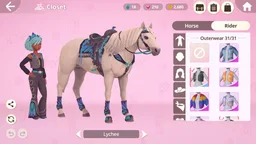
In my view, the strongest reason to try it is the combination of horses and personal expression. A child who enjoys choosing how a stable looks may find the customization as appealing as the riding itself. Barbie fans also get a recognizable character setting, while horse-loving players can settle into the fantasy of setting out on an equestrian outing. It is a more inviting starting point than a realistic simulator that expects players to manage complicated controls or detailed routines.
The trade-off is that a soft, welcoming presentation can feel too gentle for players who want mastery, tension, or a strong challenge. I would not choose it as a substitute for a detailed riding sim, nor for an adventure built around demanding combat or intricate puzzles. Its appeal rests on the mood and the horse-centered fantasy, not on a promise of serious simulation.
How the setting supports the fantasy
The stable is more than a backdrop in the game’s central idea: dressing it up gives the player a reason to make the equestrian world feel personal. That distinction matters. Some horse games focus almost entirely on riding from one place to another; here, the stable and the look of the experience are part of the attraction too. For a player who likes to make a space feel like their own, that can create a satisfying loop around the rides.
I find this sort of visual customization particularly useful for short, casual sessions. A player can approach the game with a small goal in mind—spend time with the horses, enjoy the setting, or make the stable feel more appealing—without needing to treat every session as a long campaign. That makes it easier to fit into a quiet break after school or a relaxed weekend moment. The best use case is not “I need a difficult game to conquer,” but “I want a friendly horse adventure I can dip into.”
The Barbie identity also gives the world a distinct tone. It signals a bright, character-led experience rather than a grounded account of stable work. That can be a plus for younger players who want imaginative play, but a limitation for older horse fans who prefer believable routines, realistic tack, or a more naturalistic atmosphere. I’d make that distinction before downloading: the fantasy is part of the appeal, not a side detail.
Sound and pacing: a calmer kind of adventure
For a game built around riding and a welcoming stable, pacing is important. A good fit is one that lets the player enjoy the setting without making every moment feel like a race. This is the kind of experience I would approach as a relaxed outing, rather than a game to play for high-pressure thrills. That makes it suitable for a short wind-down session, especially for someone who enjoys horses but does not want a complicated challenge after a busy day.
Sound and art direction work best when they reinforce that easygoing mood. I would pay attention to whether the presentation feels pleasant over repeated visits, not just whether the first screen looks appealing. A gentle visual language can make simple activities feel inviting, while an overly repetitive rhythm can make them lose their charm. For younger players, that repetition may be comforting; for an older player, it may become a reason to move on once the novelty of the setting wears off.
A practical tip is to treat each visit as a small, self-contained play session instead of expecting a long, continuously escalating adventure. That keeps the focus on what the game’s premise naturally offers: time with horses, a stable to make your own, and a light journey. If you or your child usually prefer games with a steady stream of new mechanical demands, the quieter rhythm may not hold attention for as long.
Where the mechanics fit—and where they may not
The game’s central mix of riding and stable dressing gives it a clear, easy-to-understand pitch. The two activities appeal to different kinds of players: riding is the obvious draw for someone who wants to be out with a horse, while decorating supports a player who likes choices and visual ownership. That pairing can broaden the game’s appeal within a family. One child may be drawn to the rides, another to the stable, and both can enjoy the same broad setting.
At the same time, a two-part appeal is not automatically deep. Players who expect the stable side to work like a full management game may be disappointed if what they really want is resource planning, breeding, or detailed animal care. Likewise, someone hoping for a realistic riding lesson should look elsewhere. I see this as a character-led adventure with equestrian themes, not a substitute for a dedicated horse-care or training simulator.
There is also a sensible way to approach the optional purchases. Since the game is free to start but offers items from $0.99 to $99.99, I would let a new player explore the basic experience before deciding whether anything extra is worthwhile. For a child, it is especially useful to set expectations about purchases in advance and keep the decision with an adult. The broad price range means it is better to check the item and its cost in the app store before confirming anything, rather than assuming every purchase is a small add-on.
The current version is 1.4.0, and the minimum operating system requirement is 10. Before installing, I would check that the device meets that requirement and that the player is comfortable with a game that includes optional purchases. The age rating is Everyone, but that does not remove the need for a parent to decide whether the purchase setup and the style of play are right for their child.
Who I would recommend it to
I’d point this toward a young player who likes Barbie, horses, and making a setting feel personal. It can also suit a casual player who wants something gentle to pick up for a short break. A realistic everyday scenario might be a child having a little free time after homework: rather than committing to a long, demanding session, they can visit the game for a relaxed equestrian diversion and enjoy its stable-centered identity.
I would steer away from it if the main goal is realistic horse handling, complex progression, or a serious challenge. Players who compare every title with a simulation game may find the fantasy framing too light, while players who mainly want a fast action adventure may find the equestrian focus too calm. In those cases, a dedicated simulator or a more mechanically demanding adventure is likely to be a better fit than trying to make this game satisfy a different appetite.
Compared with the usual alternatives in the horse-game space, its most distinctive angle is the blend of a Barbie-led world with riding and stable styling. A simulator tends to win on realism and detailed systems; a generic action adventure may offer more pressure and variety in its challenges. This game makes a different choice: it puts a friendly character setting and personal atmosphere at the center. That is a coherent direction, though not one that will suit every horse-game fan.
A final word on its atmosphere
Barbie™ Horse Ride & Rescue makes the most sense when I judge it by the experience it is trying to provide: a pleasant, accessible equestrian adventure with room for personal style. Its strongest quality is the way riding and a dressed-up stable support the same playful fantasy. Its main limitation is equally clear: players seeking realism, demanding mechanics, or extensive management may find the experience too light.
My recommendation is to try it if the Barbie setting and horse-centered mood sound appealing, and to keep expectations grounded in a casual adventure rather than a simulation. Start with the free experience, see whether the riding and stable activities hold attention, and consider optional purchases only after checking what they offer. For the right player, that gentle balance is exactly the point; for everyone else, a more realistic or challenging alternative will be a better ride.
What we like
- Horse rescue missions give the riding activities a clear purpose.
- Bright colorful visuals suit the Barbie theme.
- Horse care adds variety beyond riding.
- Controls are approachable for younger players.
- The story encourages gentle care for animals.
What could be better
- Some activities may feel repetitive after repeated play.
- The Barbie theme may not appeal to every child.
- Younger players may need help with reading prompts.
- Progress can depend on completing set objectives.
- The game offers limited appeal to players seeking complex gameplay.







