
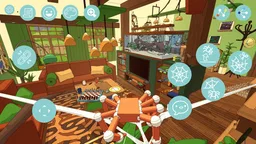
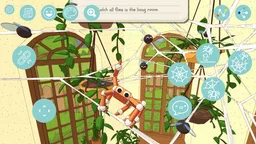
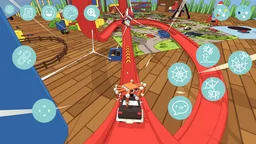
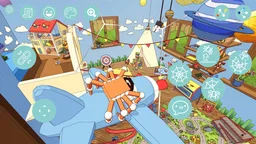
A Webbing Journey review
 Analysis by Appsdrops
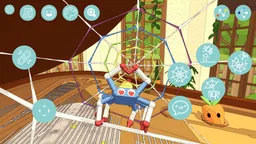
I like adventure games that let me make my own fun rather than constantly steering me toward the next marker. A Webbing Journey takes that idea somewhere wonderfully specific: I control a small spider, use webs to interact with the surroundings, and see what happens when the physics take over. Its appeal is less about racing through a plot and more about experimenting, making a mess, and finding amusing solutions to small environmental puzzles.
This is a game I would reach for when I want something light and playful, not a demanding action adventure. The central pleasure is simple to understand but surprisingly flexible: a strand of web can become a tool, a connection, or part of an improvised plan. That makes the game feel personal. I’m not just following instructions; I’m testing ideas and learning how this particular world reacts.
A tiny spider with room to experiment
Developed by Fire Totem Games GmbH, this free adventure game has a gentle, inviting premise. It is rated Everyone, so its tone suits a broad range of players, including families looking for a game that feels less intense than combat-focused adventures. The store description calls attention to its physics-based sandbox, and that is the right way to set expectations: curiosity and interaction are the draw.
The spider is more than a cute character to guide from one point to another. The web is the meaningful part of the interaction, because it lets me think about how objects and spaces connect. A straightforward route may work, but trying a different angle can be more entertaining than taking the obvious path. I found that the best moments come from treating a small obstacle as an invitation to experiment rather than as a chore to clear.
That approach gives the game a pleasant, low-pressure rhythm. I can spend a short break trying one idea, or linger over a situation because I want to see what another web arrangement does. The experience is better suited to playful problem-solving than to players who need constant action, a tightly plotted campaign, or a clear score to chase.
Why the physics matter
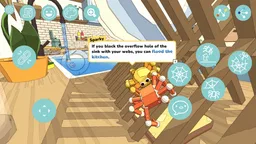
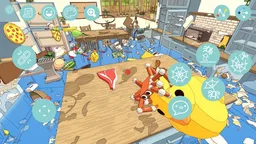
In many adventure games, the environment is mostly scenery around a prescribed route. Here, the physics are part of the appeal: interactions can feel more like a small experiment than a button prompt. If a plan behaves unexpectedly, that is not automatically a failure. It can create a funny outcome or suggest a better approach. I recommend changing one thing at a time when testing an idea; it makes it easier to understand what caused the result and helps turn accidental success into a repeatable trick.
That experimental quality is also a trade-off. Players who prefer exact, predictable controls may find improvised solutions less satisfying, especially when a setup does not behave as they imagined. I would approach each challenge with patience and a willingness to try again, rather than expecting every interaction to work like a conventional platforming move.
Good for short sessions, with a creative streak
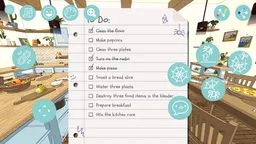
A realistic use case is a quiet break between tasks: open the game, explore a little, try a web-based solution, then put it down without needing to remember a complicated chain of objectives. It also works as a shared screen game for a parent and child, or for friends who enjoy taking turns suggesting what the spider should try. The fun is in comparing ideas, not in proving who can react fastest.
For a more useful play session, I’d avoid tapping through experiments too quickly. Pause long enough to notice what the web is attached to and how the surroundings respond. When a plan fails, adjust the connection or the approach rather than repeating the same motion. That small habit makes the sandbox feel more legible and reduces the frustration of random trial and error.
What the current release means for players
The game has an average rating of 4.8 from around 25,000 ratings, with roughly 854 written reviews and over 5 million installs. Those figures suggest that its small-scale, playful concept has found a broad audience, though popularity alone does not tell me whether its particular pace will suit you. The more relevant question is whether you enjoy experimenting with a character and environment instead of being led through a sequence of tightly scripted action scenes.
The current version is 0.15.3, and the game was released on May 18, 2023. These details give a useful snapshot of its present state, but they are not a promise about what may come next. I would treat the version number as a way to identify the build, not as proof that a specific feature has recently been added or that a particular change is planned.
For someone already playing, a version update is worth checking for practical changes before assuming the experience has been transformed. If the game is already working well on your device, there is no reason to expect a new build to alter the basic appeal: the spider, web interactions, and sandbox experimentation are what define the experience. New players can simply start with the current release and judge the core play on its own merits.
What the version and release history can—and cannot—tell you
The release date establishes that this is not a brand-new launch, while the current version identifies the build available now. Together, they make it reasonable to think of the game as an established release rather than a first public experiment. But I would not infer a particular update schedule, a list of past additions, or future plans from those two facts alone. If you are deciding whether to return after a break, check the current in-game experience rather than relying on assumptions about what may have changed.
That distinction matters because players often expect a version number to tell a whole story. It does not explain whether a change affects performance, controls, content, or balance. I’d use the release information as context, then make the decision based on whether the game’s existing style still appeals to me: a relaxed adventure built around physical interaction and self-directed play.
Free to start, with purchases to consider
The game is free to download, with in-app purchases priced from $1.99 to $10.99 per item. I’d approach those purchases as optional spending to consider only after I know I enjoy the core experience. There is no need to spend just to find out whether the spider-and-web concept clicks with you. If you are downloading it for a younger player, it is sensible to review purchase settings on the device and agree on expectations before handing it over.
It supports a minimum operating system version of 7.1. Before installing, I’d check that the device meets that requirement and has enough room for another game; that simple check avoids confusing a compatibility issue with a problem in the game itself. The age rating is Everyone, but families should still make their own judgment about purchases and screen time, as they would with any free game.
Where it differs from familiar adventure games
Compared with a standard platform adventure, this game puts less emphasis on precise jumping, combat, or a long sequence of story beats. Compared with a pure puzzle game, it leaves more room for playful improvisation: I’m not necessarily looking for one clever answer so much as seeing whether my own approach works. That makes it a good choice for players who like tinkering, but a weaker fit for anyone who wants a fast-moving campaign with constant new objectives.
It is also distinct from a competitive multiplayer game. The pleasure here is in the small discoveries, not in ranking or outplaying someone. If I want a game to challenge my reflexes or give me a strong sense of progression, I’d choose a different adventure. If I want to unwind and make a tiny spider interact with a world in unexpected ways, this is the more appealing option.
Limits worth knowing before you install
The same open-ended quality that makes the game charming can leave players wanting clearer direction. If you dislike experimenting or prefer every objective to explain exactly what to do, the sandbox style may feel vague. Physics-driven play can also make outcomes less consistent than a conventional puzzle with fixed pieces and a single intended solution. I would skip it if that unpredictability sounds irritating rather than entertaining.
It is not the first game I’d recommend to someone seeking a deep narrative, a serious challenge, or a highly structured long-term routine. Its identity is narrower and more modest: a cute spider and a world that invites interaction. That focus is a strength when it matches your mood, but it also means the game should not be judged as though it were trying to deliver a sprawling adventure.
What I would watch as a player
For existing players, the useful things to watch are the actual feel of the current build and whether it continues to run comfortably on their device. For newcomers, I would pay attention to whether the first experiments make you curious to try another idea. That reaction is a better guide to long-term enjoyment than the premise alone. I would not assume future content or changes without seeing them arrive; expectations should follow confirmed releases, not guesses based on a version number.
Overall, I recommend A Webbing Journey to anyone who enjoys gentle, creative interaction and is happy to learn through trial and error. It is free to try, easy to understand at a glance, and more distinctive than a routine adventure because the web-and-physics idea shapes how I approach play. I would choose something else for a demanding story or strict puzzle logic, but for an unhurried session of spider-sized experimentation, it has a genuinely appealing point of view.
What we like
- Web-swinging makes exploration feel fluid and playful.
- The cozy setting is easy to enjoy at a relaxed pace.
- Collectibles encourage revisiting familiar areas.
- The controls are approachable for younger players.
- Short activities suit quick play sessions.
What could be better
- Some objectives can feel repetitive over time.
- Camera angles may make precise swinging tricky.
- Progress can require searching for easy-to-miss items.
- The relaxed pace may not suit action-focused players.
- Limited challenge may leave experienced players wanting more.







