


Lime - #RideGreen review
 Analysis by Appsdrops
Replacing a short car trip sounds appealing, but it only works when the alternative fits the journey you actually need to make. That is the idea behind Lime: a shared electric-vehicle service designed to give riders another way to get around town. Its defining appeal is straightforward—choose a vehicle for a local trip instead of automatically reaching for the car. In my view, that focused promise is also the best way to understand the app: it is most useful when your destination is nearby and an electric ride makes sense for the route.
A practical alternative for short trips
Lime is a free travel and local app from Neutron Holdings, Inc. Its store summary positions the service as a way to replace car trips through shared electric vehicles. That framing matters because this is not simply a map or a general travel planner. The service is built around getting a rider from one place to another using a shared vehicle, with the app acting as the point of contact between the journey and the available service.
The potential benefit is easy to picture. A short journey can feel inconvenient by car, especially when the effort of using one seems out of proportion to the distance. A shared electric vehicle offers a different option: rather than making every local errand a car trip, you can consider a ride that better matches the scale of the journey. For me, that makes Lime most compelling as a practical choice for specific trips, not as a blanket replacement for every way of getting around.
The distinction is useful. An app can promise a convenient alternative, but the real value depends on whether that alternative suits the trip at hand. Lime’s core proposition keeps the decision simple: consider a shared electric ride when you have a local destination and want to avoid taking the car. That clear purpose makes the service easy to understand, even before weighing whether a particular journey is a good fit.
One clear idea, rather than a complicated pitch
Some mobility services try to be everything at once. Lime’s central message is more focused: shared electric vehicles can take the place of some car journeys. I like that emphasis because it gives the app a recognizable role in a travel routine. Instead of asking you to rethink every trip, it invites you to reconsider the local ones where a car may not be the only reasonable option.
That does not mean every short journey will suit an electric vehicle. Your destination, the route, and your own preferences all matter. The useful takeaway is that Lime gives you another possibility to consider. When the trip is local and the alternative is otherwise a car ride, the app’s purpose feels especially relevant.
How the service fits into a journey
In practice, the app is part of a larger travel decision. First, you have a destination and a reason to go there. Then you decide whether a shared electric vehicle fits that journey better than your usual choice. Lime’s role is to connect you with its shared-vehicle service so that this option can be part of the decision, rather than leaving the car as the automatic answer.
That way of thinking is more useful than treating the app as a promise that every ride will be effortless. The service’s appeal rests on having a suitable local trip in mind. If your plans involve a nearby destination and an electric vehicle works for the journey, Lime’s basic proposition is easy to grasp. If the trip is a poor match for that kind of travel, the app’s central idea may be less relevant on that occasion.
I also appreciate that the concept is easy to explain to someone who has never used the service. Lime is a shared electric-vehicle company, and the app is the travel tool associated with that service. You do not need to approach it as a broad travel encyclopedia. Its value is narrower and more practical: it gives you a way to think about shared electric mobility when planning a local trip.
Choosing the right moment to ride
The best scenario is a short, local journey where taking a car feels unnecessary or inconvenient, but you still want a direct way to get around. A quick visit across town, a nearby errand, or a simple point-to-point trip can all be the kind of situation where considering a shared electric ride makes sense. The key is not the label attached to the journey; it is whether this mode of travel suits the destination and your plans.
For people who frequently travel around their immediate area, that can make the service easier to place in everyday life. Lime is not presented as a substitute for every transport need. It is an alternative for selected trips, which is a more realistic and helpful promise. Keeping that expectation in mind makes the app easier to evaluate: ask whether the trip is local, whether an electric vehicle is suitable, and whether you would otherwise take the car.
That last question gets to the app’s central appeal. If using Lime helps you reconsider a car journey, the service is doing the job its summary describes. If you were already planning to walk or use another form of transport, it may not change much about that particular trip. The strongest use case is therefore not simply “I need to travel,” but “I have a local trip where a shared electric vehicle could be a sensible alternative to driving.”
Tradeoffs are part of the choice
A service built around shared electric vehicles will not be the perfect answer for every traveler or every journey. The same idea that makes Lime useful for a local trip also defines its limits: it is most relevant when that kind of vehicle and that kind of route suit the user. A longer journey, a different travel preference, or a destination that does not fit the plan may make another option more appropriate.
That is not a flaw unique to Lime; it is simply the tradeoff involved in choosing a specific mode of transport. The app’s clear focus is a strength, but it also means the service is not a universal travel solution. I would approach it as an additional option to keep in mind, rather than assuming it can replace every car ride or meet every local travel need.
There is also a practical difference between liking the idea and finding it useful in a particular situation. The idea of shared electric mobility can sound attractive, but the decision still has to work for the trip you are making. Lime’s promise is most persuasive when the journey is a good match for that service. Thinking through the route and your own comfort with this travel choice helps keep expectations grounded.
For that reason, the app’s simple pitch should be read as an invitation, not a guarantee that every car trip has an equally suitable replacement. The useful question is whether a shared electric vehicle fits this journey today. That framing avoids expecting the service to solve needs outside its purpose, while still recognizing why it can be appealing for local travel.
Who is likely to get the most from it?
Lime is likely to appeal most to people who make local trips and are open to using a shared electric vehicle instead of a car. It may also suit travelers who want to keep a broader set of options in mind when deciding how to get around. If you often find yourself making short journeys by car, the app’s premise gives you a reason to pause and consider whether a different choice would work.
It is less likely to be a must-have for someone whose routine rarely involves local travel or who has no interest in shared electric mobility. That is a matter of fit, not a judgment on the quality of the idea. A focused travel app can be genuinely useful to the people whose needs line up with its purpose, even if it does not become part of everyone’s daily routine.
There is a strong audience for that focused approach. People who value having an alternative to driving for selected journeys can understand Lime’s role quickly. The app does not need to replace every transport habit to be worthwhile; it only needs to make sense when a suitable trip comes up. For me, that modest expectation is the fairest way to judge the service.
What its popularity suggests
Lime has a 4.9 average from around 727,000 ratings, with roughly 29,000 written reviews. It has also passed 10 million installs. Those figures suggest that many people have turned to the app, though popularity alone cannot decide whether it suits an individual rider. I would treat them as signs that the service has reached a broad audience, then judge its usefulness by how well its central idea matches my own travel needs.
The app is free, is intended for everyone, and its current version is 3.289.0. It first appeared on May 10, 2017, and supports operating systems from version 9 onward. These details make it easier to identify the app and its general availability, but the main question remains practical: do you have local journeys where shared electric mobility is an appealing alternative to taking the car?
A focused option worth considering
My overall impression is that Lime’s strongest point is its straightforward purpose. It presents shared electric vehicles as a way to replace some car trips, giving local travelers another option without making the idea difficult to understand. That focus is useful because it helps you decide when to consider the app: not for every trip, but for the journeys where an electric ride could fit naturally.
The tradeoff is just as clear. A focused service will not suit every route, routine, or preference, so its usefulness depends on the kind of travel you actually do. I would not judge it by whether it can replace all transportation. I would judge it by whether it gives you a reasonable alternative for a local journey you might otherwise make by car.
If that is the sort of choice you want to have, Lime is worth considering. It is a free travel app with a clear connection to shared electric mobility, and its central idea is easy to bring into everyday planning. The best reason to try it is not a promise that every ride will be perfect; it is the possibility of making a suitable local trip without defaulting to the car. For the right journey and the right traveler, that is a practical, appealing proposition.
What we like
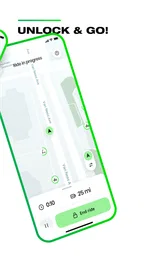
- Unlocking a nearby scooter is quick through the app.
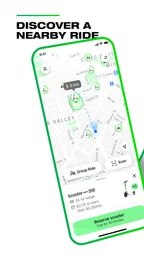
- Live vehicle locations make it easier to find a ride.
- Ride history helps track past trips and charges.
- The map shows designated parking areas in supported cities.
- In-app safety guidance helps new riders get started.
What could be better
- Scooter availability can vary by location and time.
- Rides require a charged phone with mobile data access.
- Some areas restrict where scooters can be parked.
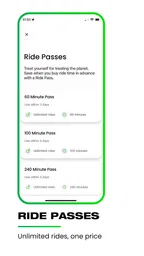
- Pricing and fees may differ between cities.
- A payment method is required to start most rides.





