




Airalo: eSIM for travel & data review
 Analysis by Appsdrops
I think of Airalo as a travel tool that deserves a little preparation, rather than a magic switch that guarantees a connection the moment a plane lands. It is a mobile app from Airalo for buying and managing travel eSIMs, with options ranging from fixed data allowances to unlimited data. That can be a useful alternative to hunting for a local SIM after arrival, but it still depends on choosing a suitable plan and getting the eSIM set up correctly.
Trust starts with knowing what the app is for
Airalo sits in the Travel & Local category, and its purpose is fairly focused: help travelers arrange mobile data for trips. Airalo is the developer, and the app is free to install. That does not mean the data plans themselves are free; I would treat the app as a place to browse and manage connectivity options, then check the plan’s price and terms before buying.
The app has a 4.6 average from around 197,000 ratings, with about 5,100 written reviews and over 10 million installs. Those figures suggest that many travelers have tried it, but popularity is not a substitute for checking whether a particular eSIM suits your phone, route, and travel habits. The age rating is Everyone, and the current version is 2.31.0, with Android 10 as the minimum operating system listed.
That context matters because an eSIM purchase is not like buying a map or saving a hotel reservation. You are making a choice about mobile access while away from home, and the practical cost of a bad fit can be high: you may need to find Wi-Fi, pay for roaming, or buy another plan. I would use Airalo as a planning aid, not as a reason to skip checking your carrier’s roaming terms or the connectivity options at your destination.
Compared with a physical SIM bought at an airport, an app-based eSIM can save the stop at a kiosk and avoid swapping a tiny card. Compared with roaming through your usual carrier, it gives you another option to consider before departure. The trade-off is that the eSIM route asks you to handle device compatibility, installation, and line settings yourself. If you prefer a shop employee to set up a SIM for you, a local physical SIM may feel more reassuring.
Make the purchase decision before you need the connection
I would browse and decide while I still have dependable internet, rather than waiting until I am standing outside an airport trying to message someone. Before buying, check that your phone supports eSIM and is not restricted in a way that prevents using another network. Also compare the destination coverage, plan duration, data amount, and any conditions shown for the specific offer. The fact that plans can be fixed or unlimited does not make those options interchangeable: a fixed allowance suits predictable use, while an unlimited label is worth reading carefully for its stated terms.
A useful everyday scenario is a short city break. I might use mobile data for maps, transit directions, and messages, while relying on hotel Wi-Fi for video or large downloads. In that case, a modest fixed plan could be more sensible than paying for more data than I expect to use. A longer trip involving remote work, frequent navigation, or multiple devices calls for a different calculation, and I would compare the plan details against those needs rather than choosing by the word “unlimited” alone.
For a trip crossing borders, I would check each destination separately before assuming one purchase will cover the whole itinerary. A traveler can lose time if a plan’s coverage does not match a stopover or a last-minute route change. I also recommend saving the plan details somewhere accessible offline, such as a note, so that essential instructions are not trapped behind the very connection you are trying to arrange.
Visible choices matter more than assumptions
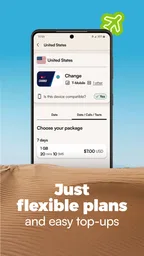
When I assess trust in a travel app, I look for choices I can actually verify in the app and at the point of purchase. In Airalo, the meaningful user decision is the plan selection: compare the available data arrangement and destination details, then decide whether to proceed. I would read the information attached to the selected eSIM instead of relying on general expectations about how travel data works.
I would not treat installation as a trivial tap. An eSIM is a mobile line, so the device’s own cellular settings matter after setup. A cautious workflow is to install it while connected to reliable Wi-Fi, keep the instructions available, and confirm which line is intended for mobile data before changing settings. If you need your regular number for calls or messages, think through how you want that line and the travel data line to be used; do not assume that buying data automatically changes every phone setting for you.
There is also a useful distinction between getting an eSIM onto a phone and having usable service at a particular moment. A plan can be installed before a trip, yet the traveler still needs to follow the plan’s activation instructions and check the device’s line selection when arriving. I would avoid troubleshooting by repeatedly changing settings at random. Instead, revisit the plan instructions, verify the selected data line, and use Wi-Fi to seek help if the connection is not working.
Airalo is a free app, but mobile connectivity is a paid decision in practice. I would review the total cost and included allowance before confirming a purchase, and keep the purchase information for reference. For privacy-conscious users, the same careful approach applies to the account and payment screens: read what is presented, provide only information needed to complete the action, and use the app’s visible account controls rather than assuming a setting exists. I would not make claims about permissions or data practices without seeing the relevant details firsthand.
Keep sensitive moments deliberate
Travel often pushes people to act quickly: connect to public Wi-Fi, enter payment details, or adjust a phone while tired. I prefer to make the purchase and setup decisions before that pressure arrives. Use a connection you trust when reviewing a plan and completing checkout, and take a moment to confirm the destination and allowance. This is not unique to Airalo, but the stakes feel more immediate when your access to maps or transport information depends on the result.
There is a practical privacy trade-off in using any app-based service: convenience involves handling an account and a purchase through the app rather than making every decision in person. That may suit someone who wants to manage travel data on a phone, but a person uncomfortable with app-based purchases may prefer a physical SIM from a local retailer. Either way, I would avoid sharing account access with someone else and would take care when using a shared or borrowed device.
One non-obvious habit that helps is to plan for the gap between landing and successful activation. Keep your hotel address, meeting point, or pickup instructions available offline, and let a travel companion know the plan before departure. That way, a setup delay does not immediately become a navigation problem. I also would not count on an eSIM as the sole way to reach someone in an emergency until I had tested the connection and understood how my phone handles its regular line.
Where it fits—and where I would choose differently
I see Airalo as a strong candidate for independent travelers who are comfortable following phone setup instructions and want to arrange data before they arrive. It is especially appealing when avoiding a physical SIM swap matters, or when a traveler wants to compare destination-specific data options in one app. People who take several trips may also appreciate having a place to manage travel eSIM purchases rather than starting the search from scratch at each airport.
I would be more hesitant to recommend it to someone whose phone does not support eSIM, who cannot confirm that the device is eligible for another carrier, or who needs hands-on setup. It may also be the wrong choice for a traveler whose usual carrier offers a better-value roaming package, or whose trip involves coverage needs that the selected plan does not meet. In those cases, comparing carrier roaming and a locally purchased SIM is not needless extra work; it is the sensible alternative.
For a group, I would not assume one eSIM solves everyone’s connectivity needs. Each traveler’s device and data habits may differ, and a shared hotspot arrangement can create dependence on one person’s battery and connection. A family might find a local SIM or carrier option easier if they want one person to handle the setup in a shop, while a group of confident phone users may prefer individual eSIMs. The best choice depends on how much independence each person needs.
Airalo’s main strength, in my view, is the convenience of organizing travel data through an app before the journey. Its main friction is that convenience does not remove the traveler’s responsibility to check compatibility, plan terms, and phone settings. I would make the decision with a short checklist: confirm eSIM support, match the destination and duration, compare the allowance with expected use, and keep the setup instructions available offline.
A cautious recommendation for the right traveler
My verdict is positive, with a clear condition: use Airalo when you want to arrange travel data yourself and are willing to check the details rather than treating installation as automatic. The free app, built by Airalo, is aimed squarely at travel connectivity, and its reach—over 10 million installs—shows that it is a familiar option for many people. Still, a high average rating cannot tell you whether a specific plan fits your phone or itinerary.
I would recommend it to a friend who has an eSIM-compatible phone, knows roughly how much data the trip requires, and wants to arrive with a plan already considered. I would tell a less technical traveler to compare it with a physical SIM and ask whether the convenience is worth managing setup personally. For anyone, I would avoid buying in a rush: review the destination and terms, keep a backup route to essential information, and make the final choice based on the trip rather than the app’s convenience alone.
Used that way, Airalo can make a stressful part of travel more manageable without pretending that connectivity is effortless. The best experience comes from treating the app as one part of a travel plan: a useful place to choose and manage an eSIM, paired with careful preparation and a backup for the moments when mobile data is not yet available.
What we like
- Browse plans for destinations before your trip.
- Install an eSIM without visiting a mobile shop.
- Keep your regular SIM available for calls and texts.
- Top up eligible data plans through the app.
- Track remaining data in the app.
What could be better
- Your phone must support eSIM to use the service.
- Some plans are data-only and do not include calls or texts.
- Coverage and speeds vary by destination and local network.
- Using an eSIM may require changing your phone's settings.
- Plan validity may begin soon after installation or activation.





